

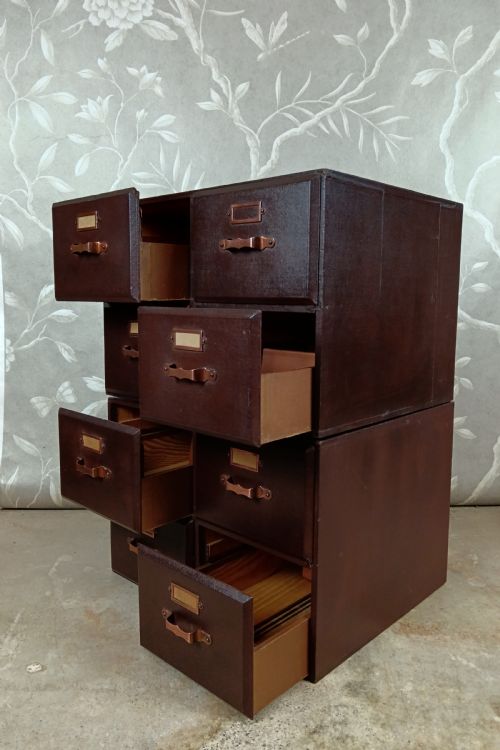


Antique Filing Cabinet Wood
An antique filing cabinet wood piece organises correspondence and documents with architectural timber construction and functional brass hardware.
Antique Filing Cabinet Wood
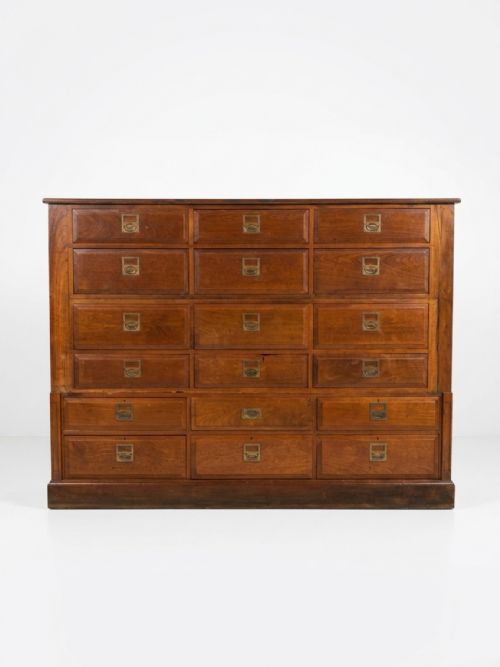
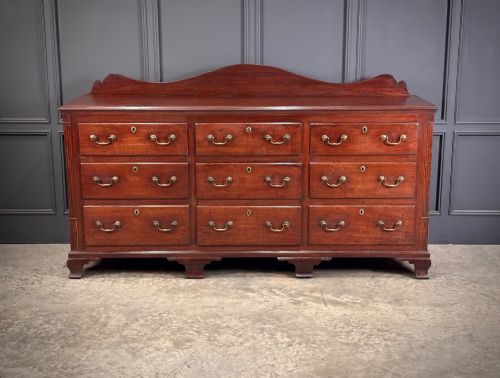
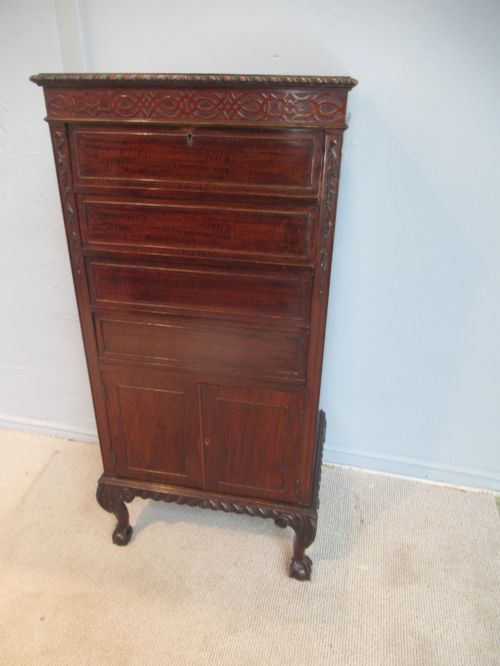
When you search for an antique filing cabinet wood piece, you encounter practical storage furniture built to house papers, letters, and documents in domestic and office settings. These utilitarian forms range from compact desktop card filing sets and music cabinets to substantial banks of drawers, pedestal units, and tambour front cabinets.
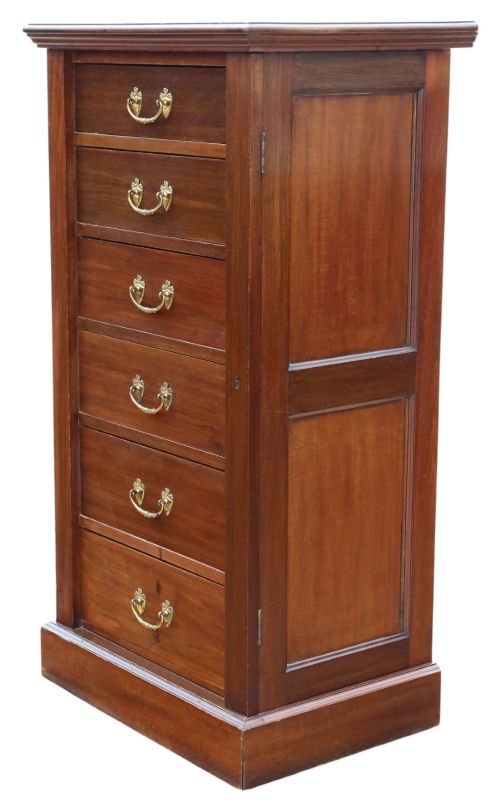
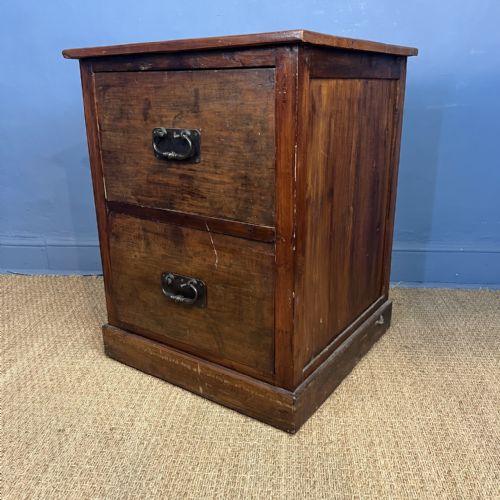
The versions you meet most frequently on this page date from the Edwardian era and the early twentieth century, constructed in oak or mahogany. Earlier nineteenth-century examples appear as Wellington chests, multi-drawer teak cabinets, and heavy banker's pedestals, alongside eighteenth-century mahogany plan chests and large banks of drawers.
Materials and construction methods
Cabinet makers utilised dense hardwoods including mahogany, oak, walnut, rosewood, and teak to ensure structural durability for daily filing use. Timber panels were joined with traditional cabinetry techniques, paired with internal runners to support numerous sliding drawers.
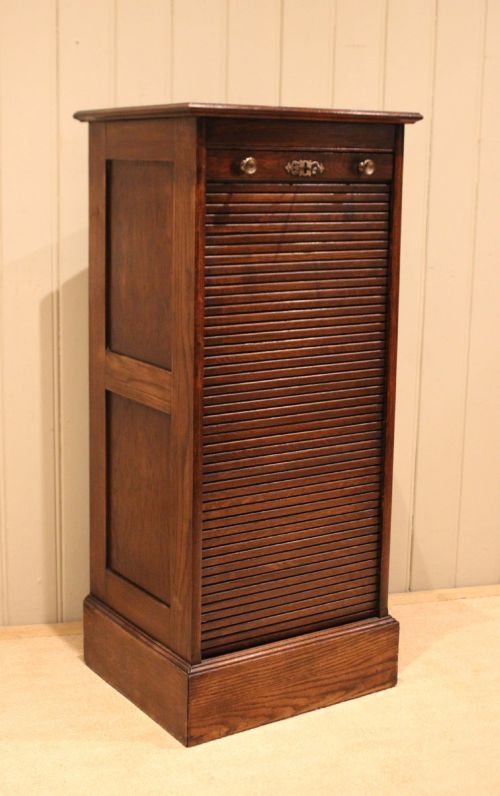
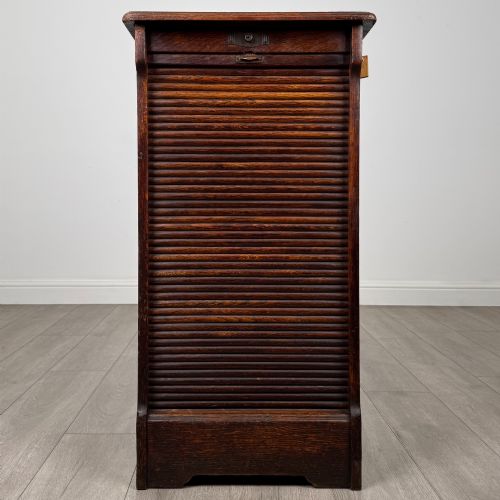
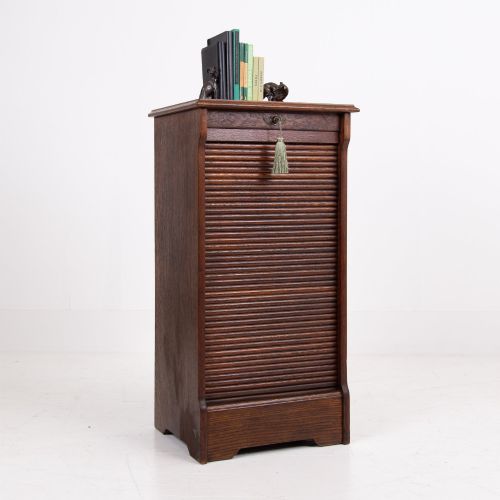
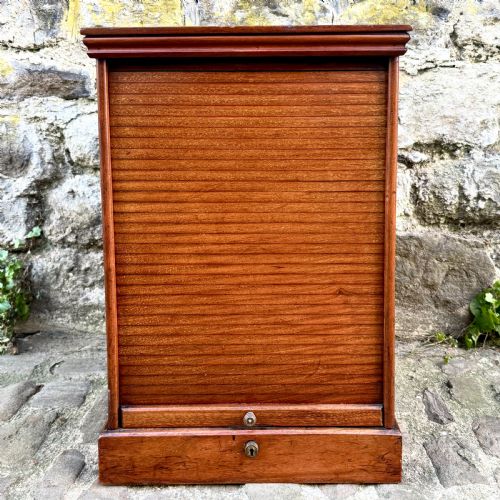
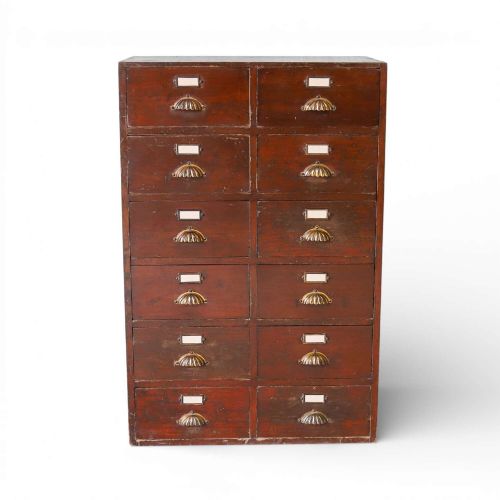
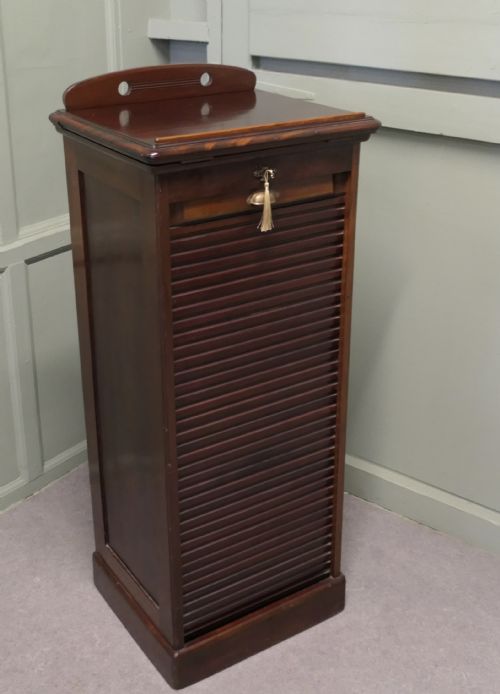
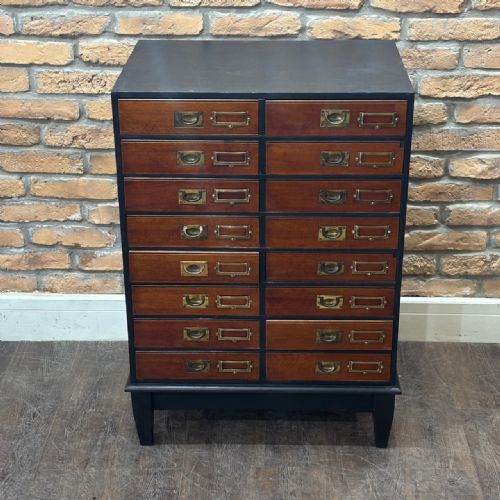
Functional metal components such as brass handles, shell pulls, label holders, and iron mechanisms complement the timber frames. Tambour fronts incorporate flexible wooden slats running in recessed grooves to conceal internal shelving or filing compartments.
Listings feature woods including mahogany, oak, walnut, rosewood, teak, and hardwood, alongside brass, iron, and canvas elements.
Distinctions in construction and finish
The standard of a piece depends upon the selection of timber, the integrity of the drawer joints, and the retention of original hardware such as brass label holders and shell pulls. Fine examples display carefully matched wood grain and robust internal framing capable of withstanding heavy document storage.
Condition and originality dictate desirability, particularly regarding sliding mechanisms, tambour doors, and patent locking systems. Pieces retaining their fitted interior filing dividers, original polish, and manufacturer labels demonstrate superior preservation compared to heavily altered or restored items.
Victor Raulin
The Antique Filing Cabinet Wood Glossary
- Tambour
- A flexible sliding door made from narrow strips of wood glued to canvas or leather backing, allowing access to enclosed cabinet shelves. This mechanism saves exterior space by sliding around the sides of the cabinet rather than swinging outward.
- Cartonnier
- A piece of furniture fitted with tiers of open compartments or drawers designed specifically to hold loose papers, documents, or cardboard document boxes. These units frequently sit upon desks or form part of larger library bookcases.
- Plan chest
- A wide, shallow multi-drawer cabinet built to store architectural drawings, maps, and large sheets of paper flat. These substantial pieces utilise sturdy timber construction to support heavy loads of paper across wide drawer spans.
Antique Filing Cabinet Wood: Frequently Asked Questions
How do tambour doors operate?
Tambour doors consist of thin wooden slats attached to a flexible backing fabric that slides smoothly along a recessed track within the cabinet frame. This design conceals the interior compartments without requiring clearance for swinging doors in tight office spaces.
Over decades of use, the internal tracks require gentle cleaning and waxing to maintain smooth operation when sliding the door open or closed.
What documents fit into these cabinets?
These cabinets were originally manufactured to organise business correspondence, library index cards, sheet music, invoices, and architectural plans. The varied drawer depths accommodate everything from small reference cards to large folded documents.
When living with these pieces today, users adapt the shallow drawers for modern stationery, letters, photographs, and desktop accessories.
How do I identify an Edwardian filing cabinet?
Edwardian filing furniture typically dates from the early twentieth century, showcasing lighter timber tones such as fumed oak, polished mahogany, and satinwood inlay. These pieces frequently incorporate patent letter files, tambour shutters, and brass label holders suited for Edwardian office administration.
Comparing the hardware styles and interior patent stamps helps distinguish these early twentieth-century designs from heavier Victorian pedestal units.
Are these cabinets suitable for modern home offices?
Wooden filing cabinets provide durable storage solutions that integrate easily into contemporary home studies and living spaces. Their traditional timber finishes and patinated brass hardware offer a warm alternative to modern metal office furniture.
Careful measurement of drawer interiors ensures that modern file folders and papers fit comfortably within the historic dimensions of the piece.