
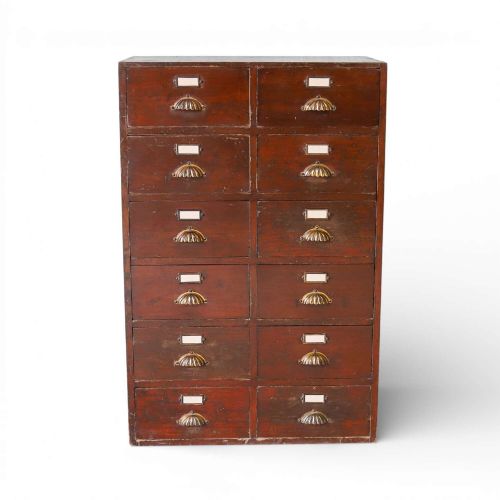

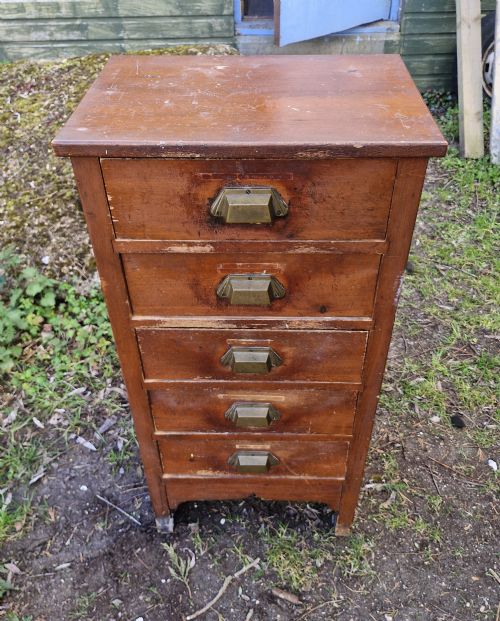


Brass Handle Bank Drawers
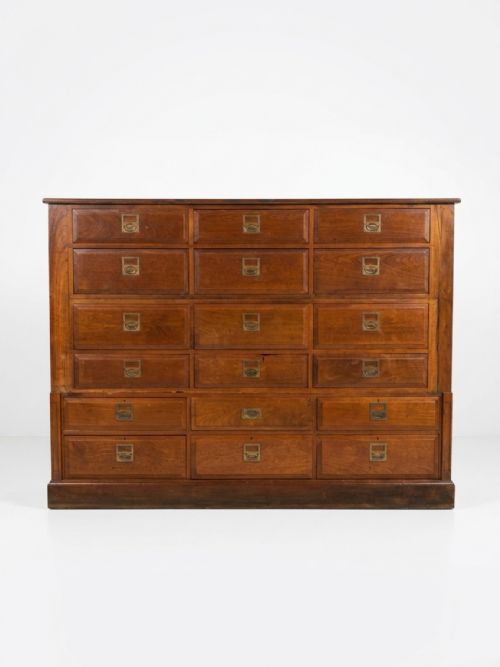
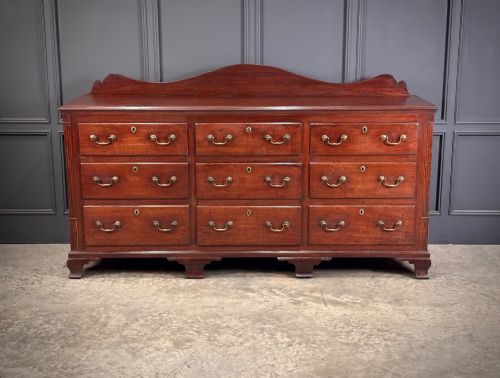
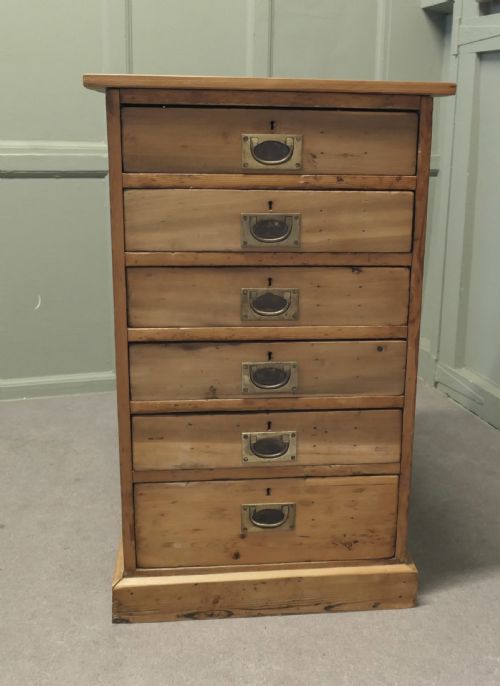
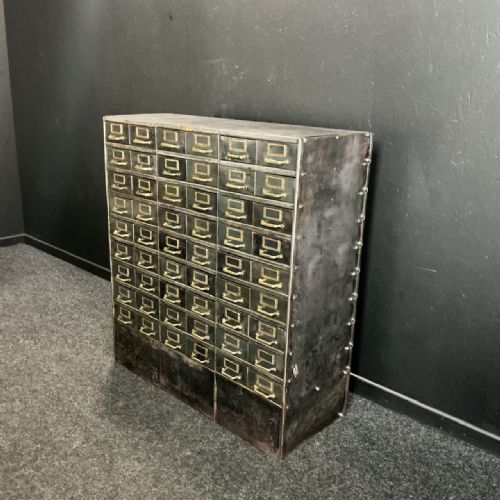
Brass handle bank drawers organise spaces with multi-drawer utility, combining robust timber construction with tactile metal hardware.
Brass Handle Bank Drawers
Brass handle bank drawers provide multi-drawer storage across several distinct forms, including filing cabinets, haberdashery units, and workshop banks. These pieces originate from periods spanning the eighteenth century through to the mid-twentieth century, encompassing Georgian, Victorian, Edwardian, and industrial eras.
Mahogany and pine dominate the material selection, alongside oak, walnut, painted wood, steel, and iron. Buyers frequently encounter pieces configured as shallow filing drawers, drapers counters, and compact chest formats fitted with original shell pulls or drop handles.
What varies in quality
Quality differences emerge in timber selection, grain figure, and the integrity of the original hardware. Finer examples feature dense mahogany or figured walnut timbers with intact, period-appropriate brass shell pulls and label holders.
Construction depth also dictates standing, with heavier architectural pieces and workshop banks demonstrating robust internal framing compared to lighter domestic adaptations.
Materials recorded across the inventory include brass, mahogany, pine, walnut, oak, painted wood, steel, and iron.
The Brass Handle Bank Drawers Glossary
- Bank of drawers
- A multi-drawer storage unit designed for commercial, office, or workshop organisation. These pieces typically feature numerous shallow or medium compartments arranged vertically or horizontally.
- Shell pull
- A stamped or cast brass handle shaped like a scallop shell, commonly incorporating a slot for a paper label. This hardware style appears frequently on filing cabinets and drapers furniture.
- Haberdashery cabinet
- A glass-fronted or multi-drawer display unit originally utilised in drapery and retail shops for small goods. Collectors value them for their extensive runs of small drawers.
- Filing cabinet
- An office furniture form engineered to hold documents, correspondence, or ledgers. Variants range from nineteenth-century pine systems to modular oak and mahogany designs.
- Drapers counter
- A long shop counter incorporating numerous drawers facing the assistant or customer. These items often feature a substantial timber top and brass drop handles.
Brass Handle Bank Drawers: Frequently Asked Questions
What rooms suit brass handle bank drawers?
These multi-drawer units fit well in studies, kitchens, and hallways where sorting small items is practical. Their timber surfaces and brass hardware complement both traditional and industrial interiors.
Positioning them against a wall provides stable storage without dominating the floor plan. The numerous drawers accommodate stationery, collections, and daily paraphernalia.
How do I care for antique timber?
Maintain the wood by applying occasional applications of quality beeswax to nourish the grain. Avoid placing pieces near direct heat sources to prevent timber splitting.
Dust regularly with a soft, dry cloth. Keep brass hardware clean using a dry cloth without harsh chemical abrasives.
Are these drawers suitable for modern paperwork?
Many historical filing drawers and cabinet formats accommodate modern paper sizes, though older configurations vary. A4 cabinets and specific office banks match contemporary filing needs directly.
Measure internal drawer dimensions before purchase if storing specific document formats. Shallow pine and mahogany drawers suit stationery and smaller items best.
How do I date a bank of drawers?
Dating relies on observing timber types, construction joints, and the style of the brass handles. Georgian and eighteenth-century examples display hand-cut dovetails and dense mahogany, while Edwardian and 1920s pieces often utilise oak or walnut.
Patent stamps, maker labels, and hardware designs offer further chronological clues. Industrial pieces from the early twentieth century typically combine heavy pine or steel with robust utility pulls.