
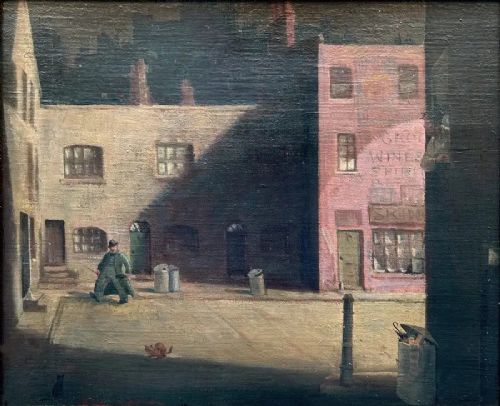
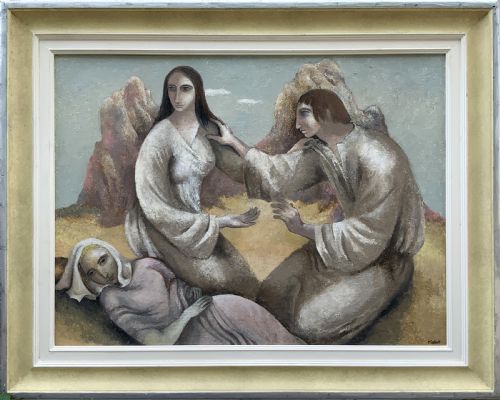
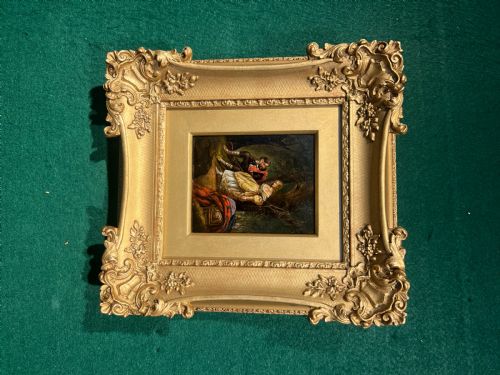
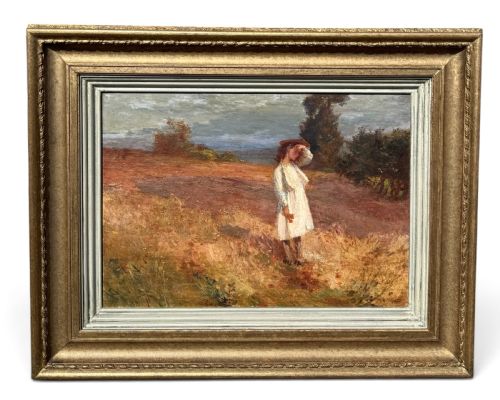
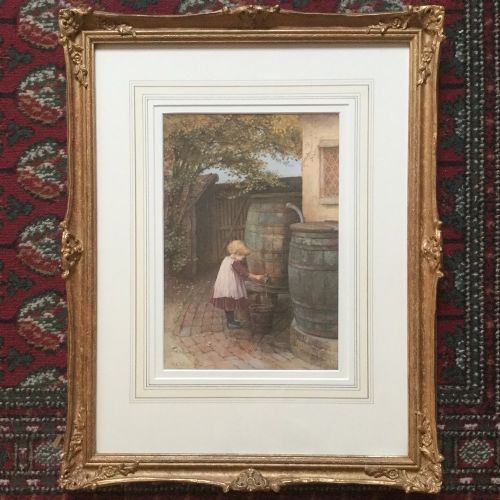


Antique Figurative Landscape Painting
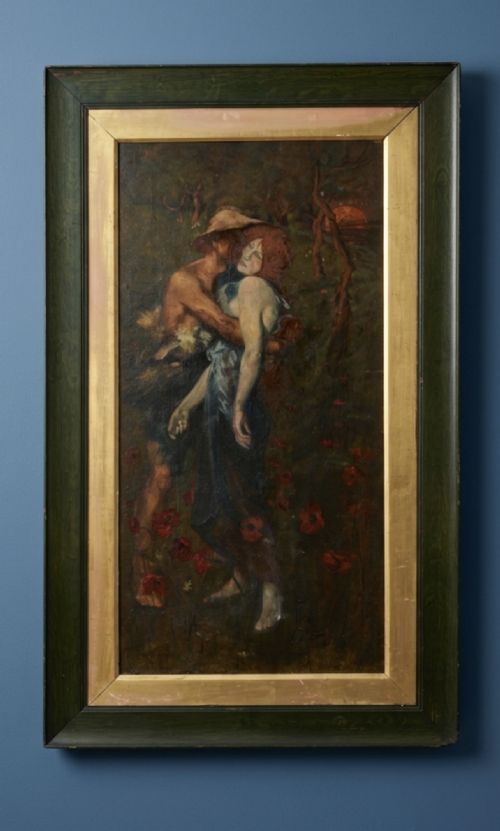
When you search for antique figurative landscape painting, you encounter works where human activity intersects with open countryside.
Antique Figurative Landscape Painting
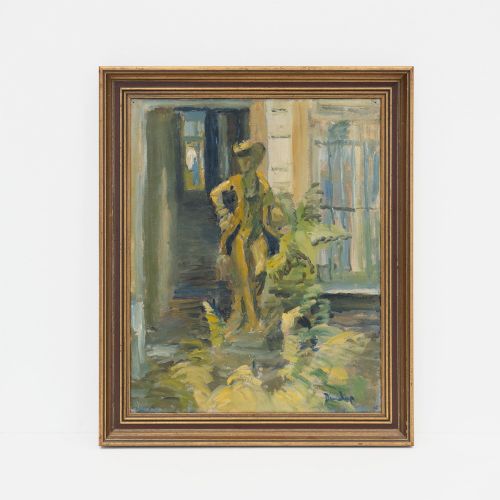
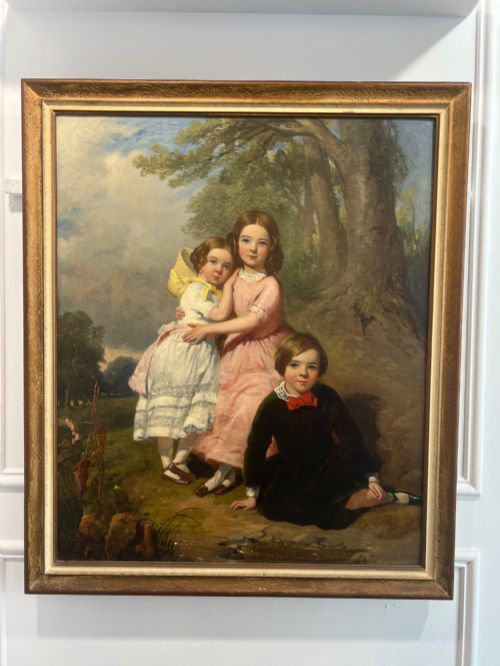
An antique figurative landscape painting places human figures within an outdoor setting, merging portraiture or genre scenes with natural scenery. These works span periods from the seventeenth century through the Victorian era and into the early twentieth century, taking the form of oil paintings and watercolours on canvas, wood, paper, and board.
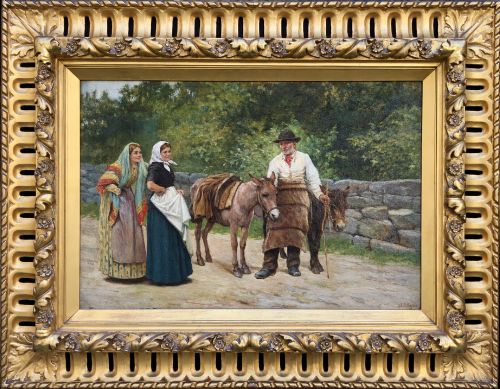
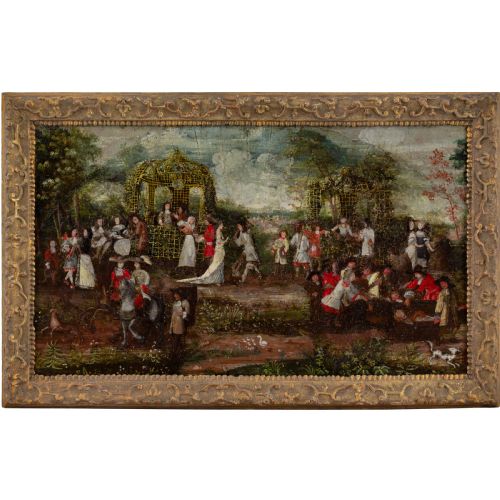
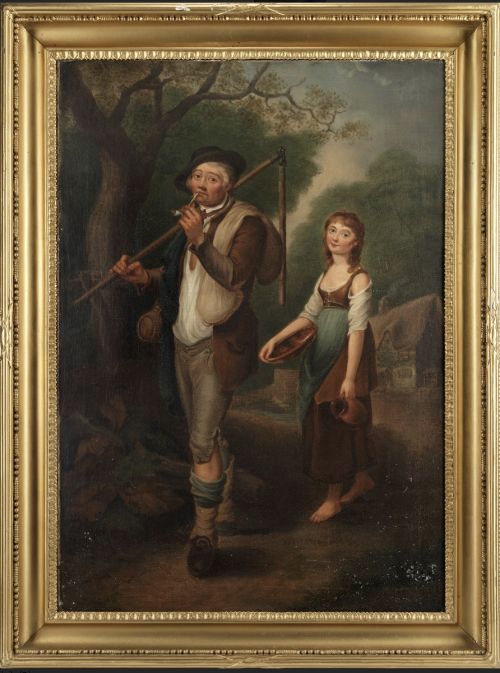
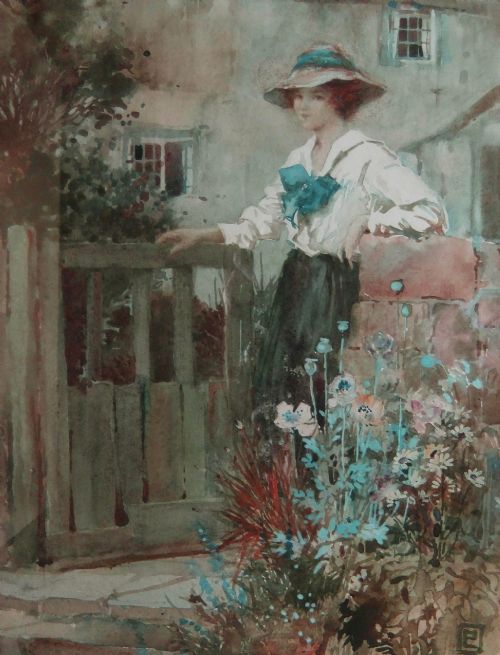
You are most likely to meet nineteenth-century and early twentieth-century examples on this page, including pastoral gatherings, coastal scenes, and cottage gates. Painters place shepherdesses, children, and courting couples against backgrounds of Flemish villages, British countryside, and seaside cliffs.
How they were made
Artists painted primarily with oil paint on canvas or wood panels, or applied watercolour pigment onto paper. Canvases received layers of oil medium to build depth in both the figures and the surrounding landscape, while watercolours relied on translucent washes on paper supported by glass and gilt wood frames.
Support materials range from stretched canvas and heavy paper to wooden panels and board. Many surviving works retain their original gilt wood frames, preserving the piece alongside nineteenth and early twentieth-century mounting traditions.
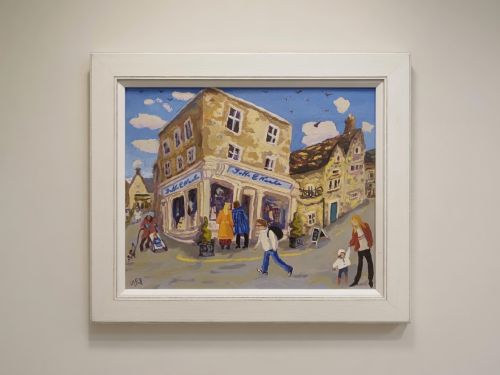
The inventory records diverse stylistic movements including Flemish Baroque, 19th Century Romanticism, Pre-Raphaelite, Impressionism, and British Impressionism.
What varies in quality
The distinction between standard works and exceptional examples lies in the handling of the human form relative to the scale of the landscape. Master painters integrate figures naturally into the lighting and atmosphere of the outdoor setting, whereas lesser works treat the figures and background as separate elements.
Brushwork precision and pigment preservation dictate the upper tier of the range. Works showing confident, loose application in Impressionist or Post-Impressionist styles contrast with tighter academic copies, while well-preserved oil on canvas pieces retain richer tonality than faded watercolours.
Thomas Barker of Bath·Francisco Sancha·Umberto Volpato·Charles Edward Wilson·Philip Richard Morris·Raymond Moritz·William Arthur Breakspeare·John Sanderson Wells·David Teniers II·Henry E Hobson·Jean-baptiste Joseph Pater·Rowland Henry Hill·Kershaw Schofield·Frank Hyde·Augustus Jules Bouvier·Thomas James Lloyd·Jane Maria Bowkett·George Kilburne·Frank Moss Bennett·David Woodlock·Linnie Watt
The Antique Figurative Landscape Painting Glossary
- Oil Paint
- A slow-drying paint made by mixing pigments with a drying oil, typically linseed oil. This medium allows artists to blend tones smoothly and build thick textured layers known as impasto.
- Watercolour Pigment
- Colour ground with a water-soluble binder, used on paper to create translucent washes. It requires precise brushwork because corrections are difficult to make once applied.
- Flemish School
- A group of artists working in Flanders during the seventeenth century, known for detailed genre scenes and landscapes. Their compositions often depict village life and rural gatherings with meticulous realism.
- Post-Impressionism
- An art movement extending roughly from the 1880s to the early twentieth century, focusing on symbolic content and expressive use of colour. Painters rejected the naturalism of impressionism in favour of bolder forms.
- Gilt Wood
- Wood carved and coated with a thin layer of gold leaf or gold paint. Frames finished in this manner were standard for nineteenth-century fine art.
Antique Figurative Landscape Painting: Frequently Asked Questions
How do I date an old landscape painting?
Dating relies on the style of clothing worn by the figures, the framing materials, and the canvas preparation visible on the reverse. Costume changes provide the most reliable chronological marker.
Technique and pigments also offer clues, as nineteenth-century academic works differ significantly in palette from early twentieth-century modernist or impressionist pieces.
Are watercolours as durable as oils?
Watercolours on paper are more sensitive to light and moisture than oil paintings on canvas or wood. They require protective glass and stable hanging conditions to prevent fading over the decades.
Oils tolerate environmental shifts better, though the underlying canvas or wooden panel still benefits from stable room humidity and indirect sunlight.
What is the difference between a genre scene and a portrait?
A genre scene depicts everyday people engaged in common activities, such as gathering berries, knitting outside a cottage, or walking by the sea. The focus is on the narrative and the daily life of the subjects.
Portraiture concentrates primarily on recording the specific likeness and identity of an individual, often with a simpler background rather than an expansive landscape.
How should I frame a nineteenth-century painting?
Retaining the period gilt wood frame that accompanies the piece preserves its historical context and appearance. These frames were designed specifically to complement the tones of the artwork.
If a piece lacks a frame, select a period-appropriate moulding that matches the artistic movement, such as an ornate Victorian style or a simpler Edwardian profile.