


1900s Framed Watercolour Art
These 1900s framed watercolour art pieces bring character to a room through delicate washes and period framing.
1900s Framed Watercolour Art
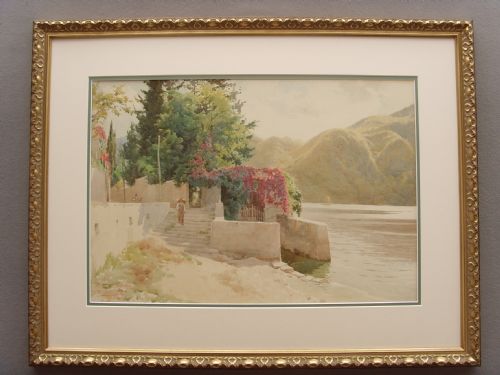
When you search for 1900s framed watercolour art, you are looking at works on paper executed with water-soluble pigments, generally housed behind glass in wooden or metal frames. The selection spans landscape scenes, rural subjects, animal studies, and portrait miniatures.
The pieces on this page originate from the Edwardian era, the late nineteenth century, and the early decades of the twentieth century. They include works by identified British, Irish, and European painters working in pastoral and domestic genres.
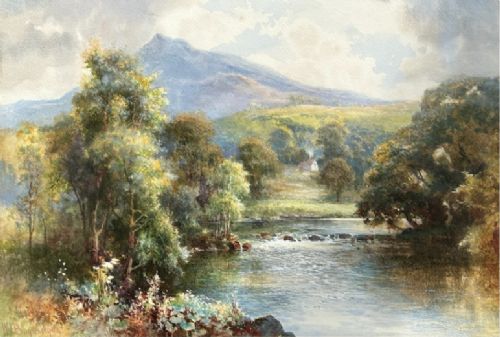
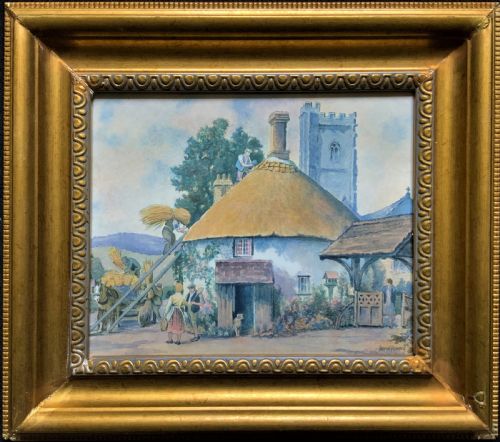
Common subjects range from Welsh river views and hunt packs to fenland folk and intimate portraits of young girls or domestic animals. Most examples present the original housing contemporaneous with the painting.
How they were made
These works rely on watercolour pigments applied to paper supports, occasionally supplemented with gouache for opaque highlights. Artists utilised fluid washes to capture atmospheric light in landscapes and precise brushwork for portrait miniatures.
Framing typically involves timber mouldings, sometimes enhanced with gold leaf or gilt finishes, protecting the delicate paper surface beneath glass. Miniature portraits frequently feature fitted metal enclosures such as silver frames.
The selection includes Edwardian pastoral scenes, Victorian animal paintings, and early twentieth-century portraits.
What varies in quality
The distinction between standard and superior pieces rests on the sureness of the brushwork and the handling of light. Stronger works demonstrate confident draughtsmanship and careful composition rather than mechanical execution.
Condition of the paper and the integrity of the original frame also influence the character of an artwork. Fading from light exposure and the presence of foxing spots affect the visual balance of the painted surface.
William Joseph Boyes·Arthur Wardle·Rowland Henry Hill·Alfred Grey RHA·Thomas James Lloyd·AJ Thornton·R Lauritsch·David Heward
The 1900s Framed Watercolour Art Glossary
- Watercolour
- A painting method where fine pigment is suspended in a water-based solution and applied to paper. This medium allows for transparent washes and luminous colour effects.
- Gouache
- An opaque water-based paint containing pigment mixed with a binding agent and white filler. It provides solid areas of colour and sharp highlights in works on paper.
- Portrait Miniature
- A small-scale painted likeness, often executed on ivory, vellum, or paper. These intimate works were frequently mounted in protective cases or metal frames.
- Foxing
- Brown spots or discolouration that develop on old paper due to chemical reactions over time. It is a common occurrence in antique works on paper.
- Gilt
- A thin layer of gold or gold-like material applied to wood or metal frames. It adds a reflective border that frames the artwork.
1900s Framed Watercolour Art: Frequently Asked Questions
How do I date these watercolours?
Dating relies on signatures, dated inscriptions on the reverse, and stylistic markers of the period. Costume, framing types, and artist biographical records also help narrow down the decade.
Paper characteristics and pigment usage further indicate the era in which the artwork was produced.
Are these watercolours original paintings?
Yes, the listings here consist of original hand-painted works rather than modern reproductions. Each piece shows the distinct brush texture and individual application of pigment unique to painting.
Close inspection reveals the subtle variations in tone that distinguish a direct painting from a printed copy.
How should I hang them at home?
Watercolours are sensitive to direct sunlight, which can cause the pigments to fade over time. Hang them on interior walls away from bright windows and damp areas.
Maintaining a stable room temperature helps preserve both the paper support and the antique frame.
What subjects are most common?
Landscapes and pastoral scenes dominate the selection, often depicting rural life, rivers, and coastal views. Animal studies, particularly dogs and farm animals, also appear frequently.
Portrait miniatures offer a more intimate glimpse into the period through detailed depictions of individuals.