


Antique Figural Pedestal
An antique figural pedestal brings sculptural human and mythical forms directly into domestic display, holding lamps, planters and art.
Antique Figural Pedestal
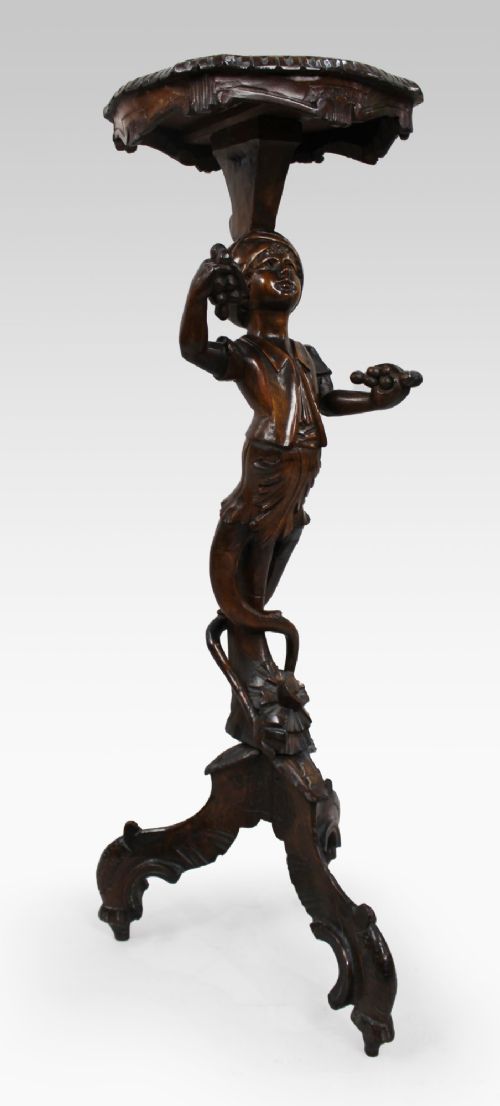
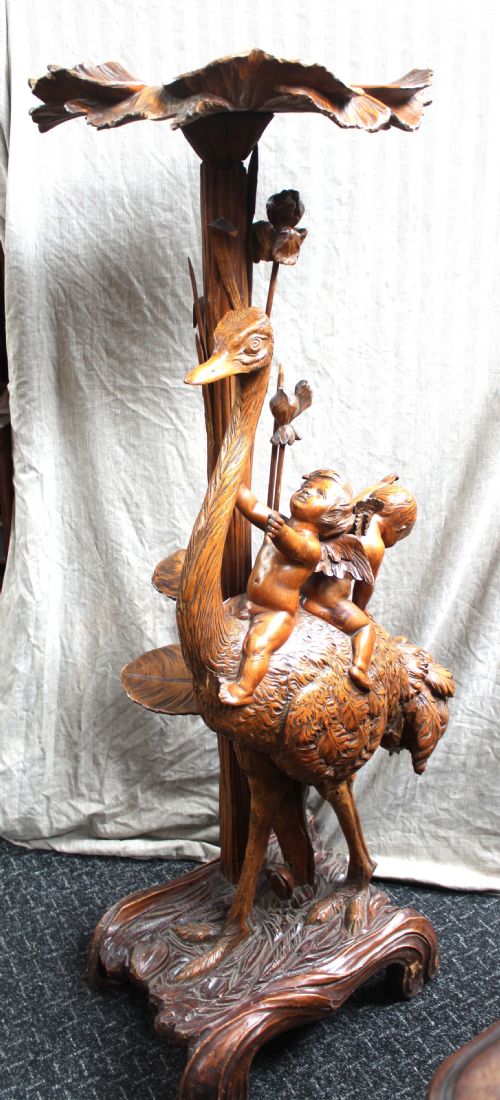
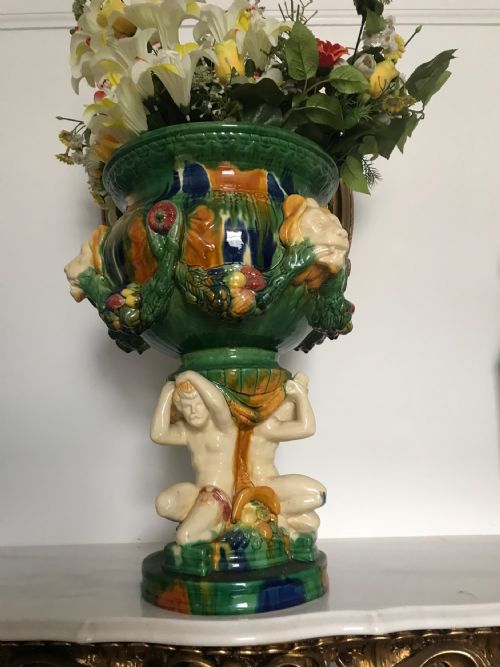
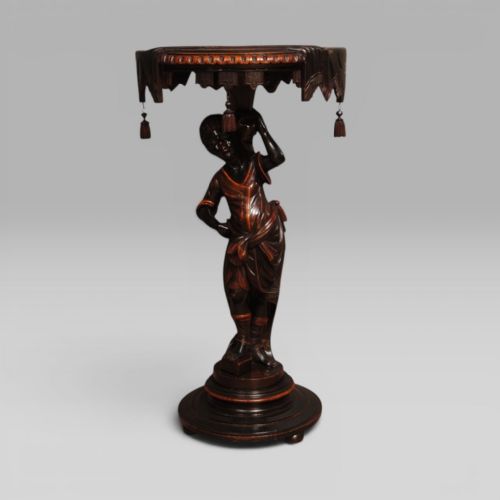
An antique figural pedestal combines structural support with carved or cast human, animal or mythical figures, acting as a stand for lamps, vases, and sculptures. You encounter these pieces executed in materials ranging from carved timber to cast bronze and ceramic, spanning the eighteenth, nineteenth, and early twentieth centuries.
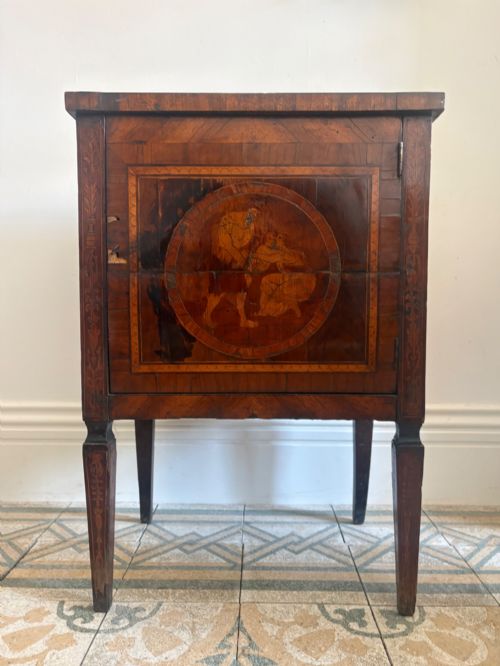
The form appears in various stylistic guises on this page, including Victorian, Neoclassical, Art Deco, and Venetian Baroque revivals. Makers utilised walnut, oak, marble, and earthenware to construct stands, torchères, and bedside tables where caryatids, putti, and regional figures support the upper tier.
Materials and construction
Artisans carved structural elements from hardwoods like walnut and oak, often combining them with cast metals such as bronze, spelter, and silver-plated alloys. Ceramic and earthenware components, notably majolica and porcelain, were moulded and hand-painted, sometimes paired with marble bases or glass elements.
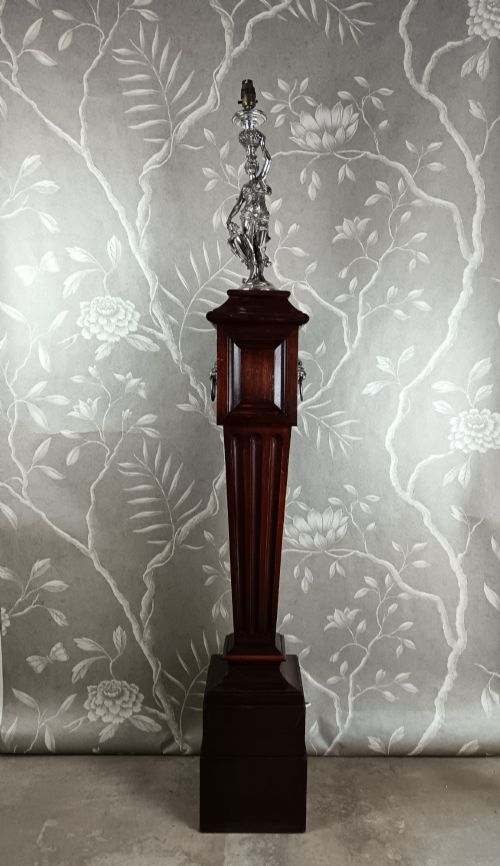
Techniques varied from traditional cabinetmaking and marquetry inlay to lost-wax bronze casting and polychrome paint application on carved timber. Metalwork pieces often integrated functional wiring for lamps or silver-plating over base metals.
Several figures hold shells, jars, or cart-pushing children, turning everyday furniture into miniature theatrical stages.
Factors of quality
Quality rests upon the crispness of the carving or the precision of the metal casting, where facial expressions and drapery folds remain sharp and expressive rather than soft or formulaic. The integration between the figural support and the load-bearing platform reveals the maker's structural competence.
Material selection further distinguishes the work, as dense marbles, substantial bronzes, and finely figured walnut outlast softer woods and fragile plaster compositions. Original surface patination, hand-painted detailing, and intact polychromy preserve the integrity of the piece.
WMF·F. De Luca·François-Christophe-Armand Toussaint·Minton·Albert Carrier
The Antique Figural Pedestal Glossary
- Caryatid
- A sculpted female figure serving as an architectural support in place of a column or pier. They appear frequently beneath the tabletops and torchères listed here.
- Torchère
- A tall ornamental stand or floor lamp designed to hold a light source. These pieces elevate figures holding Torches, lamps, or bowls.
- Majolica
- Opaque tin-glazed earthenware decorated with brightly coloured metal oxides. This ceramic technique provides the vibrant surfaces seen on large vases and planter bases.
- Spelter
- An alloy of zinc and lead cast into decorative figures and patinated to resemble bronze. It offered a more economical alternative to bronze during the nineteenth century.
- Marquetry
- The art of applying pieces of veneer to a structure to form decorative patterns. Craftsmen utilised this technique on the wooden bases and cabinets accompanying these stands.
Antique Figural Pedestal: Frequently Asked Questions
What holds up an antique figural pedestal?
Structural support comes from a carved wooden shaft, a cast metal column, or a ceramic base shaped as a human or mythical figure. These vertical supports distribute weight down to a flat plinth or foot.
The figures, whether caryatids, putti, or regional subjects, merge decorative sculpture with load-bearing engineering to hold lamps, plants, and vessels.
How do I place one in a room?
Position these stands in corners, hallways, or beside seating where the sculptural base remains visible from multiple angles. They function effectively as independent display points for smaller works of art.
Ensure the surrounding floor space accommodates the projection of the figural base, particularly pieces with extended limbs or wide torchère attachments.
Are these pieces wired for electricity?
Certain floor lamps and torchères include integrated electrical fittings from later adaptations or original manufacturing. Others began purely as stands or candleholders before receiving conversion.
Examine the wiring and consult a professional to ensure older electrical components meet modern safety standards before plugging them in.
How do I identify the period of a stand?
Dating relies on stylistic clues such as Neoclassical symmetry, Victorian ornamentation, or the geometric lines of Art Deco design. Materials like majolica, cast bronze, and specific hardwoods also correlate with nineteenth and early twentieth-century manufacturing.
Maker marks, signatures stamped into metal, and construction methods hidden beneath bases offer further chronological confirmation.
Can these stands support heavy items?
Timber and bronze versions generally offer high weight capacity for large vases, clocks, and heavy sculptures. Ceramic or plaster forms require more careful load assessment.
Check the stability of the base and the attachment point between the figure and the upper platform before placing substantial objects on top.