




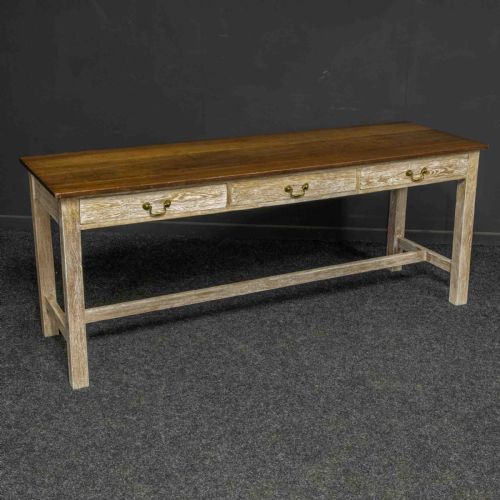
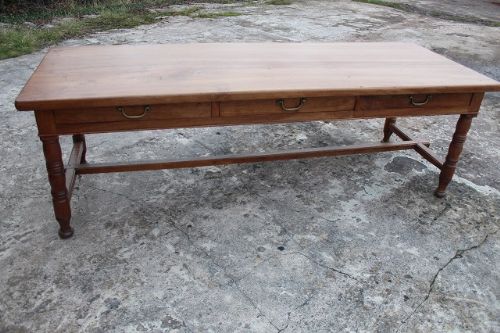
Antique Farm Table Drawer
An antique farm table drawer offers robust utilitarian storage built directly into domestic work surfaces of pine, fruitwood, and oak.

Antique Farm Table Drawer
When you search for an antique farm table drawer, you are looking at functional compartments integrated into the timber structures of nineteenth-century and early twentieth-century kitchen, dairy, and refectory tables. These pieces originate predominantly from the Victorian era and the broader nineteenth century, reflecting the practical needs of rural work spaces.
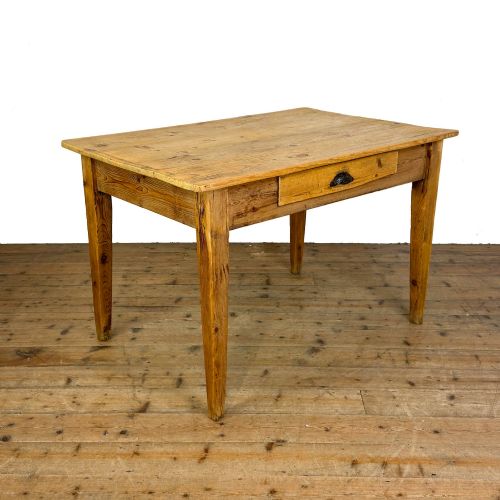
The version you are most likely to meet on this page is a single or multi-drawer pine kitchen or dairy table, often constructed with a solid scrub top and side or end drawers. These surfaces served heavy daily use in farmhouses, meaning the drawers themselves were built to hold utensils, linens, and dry goods close to hand.
Beyond pine, the evidence shows examples constructed from sycamore, elm, cherrywood, oak, and fruitwood, associated with styles ranging from rustic farmhouse and country to French provincial and Scandinavian country. Each piece demonstrates how utilitarian furniture adapted regional domestic habits through straightforward timber joinery.
What varies in quality
Quality in these pieces rests upon the selection of timber and the structural integrity of the drawer runners and frieze. Tables utilising denser hardwoods like oak, cherrywood, or fruitwood alongside pitch pine often display superior durability compared to lighter domestic variants.
The execution of the drawer housing and the retention of original brass or cast iron hardware distinguish finer examples. Furthermore, balanced proportions between the table top, the depth of the drawers, and the supporting legs determine the overall refinement of the piece.
Materials recorded across these listings include pine, brass, oak, sycamore, fruitwood, cast iron, elm, and cherrywood.
The Antique Farm Table Drawer Glossary
- Frieze
- The horizontal member running beneath the table top into which single or multiple drawers are frequently fitted. It provides structural stability to the frame.
- Scrub top
- A plain timber table top designed to be scrubbed clean with water and sand after heavy food preparation or dairy work. It is a common feature on nineteenth-century kitchen tables.
- Breadboard
- A board fastened across the end grain of a table top to prevent warping and movement in solid timber. This technique maintains the flat surface of large dining tables.
- Refectory table
- A long dining table traditionally used for communal meals, adapted in later periods into domestic kitchens and workspaces with integrated drawer storage.
Antique Farm Table Drawer: Frequently Asked Questions
What were farm table drawers used for?
These drawers served as practical storage spaces in busy domestic kitchens and dairies, keeping knives, linens, and small utensils immediately accessible during food preparation.
Because farm tables functioned as the central workspace of the home, having built-in compartments reduced clutter on the main timber surface.
How do I date an antique farm table?
Dating relies on observing the timber species, construction methods, and hardware style, with nineteenth-century pieces often showing hand-finished joints and native pine or fruitwood construction.
Changes in regional styles, such as Victorian proportions or French provincial details, also help place the table within a specific historical decade.
Are multiple drawers common on these tables?
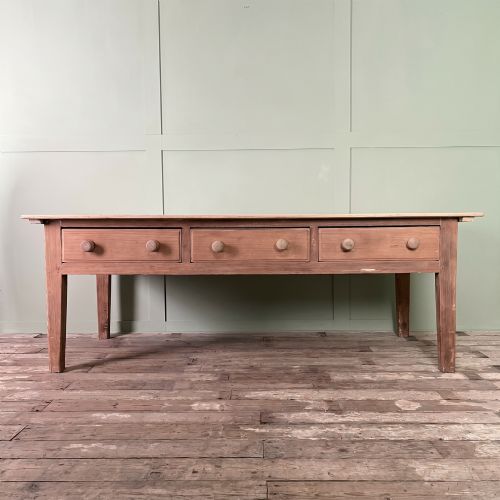
Single drawers positioned in the front frieze are typical, though larger tables frequently incorporate two or three drawers along the sides or at opposing ends.
The number of compartments usually corresponds to the overall length of the dining or kitchen table and its specific regional origin.
How do I care for a scrub top table?
Maintaining a historic timber top involves gentle cleaning with dry or minimally damp cloths to preserve the natural grain and historic patina of the wood.
Avoiding excessive moisture protects both the table surface and the sliding mechanism of the integrated drawers underneath.