




Antique Fan Fire Screen
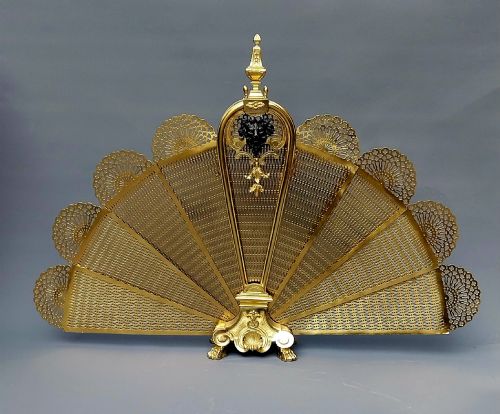
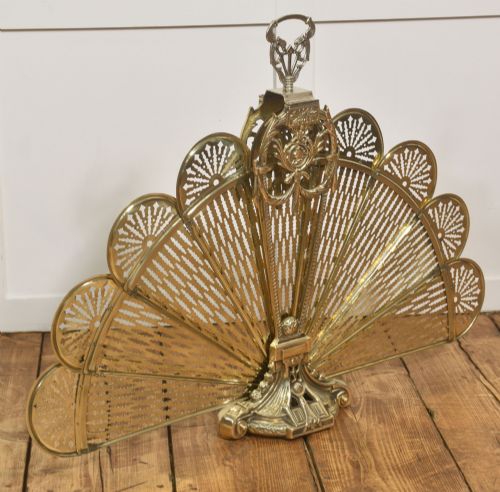
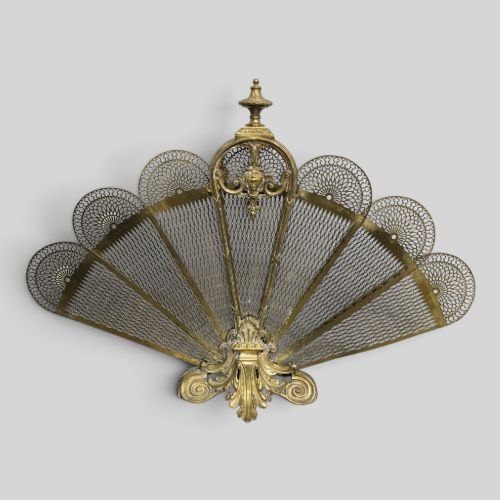
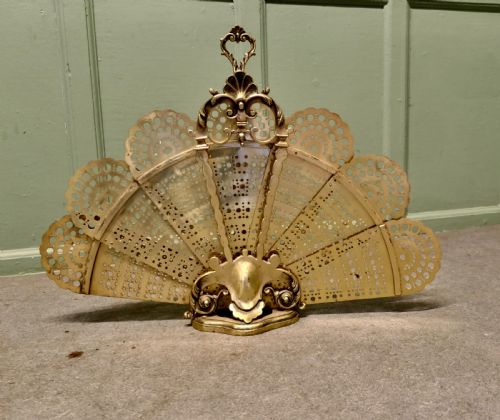
These antique fan fire screen pieces bring folding brass blades and gilt bronze frames to a hearth, offering both decorative movement and practical protection.
Antique Fan Fire Screen
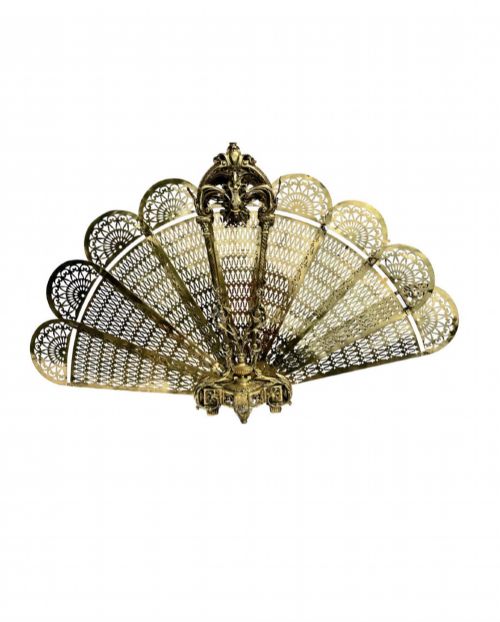
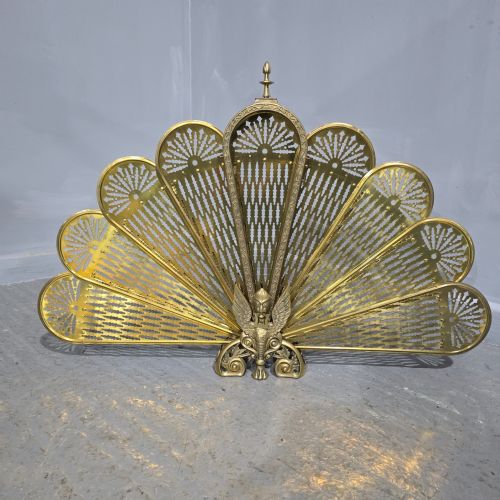
An antique fan fire screen is a hearth accessory designed with expanding blades of brass, wire mesh, or papier-mâché that open outward like a peacock tail. These folding guards protect a room from sudden sparks while dressing an empty fireplace during warmer months.
The versions most commonly met on this page span the Victorian era, the nineteenth century, and the early twentieth century. They take forms ranging from large floor-standing peacock screens to smaller handheld face screens made of papier-mâché with mother-of-pearl inlay.
Makers working in French Rococo Revival styles also produced ornate gilt bronze screens alongside utilitarian brass models. Buyers encounter everything from space-saving folding mechanisms to heavy cast brass frames designed to anchor a formal drawing room.
Materials and construction
These screens rely heavily on cast brass, gilt bronze, and wire mesh to form the expanding blades and structural mounts. Metalworking techniques allowed makers to stamp, pierce, and cast individual fan segments so they pivot smoothly on a central axis.
Alternative materials include papier-mâché paired with mother-of-pearl for handheld face screens, utilising layered paper pulp pressed into rigid panels. Frames combine articulated hinges with weighted bases to support the span of the metal or paper fan when fully opened.
Antique Fan Fire Screen Retail Price Guide 2026
Typical asking prices for fan fire screen among the pieces listed under this phrase on Sellingantiques today, from the lower quarter to the upper quarter. They describe what is for sale here now, not the wider market.
Materials documented across the inventory include brass, gilt bronze, wire mesh, papier-mâché, and mother-of-pearl.
Distinctions in quality
Quality rests in the weight of the metal and the precision of the articulating pivot mechanism. Superior examples utilise heavy gilt bronze or cast brass with finely pierced blades that align evenly when closed.
The refinement of the surface chasing and the crispness of the Rococo Revival casting separate standard production items from distinguished workshop pieces. Finer screens maintain rigid tension across every blade without sagging or binding at the joint.
Bouhon Frères
The Antique Fan Fire Screen Glossary
- Fire Screen
- A moveable barrier placed in front of an active or dormant fireplace to block excessive radiant heat or conceal the grate. They evolved into highly decorative furnishings during the nineteenth century.
- Peacock Screen
- A folding fire screen whose radiating metal blades resemble the fanned tail feathers of a peacock. This form gained immense popularity during the Victorian period.
- Gilt Bronze
- Metal cast in bronze and treated with a gold-coloured finish or mercury gilding. It provides a rich surface sheen associated with French decorative arts.
- Papier-mâché
- A composite material made from paper pulp mixed with glue and resin, pressed into moulds and hardened. It was frequently painted and inlaid with mother-of-pearl for Victorian face screens.
- Face Screen
- A small handheld screen used to protect a person's complexion from the direct heat of an open coal fire. They often match the decorative style of larger hearth screens.
Antique Fan Fire Screen: Frequently Asked Questions
What is an antique fan fire screen?
An antique fan fire screen is a hearth guard featuring articulated metal or paper blades that expand outward in a semicircular fan shape. They serve to shield a room from fireplace sparks and ornament the hearth when fires are unlit.
Most examples date from the nineteenth century and the early twentieth century, utilising brass, bronze, and papier-mâché. Their folding design allows them to retract into a compact footprint when not in use.
How do you open and close them?
These screens operate via a pivot hinge at the base where individual metal or wire mesh blades rotate outward. Users gently fan the blades apart until the locking stop or tension holds them in a full semicircle.
Care must be taken with older brass and paper examples to guide the blades evenly along their axis. Forcing a stuck hinge can warp the thin metal segments or strain the central pivot.
Where should I place a screen?
They sit directly on the floor in front of smaller register grates or open hearths to catch stray embers. Many owners also position them within decorative fireplaces during summer months to provide visual interest.
Smaller papier-mâché face screens are designed to rest on side tables or be held by hand near a heat source. Larger brass peacock screens function best as standalone floor pieces in a principal reception room.
How do I date a brass screen?
Dating relies on identifying the manufacturing style, material composition, and mechanical construction. Victorian and nineteenth-century models often feature heavier cast brass components and hand-finished pierced detailing.
Early twentieth-century versions, such as those from the 1920s, typically show more standardised manufacturing methods and lighter gauge wire mesh or stamped blades. Maker signatures or stamps, when present, provide a precise point of origin.