




Antique Family Portrait Painting
When you search for an antique family portrait painting, you find centuries of preserved lineages captured in oil, watercolour and silhouette.
Antique Family Portrait Painting
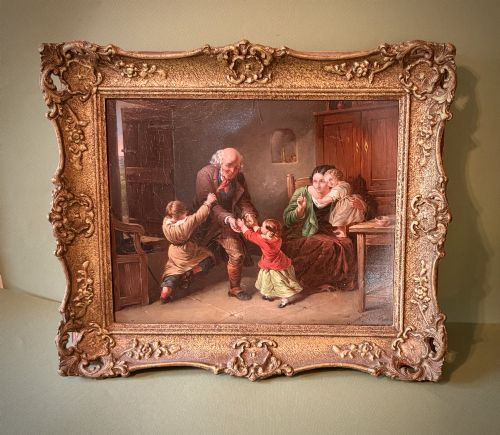
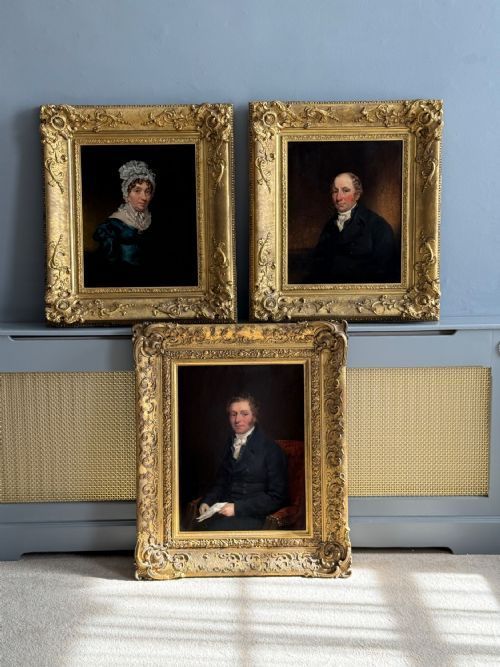
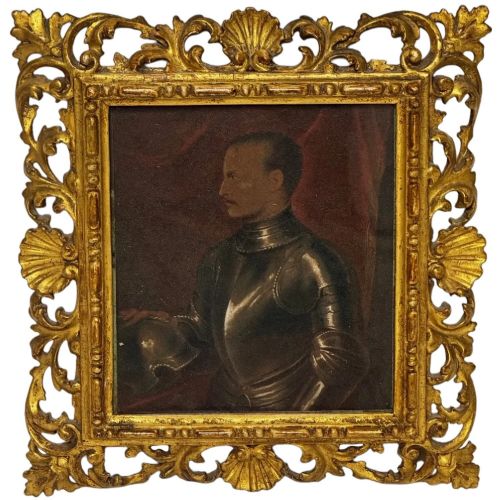
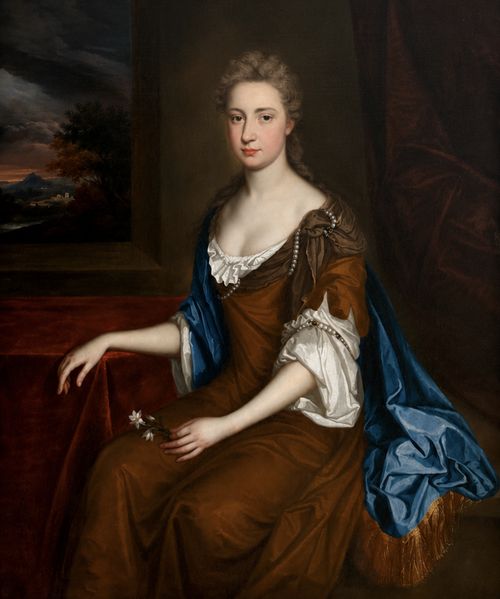
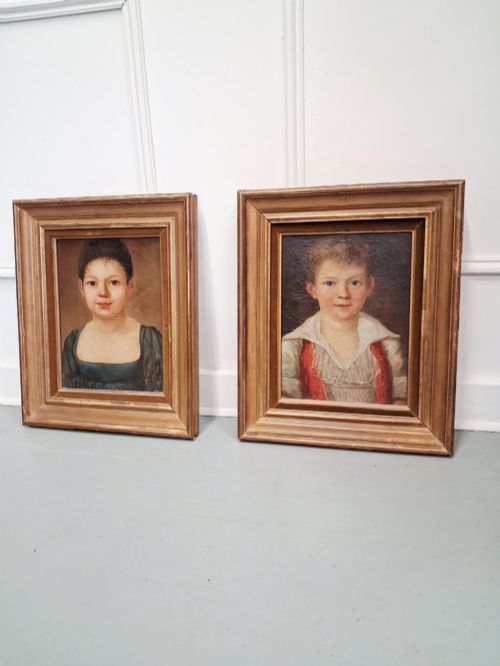
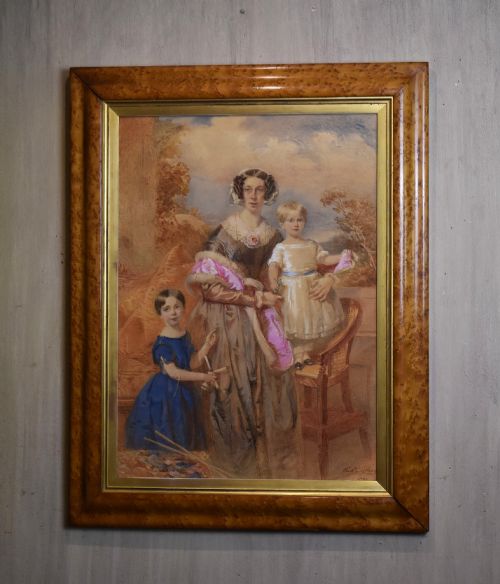
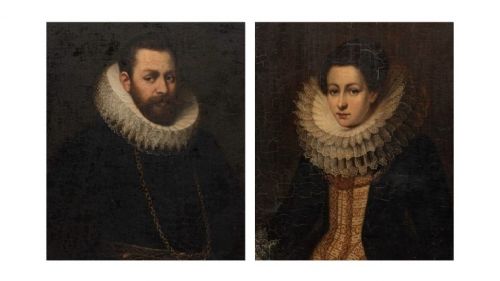
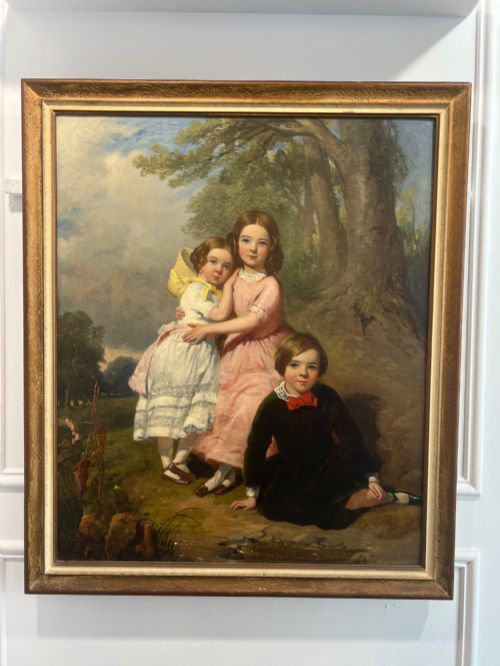
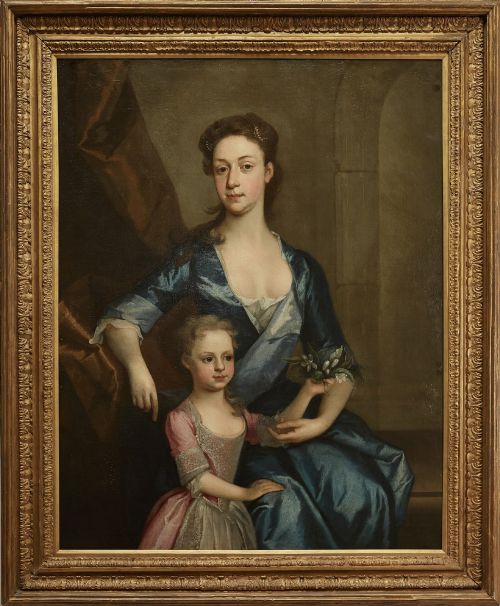
An antique family portrait painting records households from the seventeenth century onward, spanning grand oil canvases and modest watercolours. You encounter depictions of parents, children and siblings rendered in styles from Baroque and Georgian to Victorian folk art.
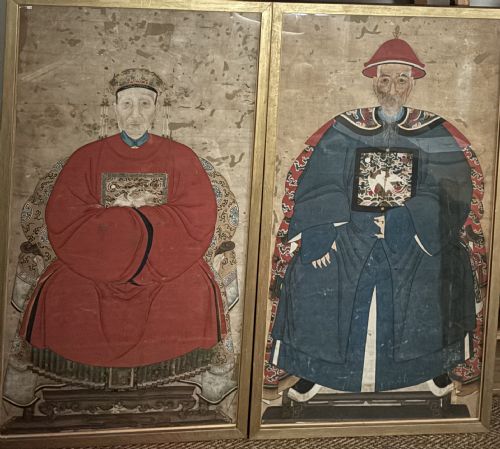
The pieces on this page range from intimate miniature watercolours to expansive group canvases set in country houses or gardens. Alongside British and Continental works, the selection includes Chinese ancestor paintings and Italian religious family scenes.
Many works capture specific lineages, such as the Markham, Greder or Dalbiac families, while others remain anonymous studies of children or sibling groups. They appear framed in period wood, giltwood or maple, preserving the original presentation of the domestic interior.
Assessing quality
Quality rests in the precision of the facial likeness, the handling of textiles such as ruff collars or silk dresses, and the anatomical accuracy of the subjects. Master painters achieve lifelike depth in the eyes and skin tones, whereas folk art and naive examples prioritise charming character over academic proportion.
The integrity of the original support and frame also determines the standing of a piece. Retained original stretchers, untouched canvas surfaces and period frames bearing maker plaques or inscriptions elevate the historical weight of the artwork.
Listings feature works spanning the 17th Century to the mid-20th Century, executed in oil, watercolour, and mixed media.
Joseph Clover RA·Frederick Tatham·Joseph Highmore·Charles Hayter·Hyacinthe Rigaud·Carl Adolf Mende·William Henry Knight·K and K Hof Atelier Pietzner·William Egley·George Engleheart·Alfred Darbyshire·Antonio Allegri·Leonardo Morello·Franz Xaver Winterhalter·Charles Philips·Michael Dahl·Hans Hysing·Kershaw Schofield
The Antique Family Portrait Painting Glossary
- Portrait Miniature
- A small, highly detailed painting executed on vellum, card or ivory, often framed for personal or pocket wear. These works demand extreme precision from the artist using fine brushes.
- Giltwood
- Wood that has been coated with a thin layer of gold leaf or powder. This finish is commonly found on decorative frames from the eighteenth and nineteenth centuries.
- Oil on Panel
- A painting technique where pigments bound in oil are applied to a flat wooden board rather than canvas. Panels provide a rigid support favoured by earlier artists.
- Silhouette
- A solid dark profile image of a person cut from paper or painted on card, popular in the Georgian and Victorian eras. They offer an economical yet striking likeness.
- Provenance
- The documented history of ownership of an artwork tracing it from its creation to the present day. Clear provenance helps verify the identities of sitters and the attribution to an artist.
Antique Family Portrait Painting: Frequently Asked Questions
How do I date an antique family portrait?
Dating relies heavily on the clothing, hair styles and framing methods visible in the artwork. Written inscriptions on the reverse or accompanying documentation also help anchor the piece to a specific decade.
Comparison with documented works by known schools or artists provides further chronological context. Costumes changed rapidly, making collars and bonnets reliable indicators of the period.
What is the difference between oil and watercolour portraits?
Oil paintings on canvas or panel offer rich textures and deep colour layering suitable for grand formal commissions. Watercolours on paper provide a lighter, more intimate finish often used for domestic interior scenes.
Oils generally required more time and expense to produce, whereas watercolours and miniatures suited private family keepsakes. Both mediums have survived centuries when protected behind glass or in stable environments.
Where were these portraits displayed originally?
Wealthy families hung large oil portraits in the reception rooms, halls and galleries of country houses to display lineage and status. Smaller watercolours and silhouettes were kept in private drawing rooms, bedrooms or carried as miniatures.
Ancestor paintings served as focal points for family identity across generations. Their placement reflected the social standing and domestic habits of the household.
How should I care for an antique painting?
Keep paintings away from direct sunlight and sources of extreme heat to prevent the canvas or paper from drying out and cracking. Maintain a stable room temperature and avoid hanging pieces in damp areas.
Dust frames and glass gently with a soft, dry cloth without applying liquid cleaners directly to the surface. Professional conservators should handle any structural repairs or deep cleaning of the paint layer.