


Antique Famille Rose Lighting
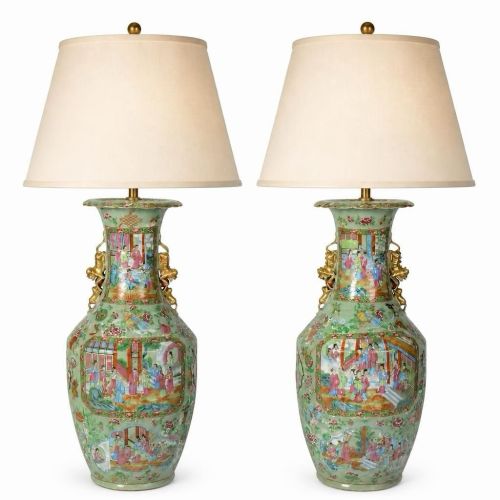
Antique famille rose lighting transforms hand-painted Chinese porcelain vases into practical lamps, bringing vibrant floral enamel palettes into modern rooms.
Antique Famille Rose Lighting
When you search for antique famille rose lighting, you find porcelain vessels adapted into table lamps, often paired with fabric or silk shades. These pieces emerge from the nineteenth and early twentieth centuries, spanning periods from the 1800s through the 1920s.
The most common forms on this page are pairs of table lamps converted from vases, ginger jars, and oil lanterns. Originating from Chinese export workshops and Cantonese traditions, these items showcase styles such as Qing Dynasty, Chinoiserie, and Victorian Chinoiserie.
Buyers encounter single lamps alongside balanced pairs mounted on brass, gilt bronze, or ormolu bases. The underlying ceramic bodies typically feature traditional vase shapes, baluster silhouettes, and rose medallion motifs.
How they were made
Artisans built these items using porcelain bodies decorated with enamel paints, dominated by the characteristic pink or rose palette of famille rose and famille verte. These ceramic forms were frequently imported from China during the nineteenth century and later fitted with electrical or oil-burning mechanisms.
Metal mounts in brass, ormolu, and gilt bronze were often added to secure the porcelain and elevate the height of the lamp. Fabric and silk shades complete the construction, complementing the detailed enamel work on the ceramic surfaces.
Styles represented on this page include Chinoiserie, Chinese Export, Qing Dynasty, and Victorian Chinoiserie.
What varies in quality
Quality in these porcelain lamps rests upon the precision of the hand-painted enamels and the crispness of the ceramic moulding. Finer examples display meticulous detail in the floral and figurative motifs across the vase surface, whilst simpler pieces show broader brushwork.
The integration of the metal mounts also distinguishes the range. Heavy ormolu and brass fittings that complement the proportions of the porcelain body elevate the overall standard compared to simpler wooden or basic metal mountings.
The Antique Famille Rose Lighting Glossary
- Famille rose
- A ceramic palette defined by opaque pink or rose enamel colours introduced during the Qing Dynasty. This technique allows for subtle shading and intricate floral depictions.
- Ormolu
- Gilt bronze mounts used to decorate and support the base and rim of porcelain vessels. This material adds weight and a golden finish to the lamp structure.
- Ginger jar
- A wide-shouldered ceramic vessel originally used for storage, frequently converted into a lamp base. These jars often feature removable lids or fitted electrical stems.
- Rose medallion
- A specific style of Chinese export porcelain decoration divided into distinct panels filled with figures, birds, and flowers. The design relies heavily on pink enamel highlights.
- Chinoiserie
- European decorative style reflecting Chinese artistic influences, frequently seen in Victorian interpretations of imported porcelain. This aesthetic guides how the lamps integrate into Western interiors.
Antique Famille Rose Lighting: Frequently Asked Questions
Are these lamps wired for modern use?
Most of these porcelain pieces function as practical table lamps equipped with standard electrical fittings suited for contemporary homes.
Buyers should check individual listings to confirm the current wiring standard and plug type used on each lamp.
Do the lamps come with shades?
Several pieces include fabric or silk shades that complement the proportions of the ceramic bases. These shades soften the light cast by the lamp.
Other listings offer the porcelain vase body alone, allowing collectors to select their own shade.
How do I date a famille rose lamp?
Dating relies on the manufacturing period of the porcelain body, typically assigned to the nineteenth century or early twentieth century. Stylistic markers like Qing Dynasty designs help establish this timeframe.
Metal mounts added during conversion can also provide clues regarding when the vase was adapted into a lamp.
Can I find matching pairs?
This selection frequently includes balanced pairs of vase lamps sharing identical decorative motifs and colour palettes. These sets suit placement on matching side tables or mantels.
Single lamps also appear for buyers seeking an accent piece for smaller spaces.