




Antique Fabric Drop Table
An antique fabric drop table is a versatile nineteenth-century piece designed for needlework and small tasks, combining drop leaves with fitted internal storage.
Antique Fabric Drop Table
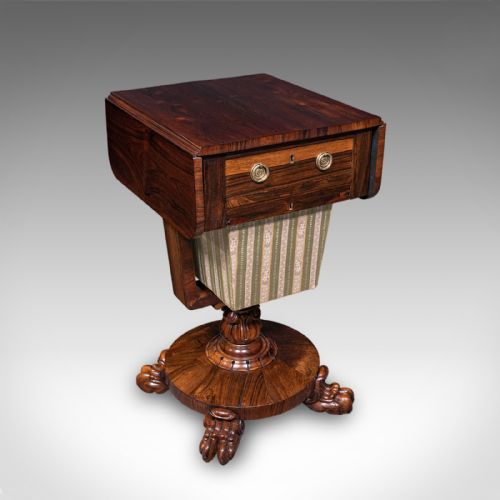
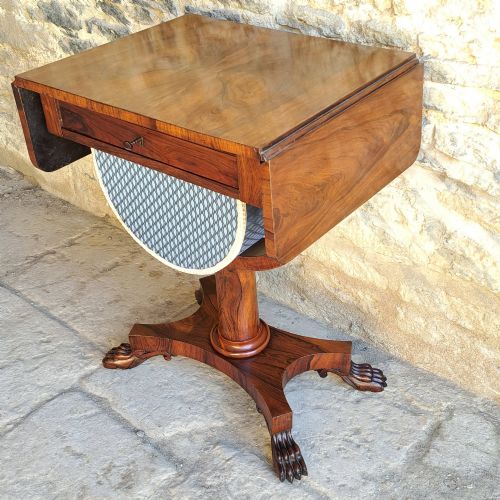
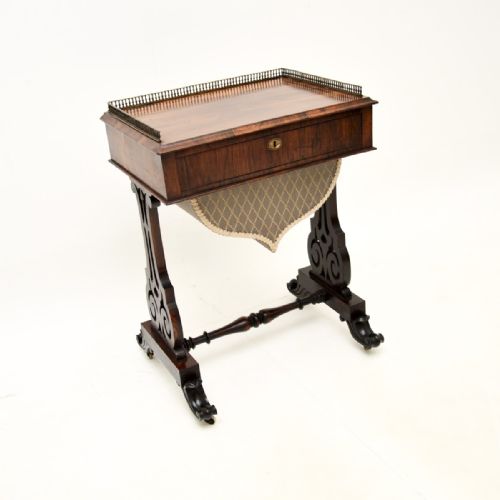
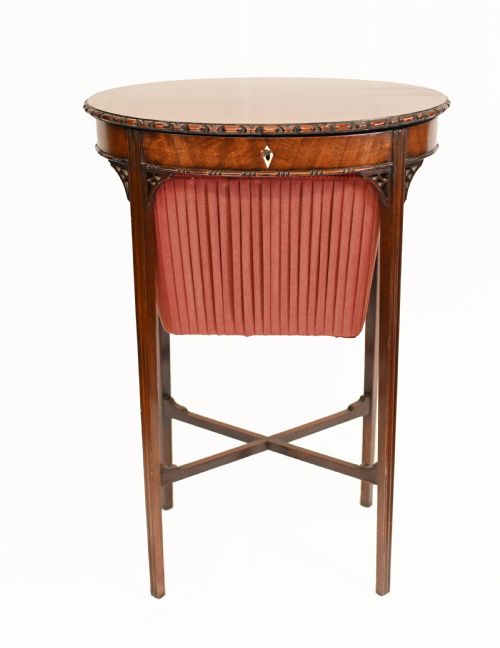
An antique fabric drop table is fundamentally a work or sewing table equipped with drop leaves and often a fabric basket or bag suspended beneath for textiles. These domestic pieces date predominantly from the Georgian, Regency, and Victorian eras, crossing periods such as William IV, George IV, and Edwardian production.
The versions most commonly met on this page are rosewood and mahogany sewing tables featuring hinged leaves, turned legs, and internal compartments. They served elite ladies for parlour hobbies, writing, and needlework, functioning simultaneously as occasional and side tables in period rooms.
Makers such as Gillows of Lancaster produced high-end examples in rosewood and pollard oak, while simpler vernacular pieces utilise mahogany or walnut. Alongside traditional sewing tables, related forms like sofa tables, side tables, and even occasional lamp tables appear within these listings.
How they were made
Cabinetmakers constructed these tables using solid hardwoods such as mahogany, rosewood, burr walnut, and pollard oak, frequently enhanced with decorative veneers and brass castors. Timber selection dictated the weight and visual richness of the frame, from figured mahogany to deeply grained burr walnut.
Drop leaves rely on hinged wooden flaps supported by pivoting wooden arms or rule joints to extend the surface area. Beneath the main drawer or compartment, textile bags and fabric wells were gathered on wooden frames to store sewing materials.
Many tables retain secret compartments hidden inside the sewing drawers for storing small thimbles and pins.
What varies in quality
The distinction between standard workshop production and master cabinetmaking lies in timber selection, such as richly figured rosewood versus plain mahogany, and the precision of the joinery. Premium examples display crisp carving on the pedestal supports and finely dovetailed internal drawers.
Fittings like original brass castors, functioning brass locks, and intact internal compartments elevate a piece significantly. The complexity of the sewing bag mechanism and the condition of the integrated textile components also distinguish finer parlour furniture from simpler utility items.
Gillows of Lancaster
The Antique Fabric Drop Table Glossary
- Drop leaf
- A table with hinged flaps on opposite sides that can be raised to enlarge the surface or lowered when space is restricted. These flaps are supported by swing brackets or wooden arms.
- Work table
- A small nineteenth-century table designed specifically for women's needlework, featuring compartments, drawers, and an attached fabric bag to hold sewing supplies. They are frequently synonymous with sewing or hobby tables.
- Pembroke table
- A small occasional table characterised by two hinged drop leaves on opposing sides and a single central drawer. They originated in the eighteenth century and remained popular through the Regency period.
- Sofa table
- A rectangular occasional table designed to stand in front of or beside a sofa, typically featuring drop leaves and a pair of small drawers. Regency versions often utilise twin pedestal ends joined by a central stretcher.
Antique Fabric Drop Table: Frequently Asked Questions
What is an antique fabric drop table used for?
These pieces were originally designed for ladies' needlework, sewing, and small writing tasks in the parlour.
Today, they function well as compact side tables, occasional lamp tables, or bedside stands in contemporary interiors.
How do I tell Regency from Victorian tables?
Regency tables typically feature cleaner classical lines, sabre legs, brass paw castors, and darkly figured rosewood or mahogany.
Victorian examples often display heavier proportions, carved pedestal bases, burr walnut veneers, and more ornate turnings.
What are the fabric bags made from?
The hanging compartments beneath the work tables utilise gathered textiles, silk, or velvet to store soft sewing materials.
Many surviving pieces have had their original fabric replaced during restoration while retaining the original wooden or wire gathering frame.
Are drop leaves sturdy enough for daily use?
The hinged leaves are supported by pivoting wooden brackets designed to bear moderate weight such as books or lamps.
Users should avoid leaning heavily on the extended flaps, as the rule joints and hinges are primarily intended for light domestic tasks.