

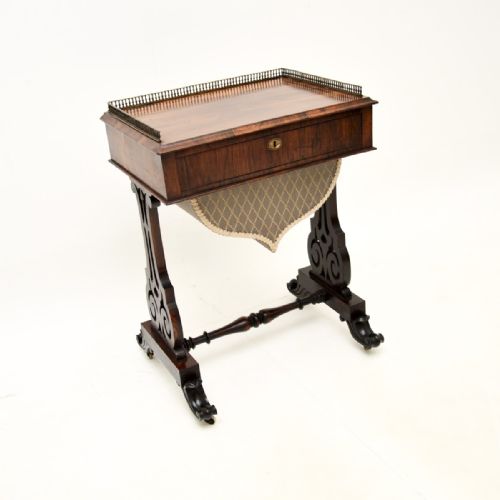


Antique Fabric Basket Table
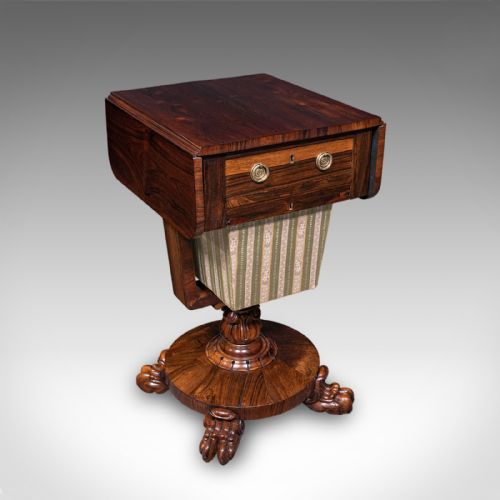
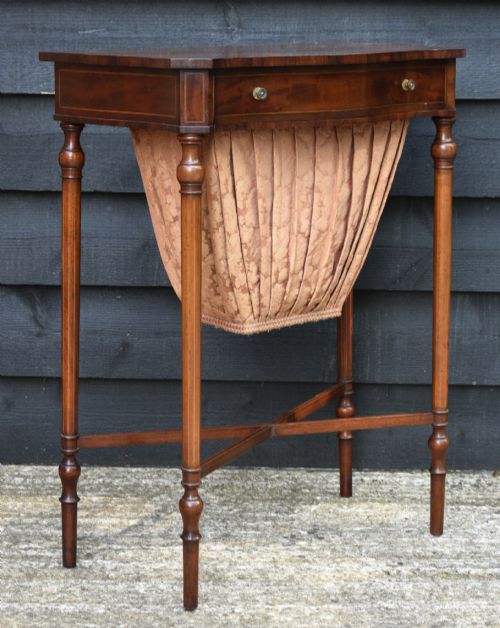
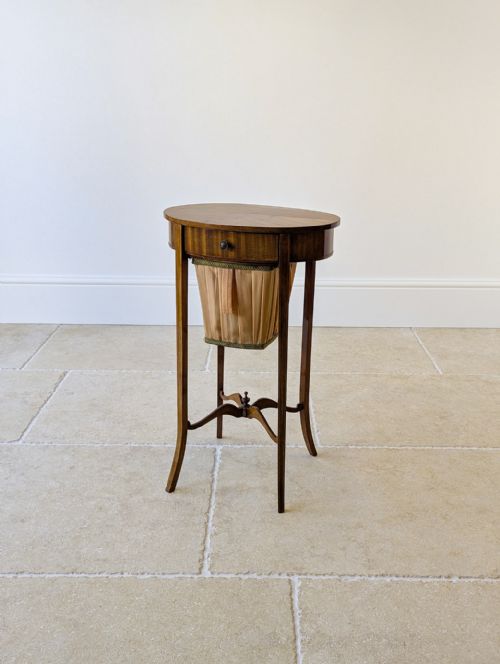
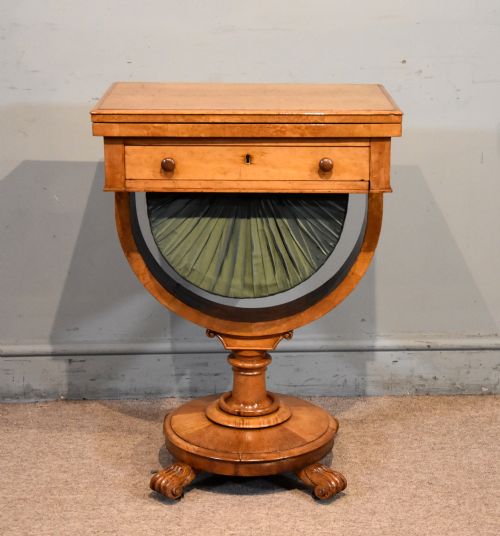
These antique fabric basket tables are clever parlour and needlework pieces designed to hold textiles and sewing equipment.
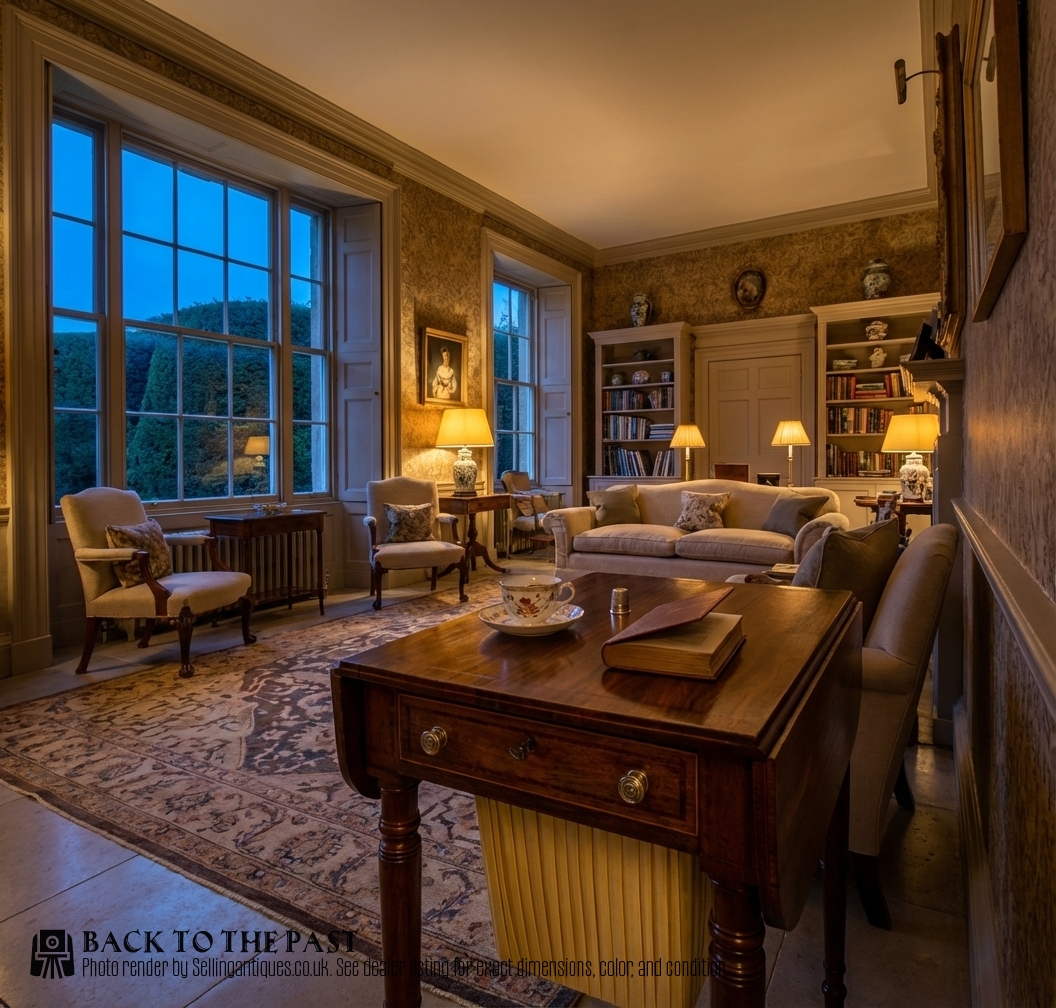
Antique Fabric Basket Table
An antique fabric basket table is fundamentally a work table, sewing table, or side table equipped to house needlework and domestic crafts. These pieces combine a rigid furniture frame with a suspended fabric bag or basket underneath to hold textiles.
The versions most frequently met on this page date from the Georgian, Regency, William IV, Victorian, and Edwardian periods. They appear in forms ranging from drop-leaf tables and Pembroke-style stands to circular lamp tables and lyre-ended designs.
Makers constructed these items to serve as functional hobby stands in the parlour or drawing room, where ladies kept sewing, mending, and needlework supplies close at hand. Many examples incorporate compartmentalised drawers above the fabric basket to organise smaller tools such as threads and needles.

Materials and construction
Cabinet makers utilised dense cabinet timbers such as mahogany, rosewood, burr walnut, satinwood, and maple to build the structural frames. These hardwoods provided the stability required for drop leaves, hinged lids, and pivoted drawer mechanisms.
The suspended receptacles combine wooden or brass framing with integrated fabric and silk components to create a soft pouch or basket. Joinery techniques included precise turning for pedestals, delicate inlay work, and robust framing to support the hanging compartments.
Antique Fabric Basket Table Retail Price Guide 2026
Typical asking prices for fabric basket table among the pieces listed under this phrase on Sellingantiques today, from the lower quarter to the upper quarter. They describe what is for sale here now, not the wider market.
Many a Victorian needlework table has spent more time holding television remotes than it ever did holding embroidery silk.
Assessing quality in these tables
The standard of a piece depends heavily on the selection of timber veneers and the crispness of the secondary carving or inlay. Finely figured rosewood, burr walnut, and satinwood distinguish superior examples from plain mahogany or standard wood constructions.
Internal joinery within the drawer compartments and the execution of the lyre ends or pedestal bases indicate the skill of the original workshop. The durability and neatness of the integrated fabric basket assembly also separate utilitarian items from finer parlour furnishings.
Gillows
The Antique Fabric Basket Table Glossary
- Work table
- A small movable table fitted with drawers and a fabric basket specifically designed for needlework and domestic crafts. These pieces were standard appointments in nineteenth-century sitting rooms.
- Drop-leaf table
- A table featuring hinged flaps on one or both sides that can be raised to extend the surface area or dropped down to save space. They frequently form the top surface of sewing stands.
- Lyre-ended
- A furniture support shaped in the classical silhouette of a Greek lyre, commonly utilised on the pedestals of Regency and William IV tables.
- Pollard oak
- Oak timber taken from trees that have been pollarded, producing timber with dense, speckled, knotty growth rings that create a highly decorative grain pattern.
- Satinwood
- A pale, hard timber with a natural sheen that takes a fine polish, frequently employed for stringing, banding, and detailed inlay work during the Edwardian era.
Antique Fabric Basket Table: Frequently Asked Questions
What is an antique fabric basket table used for?
These tables served primarily as dedicated workstations for ladies undertaking sewing, embroidery, and needlework in the home.
The suspended fabric basket held balls of yarn, scraps of cloth, and unfinished projects, while the upper drawers organised smaller implements.
How do I date a Regency sewing table?
Regency examples typically exhibit classical architectural motifs, such as brass paw feet, turned pillars, and lyre-ended pedestals.
Timbers from this era lean heavily towards dark mahogany and figured rosewood with minimal surface ornamentation.
Are Edwardian work tables different from Victorian ones?
Edwardian versions generally display lighter timbers like satinwood, alongside delicate stringing and serpentine outlines.
Victorian pieces tend to be heavier in proportion, often rendered in dark rosewood or burr walnut with robust turnings.
Can these tables function as side tables today?
Their compact proportions make them suitable as lamp tables or occasional side tables beside seating.
The enclosed storage and drawers remain practical for modern living spaces while retaining period character.