



Antique Export Watercolour
These antique export watercolour pieces are delicate historical paintings created in China for foreign markets, offering collectors a fascinating glimpse into past cross-cultural trade.
Antique Export Watercolour
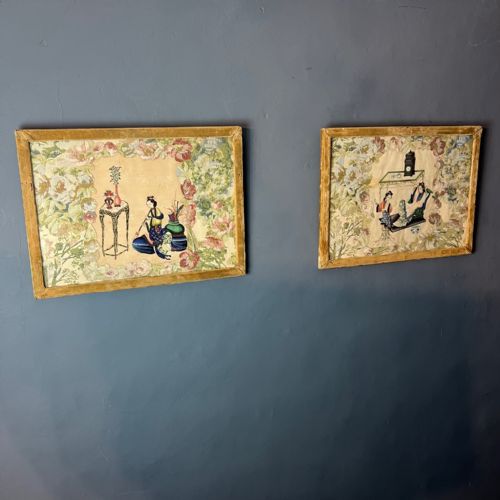
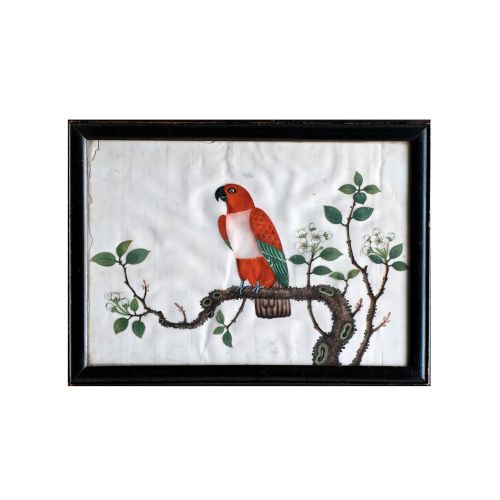
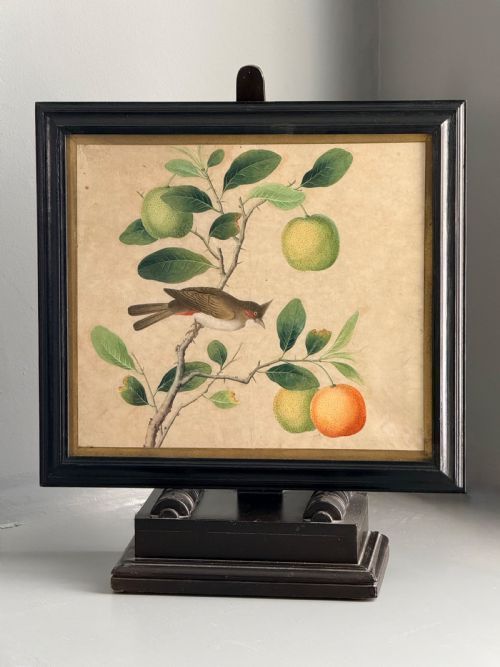
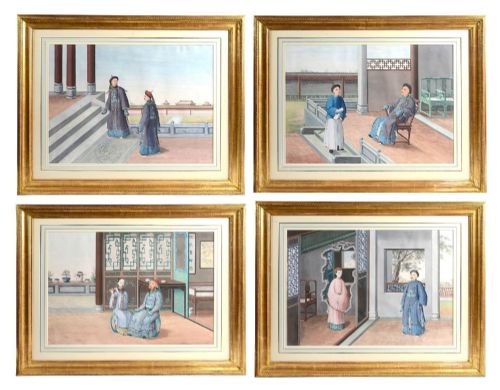
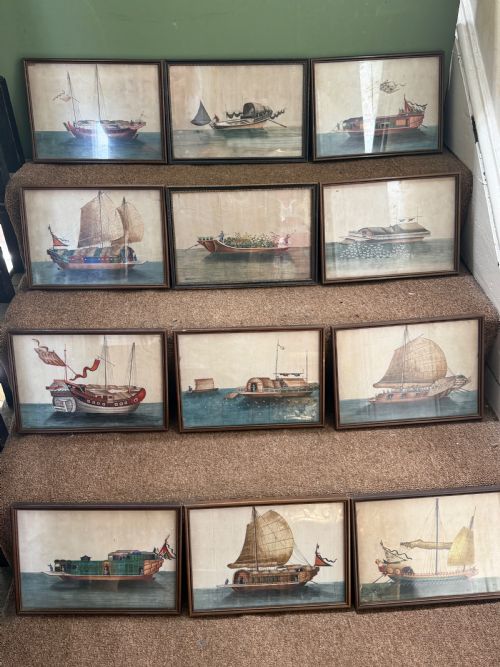
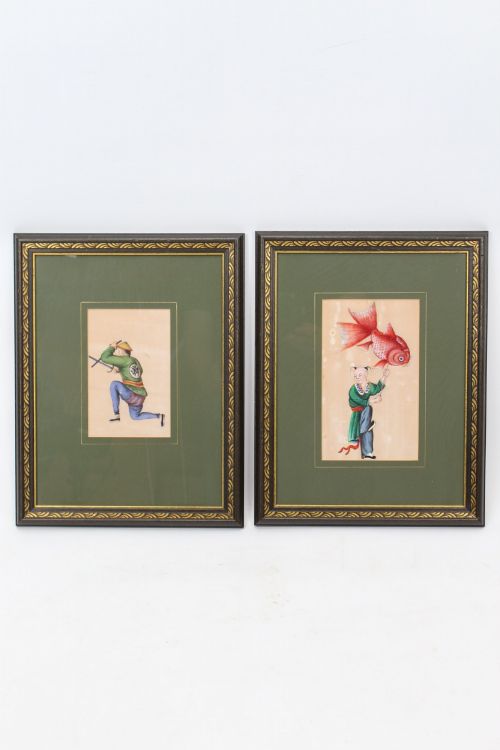
When you search for antique export watercolour, you encounter historic paintings produced in China primarily during the eighteenth and nineteenth centuries for Western buyers. These works document maritime scenes, native flora and fauna, and figural compositions meant for export abroad. On this page, you are most likely to meet framed paintings and sets executed on pith paper.
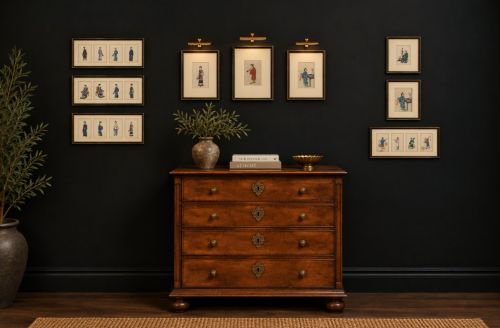
The objects span several distinct eras, including the Regency period, the late nineteenth century, and the Edwardian epoch. Many survive in sets, such as groups of twelve or twenty-one individual paintings, while others appear as pairs or singular framed artworks. Their primary forms include wall art and original framed paintings originating from Qing dynasty workshops.
How they were made
Artists created these works primarily using watercolour and gouache applied onto delicate pith paper, often mistakenly called rice paper. This cellular plant material takes pigment with a distinctive velvety depth and luminous quality that standard paper cannot replicate. Painters frequently mounted these fragile sheets onto backing paper to ensure stability during transport.
Framing often involves wood and glass, sometimes complemented by gilt wood surrounds to protect the light-sensitive pigments. The combination of water-based media on organic pith requires careful handling to preserve the vibrant hues of the original pigments over centuries.
Antique Export Watercolour Retail Price Guide 2026
Typical asking prices for export watercolour among the pieces listed under this phrase on Sellingantiques today, from the lower quarter to the upper quarter. They describe what is for sale here now, not the wider market.
Early artists occasionally painted busy harbours on fragile pith so thin it shimmers like silk when the light catches the frame.
What varies in quality
The distinction between ordinary and superior examples lies primarily in the precision of the brushwork and the complexity of the subject matter. Complex compositions featuring multiple figures, intricate butterflies, or detailed depictions of junks demand greater skill than simpler floral studies. Mastery of line and pigment layering dictates the visual impact of each painting.
Condition and completeness also govern the hierarchy of these works, particularly given the fragility of pith paper. Intact sets with uniform colour retention and minimal surface cracking command greater attention from collectors than fragmented or heavily faded groupings.
The Antique Export Watercolour Glossary
- Pith paper
- A delicate, spongy material cut from the pith of the Tetrapanax papyrifer plant. It was widely used in nineteenth-century Chinese export workshops as a painting surface.
- Gouache
- An opaque water-based paint composed of ground pigments and a binding agent, mixed with white to create solid, vibrant areas of colour.
- Qing Dynasty
- The final imperial dynasty of China, ruling from sixteen forty-four until nineteen twelve, during which export art flourished.
- Junk
- A traditional Chinese sailing ship with battened sails, frequently depicted in export paintings made for Western maritime merchants.
- Canton
- A major southern Chinese port city where much of the export art and trade with Western nations was centralised.
Antique Export Watercolour: Frequently Asked Questions
What is pith paper?
Pith paper is a delicate, spongy botanical medium harvested from the pith of a specific shrub native to southern China. Artists prized it for its unique ability to absorb water-based pigments with a velvety radiance.
Because the material is naturally fragile, surviving examples require protective framing under glass to prevent damage from handling and environmental changes.
How should I display them?
These watercolours must be displayed away from direct sunlight to prevent the organic pigments and pith paper from fading. Stable indoor humidity and temperature further protect the delicate media from deterioration.
Framing with UV-filtering glass provides an essential barrier against light damage while allowing the fine details of the brushwork to remain visible.
Why are they called export art?
Export art describes items manufactured specifically for foreign markets outside China, particularly in Europe and America, during the eighteenth and nineteenth centuries. These works often blended traditional Chinese painting techniques with subjects tailored to Western tastes, such as shipping and local flora.
Merchants and traders commissioned or purchased these pieces as souvenirs of their travels or as decorative items for Western homes.
How do I identify a Regency period piece?
Regency pieces date from the early nineteenth century and typically exhibit specific stylistic traits and framing methods characteristic of that era. Documentation or provenance associated with the set can also help confirm the manufacturing period.
Comparing the paper type, mounting style, and pigment characteristics with dated examples assists in narrowing down the age.