



Antique European Architectural Painting
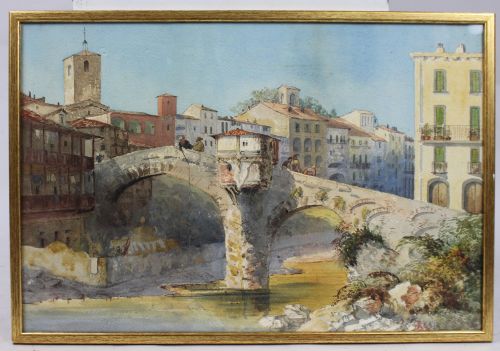
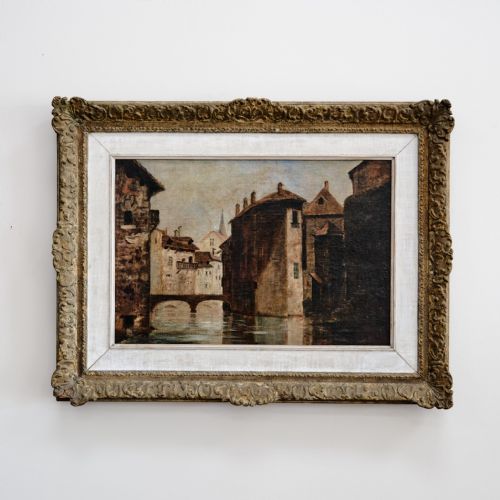
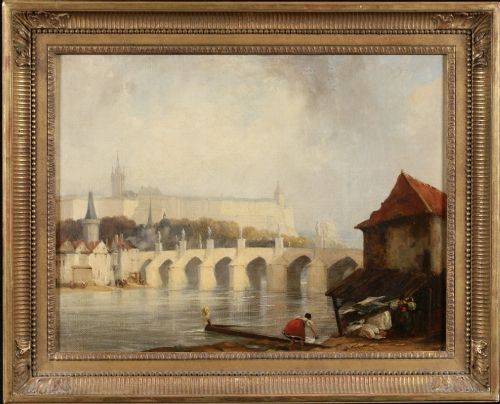
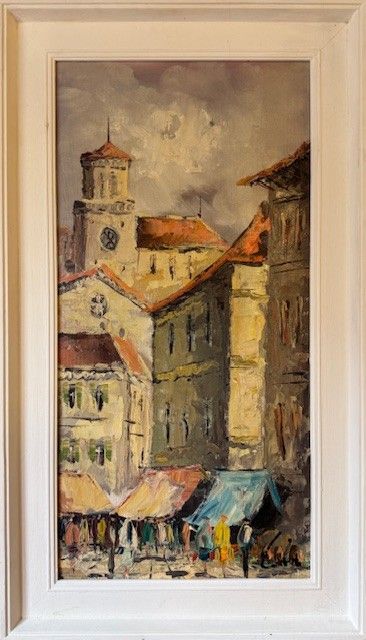
These antique european architectural painting works capture civic scale and masonry on canvas, offering a window into historic streetscapes and facades.
Antique European Architectural Painting
An antique european architectural painting represents civic buildings, cathedrals, bridges, and street scenes across various continental settings. The selection leans heavily towards nineteenth-century works and later twentieth-century interpretations.
Buyers encounter oil on canvas, oil on panel, and watercolour paintings depicting specific locations from Prague to Paris. These pieces document urban development and historic architecture through the eyes of period artists.
How They Were Made
Artists relied primarily on oil on canvas, oil on board, and watercolour on paper, often framed with gesso, giltwood, and gold leaf. The application of paint builds the texture of stone facades and shadowed archways.
Supports range from stretched canvas to wooden panels and heavy paper stock, determining how the pigment holds its depth over decades. Frames frequently incorporate period gilding that complements the painted subject.
One canvas captures a bustling saints procession in Bruges, inviting viewers right into a centuries-old crowd.
What Varies in Quality
The sophistication of perspective and the handling of light define the upper tier of these works. Masterful depiction of stone texture and atmospheric depth separates casual topographical records from compelling artistic achievements.
The integrity of the original surface and the harmony of the framing contribute significantly to a piece's visual impact. Finer works demonstrate a confident brushwork that brings static masonry to life.
Paul-Élie Gernez·Frederick Tully Lott·William George Meadows·Lewis J Wood·Joseph W. Milliken·Noel Harry Leaver·Franz Reder-Broili·Christiaan Pieter Snyders·Letitia Marion Hamilton
The Antique European Architectural Painting Glossary
- Oil on Canvas
- Pigment mixed with drying oil applied to a woven fabric support stretched across a wooden frame. This combination allows for rich blending and textured brushwork.
- Giltwood
- Wood carved and coated with gold leaf or a gold-coloured metallic finish. It frames many period paintings to enhance the overall presentation.
- Watercolour
- Pigments suspended in a water-based, translucent solution applied to paper. It creates luminous washes of colour suited for architectural detail.
- Gesso
- A paint mixture consisting of a neutral binder mixed with chalk, gypsum, or pigment. It prepares wooden panels and frames before gilding or painting.
- Impressionism
- A nineteenth-century movement characterised by relatively small, thin, yet visible brush strokes and an emphasis on accurate depiction of light. It informs several urban landscapes in this selection.
Antique European Architectural Painting: Frequently Asked Questions
What periods do these paintings cover?
The selection spans from the Georgian era through nineteenth-century works into mid-twentieth-century pieces.
Most examples cluster around the nineteenth century and the decades leading up to nineteen fifty, reflecting various regional schools.
How do I identify the location in a painting?
Many titles and inscriptions on the reverse or front reference specific European cities, cathedrals, and bridges.
Architectural landmarks such as Prague Castle or Notre Dame often provide immediate geographical context.
Are these works created on canvas or paper?
Both mediums appear across the selection, with oil on canvas being common alongside watercolour paintings on paper.
Some pieces utilise oil on panel or board to support the pigment.
How should I frame and display them?
Original giltwood frames often accompany these works, maintaining the period aesthetic.
Display them away from direct sunlight to protect the pigments on canvas and paper from fading.