
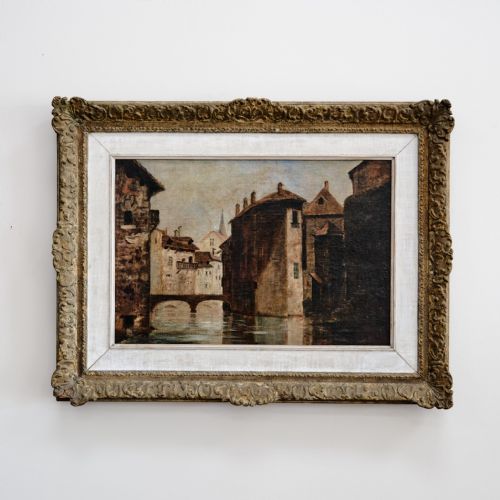
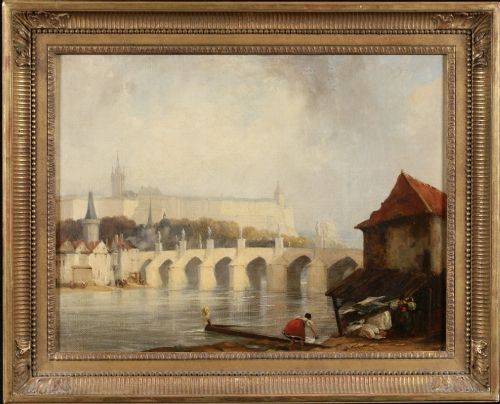


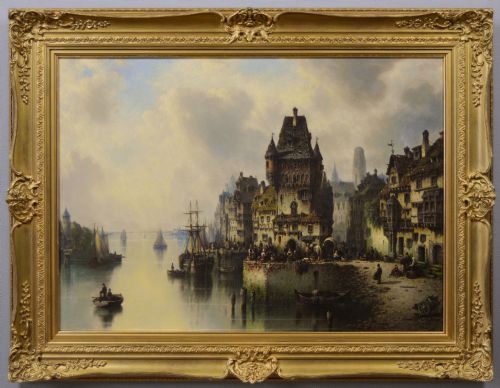


19th Century European Cityscape
These 19th century european cityscape works bring historic continental streets and harbours into a room through oil and watercolour.
19th Century European Cityscape
A 19th century european cityscape captures the architecture and daily life of historic towns, cities and ports across the continent. When searching this phrase, a buyer finds urban landscapes rendered through oil on canvas, oil on board and watercolour.
The versions most commonly met on this page span the Victorian and Georgian eras into the later 19th century. These works depict specific locations such as Prague, Bruges, Antwerp, Padua and various French and Dutch urban centres.
Makers and painters of the period recorded bustling harbours, grand cathedrals and quiet street scenes with careful perspective. Such pieces serve as historical windows into European urban development during the 1800s.
Materials and Techniques
Artists painted primarily with oil on canvas or oil on board, though watercolours on paper also appear. These mediums allowed painters to build rich layers of pigment representing stone facades, water reflections and overcast skies.
Many surviving works retain their original frames constructed from wood, gesso and gold leaf or giltwood. The combination of oil painting and ornate gilded framing reflects the standard presentation methods of the period.
Several canvases capture bustling historic crowds that have hurried through European cathedral squares for nearly two centuries.
Assessing Quality and Execution
Quality in these urban views rests upon the artist's command of perspective, architectural precision and atmospheric light. Finer works capture the bustle of a harbour or the intricate details of Gothic cathedrals with confident brushwork rather than rigid drafting.
The integration of the artwork with its period frame also influences the overall standard of the piece. Works that retain contemporary giltwood and gesso frames present a more complete historical object.
Frederick Tully Lott·William George Meadows·Lewis J Wood·Ludwig Hermann·Henry Schafer·Charles James Keats RBA
The 19th Century European Cityscape Glossary
- Oil on Canvas
- Pigment mixed with drying oil applied to stretched woven fabric. This combination provides durability and allows for subtle blending of tones across large urban scenes.
- Giltwood
- Wood carved and coated with thin layers of gold leaf or gold paint. Frames made from this material often exhibit intricate moulded ornamentation.
- Romanticism
- An artistic movement emphasising emotion, individualism and awe in nature and architecture. Paintings in this style often dramatise light and weather over city streets.
- Impressionist
- A style focusing on the accurate depiction of light and its shifting qualities. Such works prioritise overall visual effect over minute architectural details.
- Gesso
- A paint mixture consisting of a binder mixed with chalk, gypsum or pigment. It served as a smooth preparation base for wooden picture frames before gilding.
19th Century European Cityscape: Frequently Asked Questions
What subjects appear in these cityscapes?
These works typically show European urban views, including cathedrals, bridges, busy harbours and historic street scenes. Locations range from Prague and Bruges to Dutch and French towns.
Artists focused on recording the architectural character and daily activity of continental urban centres during the 1800s.
How do I identify the period?
Dating relies on stylistic clues, framing methods and recorded artist active dates spanning the Georgian and Victorian eras. Reference to specific schools, such as the French or Dutch school, also helps place the work.
Catalogues and signatures provide further confirmation of nineteenth-century origin.
Are these paintings framed?
Many examples retain period framing made from wood, gesso and gold leaf or giltwood. These surrounds often match the aesthetic of the 19th century.
Original or period-appropriate frames complement the architectural subject matter of the cityscape.
How should I care for an oil painting?
Protect the canvas or board from direct sunlight and extreme fluctuations in temperature and humidity. Dust the surface gently with a soft, dry brush without applying pressure.
Avoid using liquid cleaners on both the painted surface and the gilded wood frame.