

Antique Eternity Ring
An antique eternity ring is a continuous band of precious metal set with gemstones, prized for its unbroken circle of sparkle.
Antique Eternity Ring
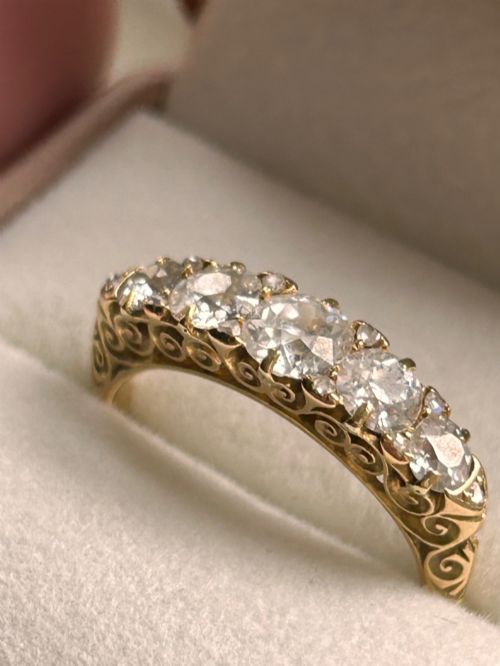
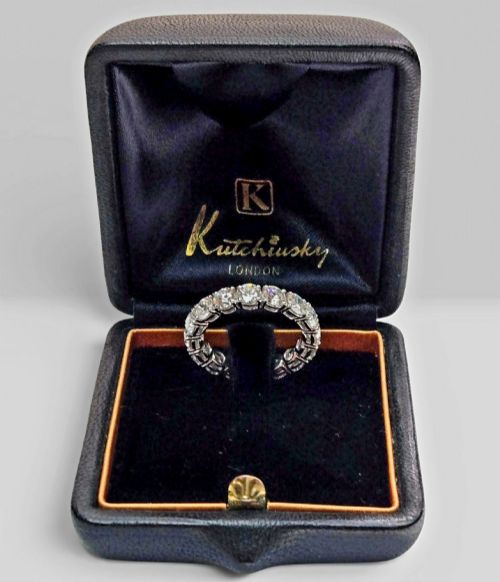
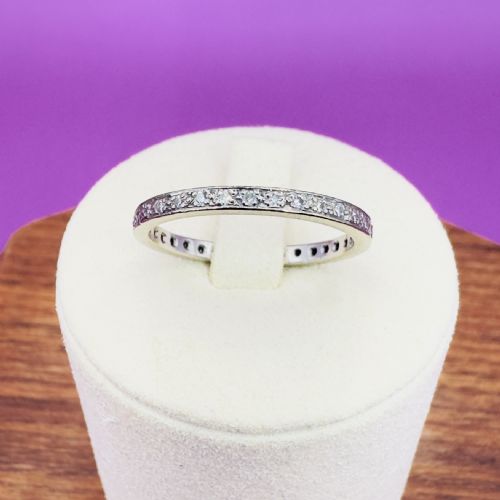
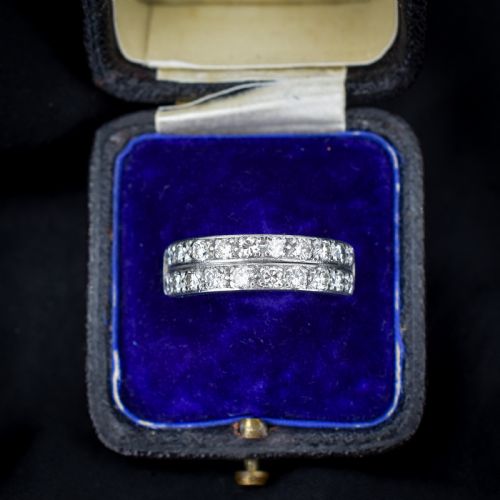
An antique eternity ring represents an unbroken circle of gemstones, most commonly diamonds, rubies, sapphires, or emeralds, set into a continuous band. These rings appear across periods from the Victorian and Edwardian eras through the Art Deco years and into the mid-century decades.
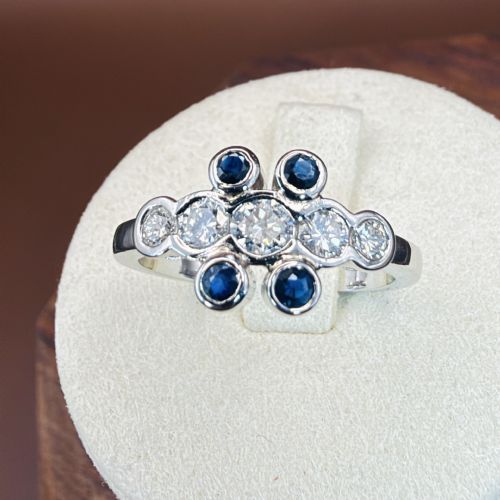
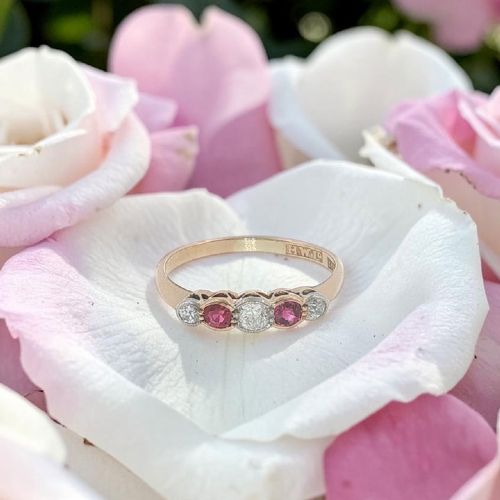
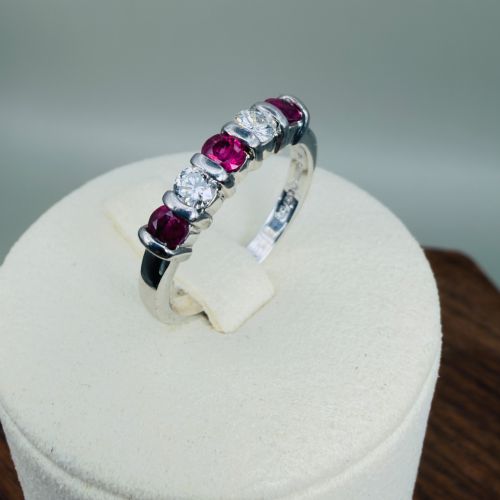
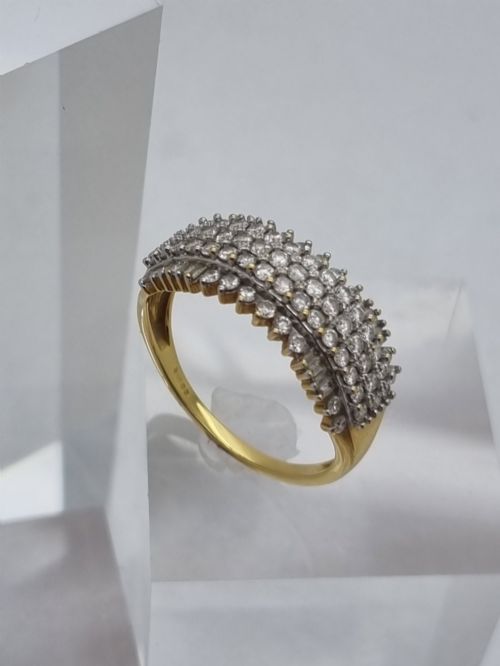
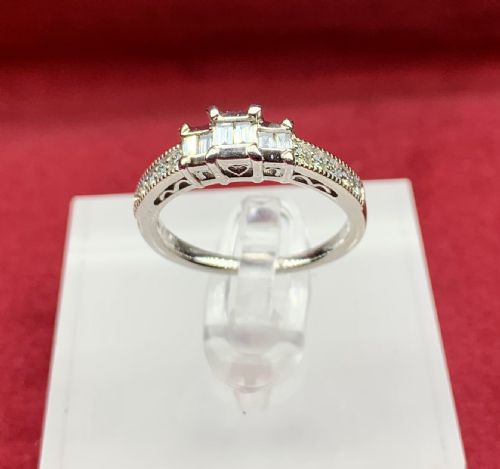
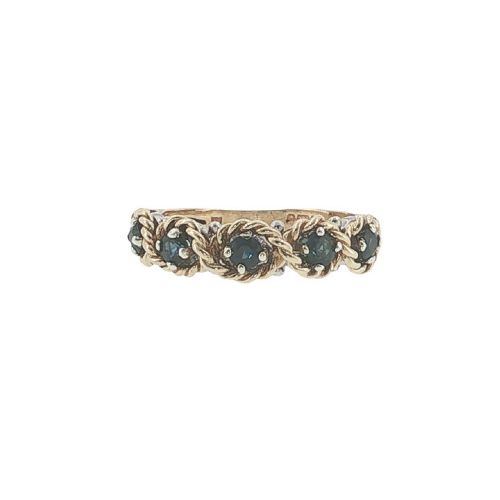
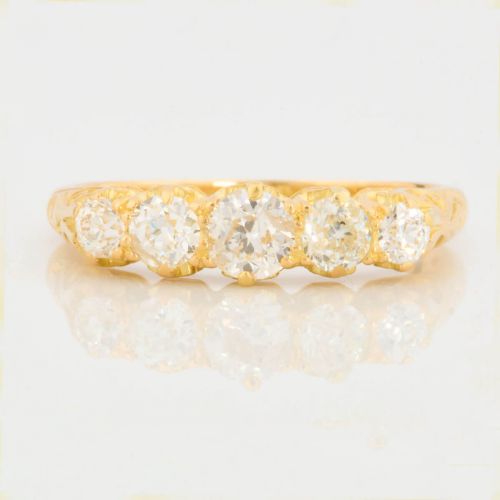
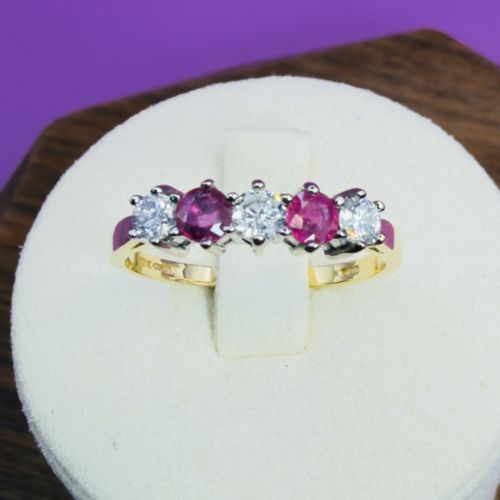
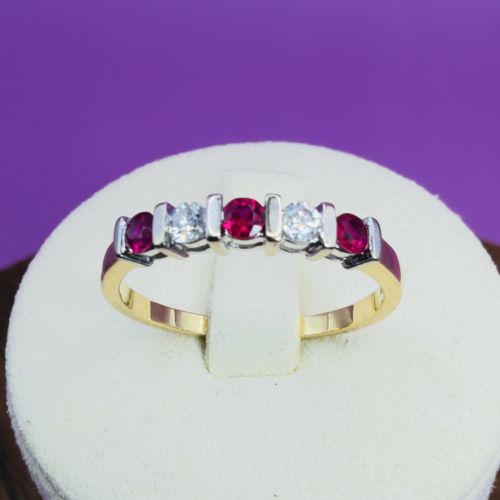
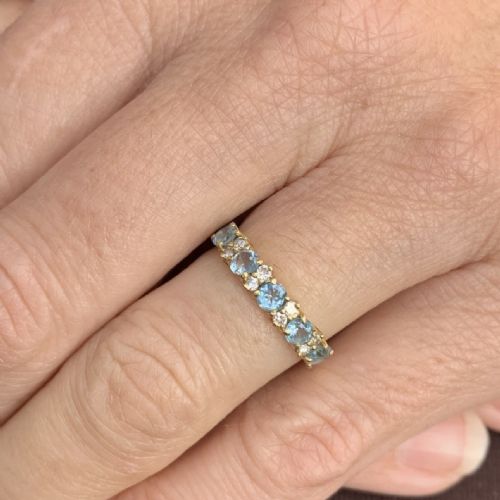
The pieces on this page span full and half eternity designs, alongside closely related five-stone and multi-stone bands in precious metals. Formats vary from platinum frames carrying rows of brilliant-cut diamonds to yellow and white gold bands interspersed with coloured stones.
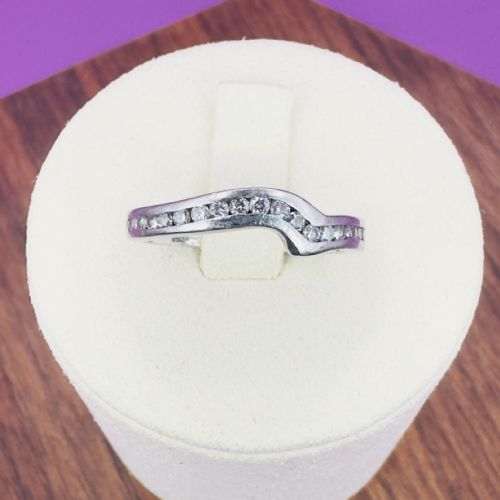
Buyers encounter traditional channel-set bands, gypsy-set variations, and intricate Art Deco mountings. Each version reflects the prevailing jewellery craftsmanship of its specific decade, from 1900 through to the 1960s.
Materials and construction
Jewellers forged these bands in platinum, 18ct white gold, 18ct yellow gold, and occasional 14ct or sterling silver settings. Platinum offered the strength required to hold continuous rows of closely spaced stones securely in slender channels or claw mounts.
Stones on these pieces feature old-cut diamonds alongside standard round and calibrated cuts for rubies, sapphires, and emeralds. Metalwork techniques combined hand-fabrication with early casting methods to house gems securely around the entire circumference of the hoop.
Listings feature platinum, 18ct white gold, and yellow gold alongside diamonds, rubies, sapphires, turquoise, and pearls across Victorian to mid-century periods.
Distinctions in quality
Quality in an antique eternity ring rests upon the uniformity and match of the set gemstones. Higher-tier examples demonstrate consistent colour, clarity, and sizing across every single stone in the continuous band.
The structural integrity of the metal setting dictates longevity, particularly in full eternity formats where stones encircle the entire finger. Superior manufacturing ensures minimal metal wear between settings and precise stone alignment that resists snagging on clothing.
The Antique Eternity Ring Glossary
- Full eternity
- A ring design where gemstones encircle the entire band completely without interruption. This format requires precise sizing because altering the circumference afterwards is exceptionally difficult.
- Half eternity
- A band where gemstones cover only the top half of the outer circle, leaving a plain metal shank at the back. This style allows for easier future resizing by a jeweller.
- Old cut
- A diamond facet style hand-cut before modern brilliant-cut standards were established, characterised by a smaller table and larger culet. These stones exhibit a distinctive chunky light return under candlelight.
- Platinum
- A dense, durable white precious metal used extensively in fine jewellery fabrication throughout the Edwardian and Art Deco periods. Its natural strength allowed jewellers to create delicate-looking settings that securely held heavy stone loads.
- Channel set
- A mounting technique where gemstones sit flush between two parallel walls of metal without individual claws. This creates a smooth exterior surface across the band.
Antique Eternity Ring: Frequently Asked Questions
Can an antique eternity ring be resized?
Half eternity rings can usually be resized by a jeweller because the plain metal shank at the back allows for cutting and adjusting.
Full eternity rings are notoriously difficult or impossible to resize due to the continuous unbroken row of stones encircling the band.
How do I wear an eternity ring?
These rings are traditionally worn stacked alongside a wedding band and engagement ring on the left ring finger. They sit comfortably against other straight bands thanks to their flat or low-profile settings.
Many wearers also choose to display them alone as a standalone dress ring to showcase the continuous line of gems.
What is the difference between full and half eternity?
Full eternity designs feature gemstones extending all the way around the entire finger, offering sparkle from every visible angle. Half eternity versions display stones only across the top visible half of the ring, leaving smooth metal underneath.
Half eternity bands offer greater comfort against adjacent fingers and practical advantages for future resizing work.
How do I tell an Edwardian ring from Art Deco?
Edwardian pieces tend to feature delicate lacy platinum work, often incorporating millegrain edges and softer floral or ribbon motifs. The focus rests on high-clarity diamonds paired with pearls or soft-toned sapphires.
Art Deco examples embrace geometric rigidity, sharp lines, symmetry, and stronger contrasts using calibrated rubies, emeralds, and sapphires set in platinum or white gold.