



Antique Entry Hallway Chairs
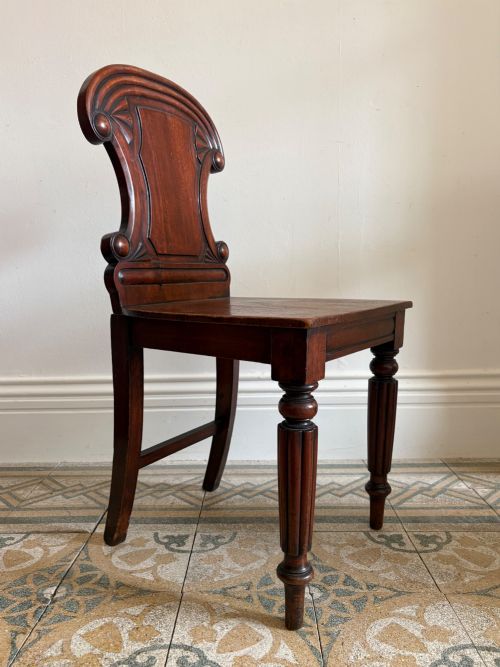
These antique entry hallway chairs are sturdy wooden seats designed to stand in corridors and porches.
Antique Entry Hallway Chairs
When you search for antique entry hallway chairs, you encounter seating designed for the entrance halls and corridors of grand homes. These pieces are built to be upright and formal, serving visitors waiting in the lobby rather than offering long hours of comfort.
The selections span several distinct periods, with Victorian and nineteenth-century examples appearing most frequently alongside earlier Georgian and Regency pieces. Oak and mahogany dominate the materials, shaping forms that range from simple timber boards to elaborate carved seats.
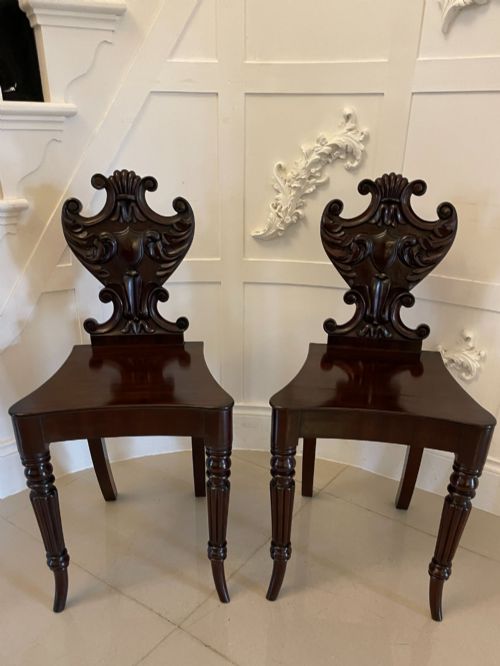
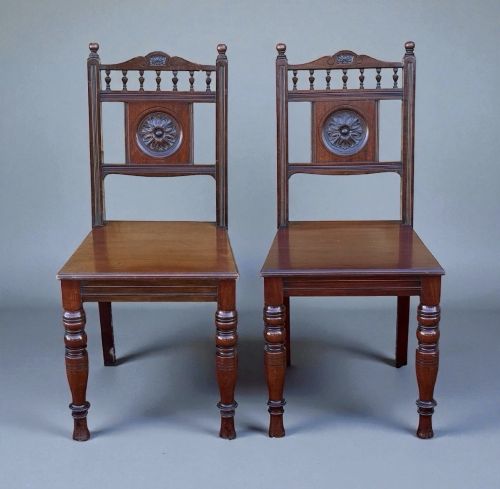
Most items function as hall chairs, though benches and settles also surface. You will frequently find pairs and larger sets alongside single items, reflecting how furnishings were originally ordered for large vestibules.
How they were made
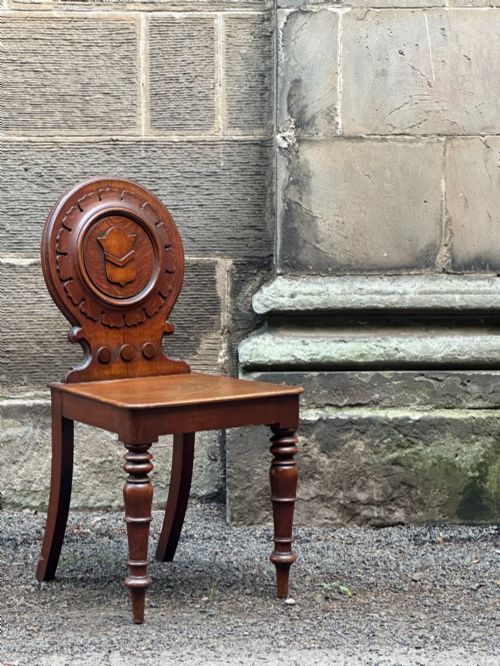
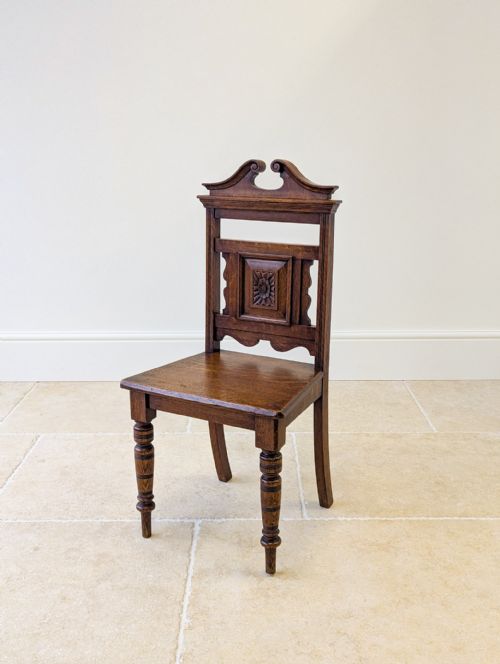
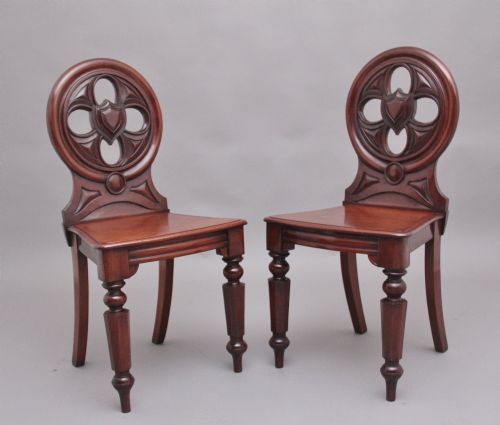
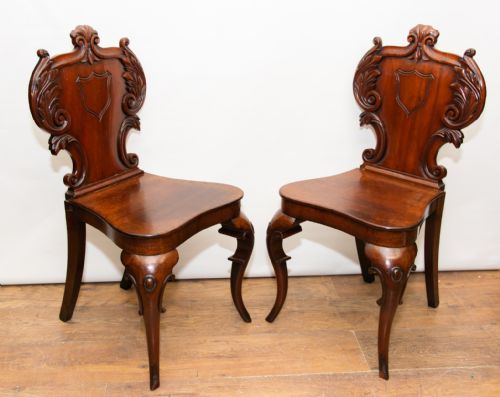
Cabinetmakers constructed these pieces primarily from solid oak and mahogany, selecting timber for strength and grain pattern. Wood is shaped through traditional joinery, often featuring carved backs that display heraldic crests or geometric motifs.
Surface treatments rely on polishing the natural wood or applying paint and ceramic details to highlight the carved elements. Structural rigidity remains essential for pieces meant to withstand daily use in busy corridors.
The inventory records formal seating forms, grouping single chairs alongside matching pairs and sets of up to six.
What varies in quality
The depth and crispness of the woodcarving separate standard utility seating from finer workshop productions. Crisp relief work on shield backs and shell motifs indicates superior craftsmanship.
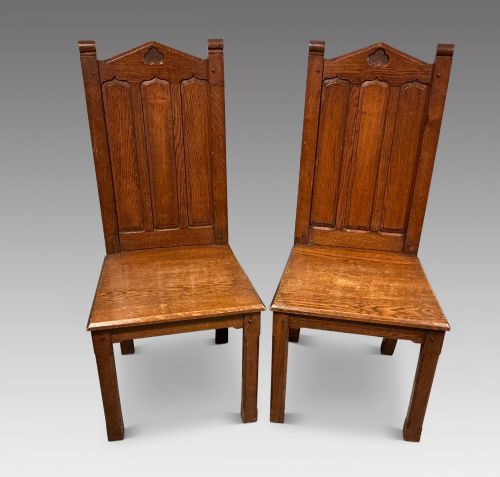
The choice of primary timber also dictates the grade of the piece, with richly figured mahogany and dense golden oak commanding higher regard than plain pine or mixed woods.
Holland & Sons·Gillows
The Antique Entry Hallway Chairs Glossary
- Hall chair
- A rigid wooden seat with a solid back, placed in an entranceway for brief use. These items rarely feature upholstery.
- Settle
- A wooden bench featuring a high back and often integrated armrests, designed to block drafts in cold hallways. They frequently include enclosed storage beneath the seat.
- Shield back
- A chair back shaped like a heraldic shield, popular in Georgian and Victorian seating designs. This silhouette provides a canvas for carved crests or initials.
- Shell back
- A decorative carved back panel resembling a scalloped seashell. This motif appears frequently on Regency and Victorian mahogany examples.
- Jacobean Revival
- A nineteenth-century style imitating seventeenth-century English furniture, characterised by dark oak and heavy turned components. It brings a dramatic, historical weight to entrance spaces.
Antique Entry Hallway Chairs: Frequently Asked Questions
How were hallway chairs used?
These chairs stood near the front door for callers waiting to be announced or for household members removing boots.
They were deliberately upright to discourage lingering and to fit flat against corridor walls without blocking passage.
Are these chairs comfortable for daily seating?
Most antique hall chairs feature solid wooden seats and rigid backs rather than cushions or upholstery.
They are intended for short periods of sitting rather than relaxation.
How do I date an oak hall chair?
Dating relies on observing the combination of wood type, carving style, and construction methods.
Simpler geometric lines often point towards earlier Georgian periods, while deeper relief carving and golden oak finishes typically indicate nineteenth-century revival styles.
Why are mahogany and oak the main materials?
Cabinetmakers selected dense hardwoods to ensure the furniture withstood heavy daily wear in busy entryways.
These timbers also accepted crisp carving for family crests and decorative motifs.