


Antique English Games Table
An antique english games table serves as both fine furniture and a social centre, designed for cards, chess, and pastimes.
Antique English Games Table
An antique english games table encompasses versatile furniture designed primarily for leisure activities such as card playing, chess, and backgammon within domestic settings.
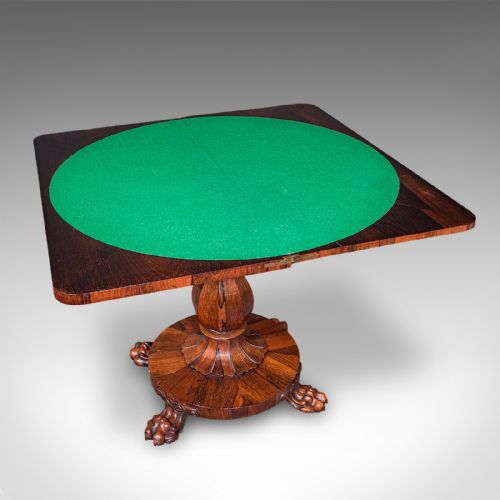
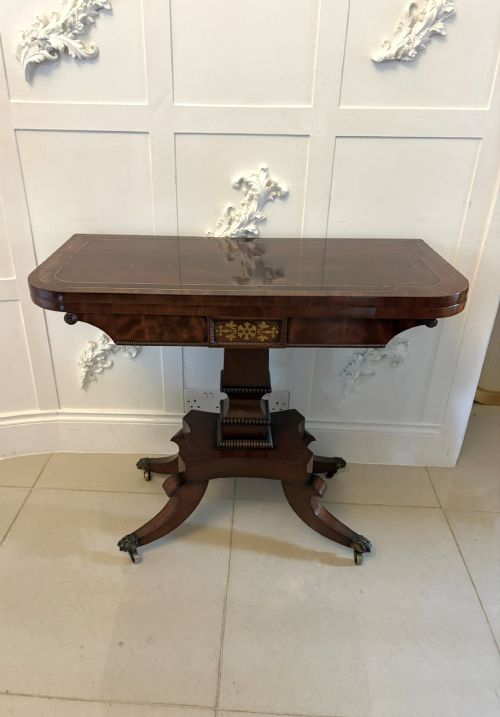
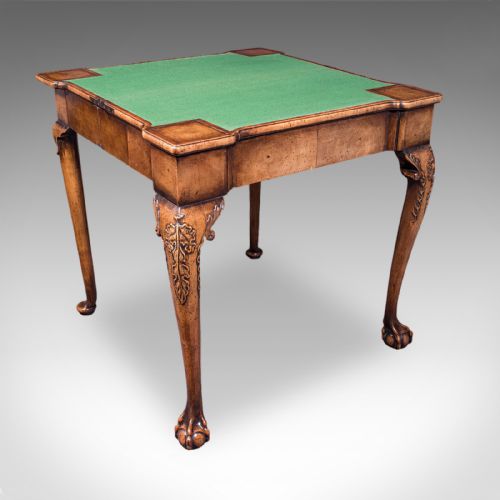
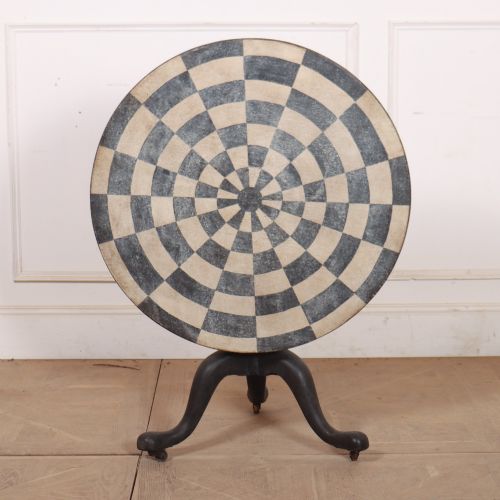
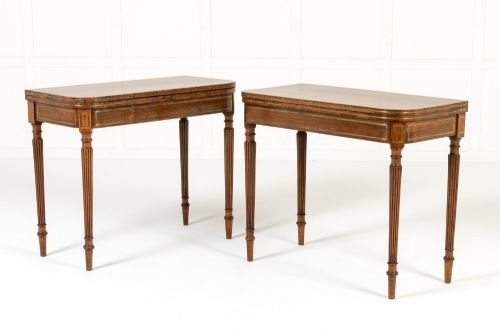
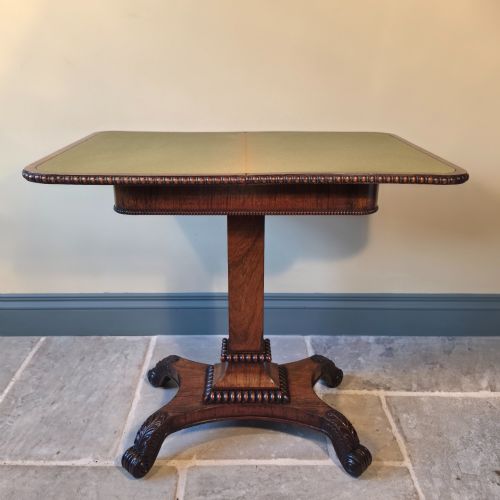
The most common formats met on this page include fold-over card tables, D-shaped console tables, and dedicated chess boards dating from the Georgian, Regency, and Victorian periods.
These pieces often double as tea tables or occasional side tables, adapting to the changing needs of a room when not in use for gaming.
How they were made
Cabinet makers utilised dense timber frames of mahogany, walnut, and rosewood, frequently incorporating contrasting veneers such as satinwood, birds-eye maple, and kingwood for decorative effect.
Surfaces were lined with baize, leather, or intricate marquetry to provide suitable textures for playing cards and moving chess pieces across the board.
Hinged mechanisms, swivel tops, and folding leaves allowed the wooden structures to transform smoothly from compact side consoles into stable playing surfaces.
Listings feature mahogany, walnut, and rosewood predominantly, spanning Georgian, Regency, and Victorian eras.
What varies in quality
The standard of timber selection and the precision of the cabinet work define the upper tiers of these pieces, distinguishing robust construction from standard production.
Refinement in secondary details, including brass inlay, penwork, hand-carved mouldings, and integrated score cabinets or drawers, signals greater workshop ambition.
Integration of the folding mechanism dictates how securely the top sits both closed and open, reflecting the original maker's technical capability.
Gillows·T & G Seddon·James Phillips·Edwards & Roberts·Thurston
The Antique English Games Table Glossary
- Baize
- A coarse woollen fabric traditionally used to line the playing surfaces of card tables. It provides a soft friction that keeps cards and counters from sliding.
- Fold-over
- A table top design featuring a hinged leaf that opens outward to double the surface area for gaming. When closed, it functions as a standard side or console table.
- Demi-lune
- A half-moon shape characteristic of certain 18th-century and Regency card tables designed to sit flat against a wall.
- Marquetry
- The art of applying pieces of veneer to a structure to form decorative patterns and pictures. It often adorns the playing boards of Victorian chess tables.
- Bagatelle
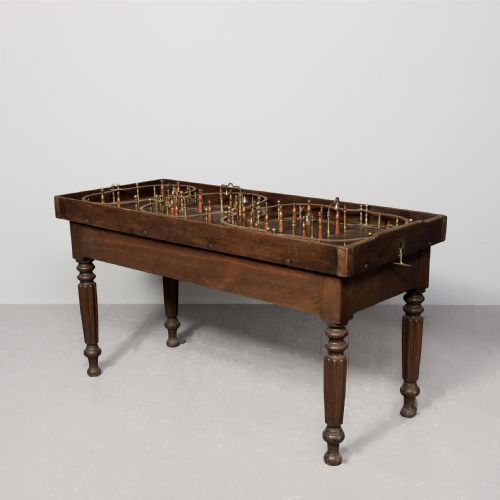
- An indoor game akin to billiards, played by hitting balls up a wooden board with cues into numbered holes. Tables built for this pastime include specialised scoring arrangements.
Antique English Games Table: Frequently Asked Questions
What is an antique english games table?
These items are multi-functional wooden furnishings built to accommodate domestic pastimes, most notably card games and chess. They combine practical room utility with specialised surfaces for leisure.
Craftsmen designed them to transform through folding leaves or rotating tops, shifting easily from daily household use to evening entertainment.
How were these tables used historically?
Households utilised them during social gatherings for card games like whist or bridge, as well as strategy games such as chess and backgammon. They sat in parlours, drawing rooms, and halls.
Many designs served a dual purpose, functioning as tea tables or writing desks during daylight hours before conversion for evening play.
How do I identify the period of a table?
Dating relies on architectural styling, leg forms, and timber choices, ranging from Georgian mahogany cabriole legs to Victorian walnut Tunbridge ware accents. Regency examples frequently showcase brass inlay and D-shapes.
Construction methods inside the frame and drawer linings also offer clear physical markers that point to specific manufacturing decades.
How do I care for the playing surface?
Preserving the wood and fabric requires keeping pieces away from direct sunlight and fluctuating humidity to prevent veneer cracking or fading. Regular dusting with a dry cloth protects the polished finish.
Original baize linings benefit from gentle brushing rather than moisture cleaning to maintain the fabric integrity over time.