


Antique English Desk Tidy
An antique English desk tidy keeps correspondence in order, bringing functional heritage and tactile materials to a working surface.
Antique English Desk Tidy
An antique English desk tidy covers a range of desktop accessories designed to hold stationery, letters, pens and ink. These pieces appear primarily from the Georgian, Victorian and Edwardian periods, reflecting the shifting demands of letter writing and office administration over two centuries.
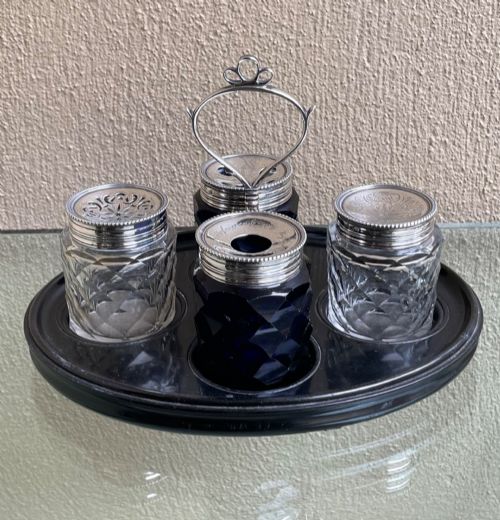
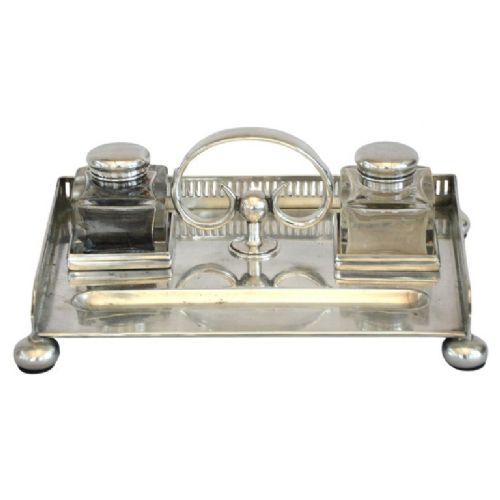
The selections on this page span several specific forms, including stationery boxes with fall fronts, letter racks, inkstands fitted with glass inkwells, and specialised organisers for insurance agents, naval architects and clerks. Treen examples in beech and walnut, alongside mahogany document drawers and oak caddies, illustrate the variety of domestic and commercial workspaces these objects served.
Materials and Construction
Cabinet makers utilised dense hardwoods such as oak, mahogany, walnut and rosewood, often employing techniques like veneer, fan inlay, brass stringing and pokerwork to decorate the surfaces. Silver plate, sterling silver and brass appear frequently for mounts, hinges, pen trays and inkwell lids, adding weight and structural contrast to the wooden bodies.
Specialised items incorporate cut glass for inkwells, alongside more unusual natural materials including tortoiseshell, horn, carved wood, and gilded bronze for figural novelty pieces. Workshops constructed these tidies with durable joinery suited to daily desktop use, combining dovetailed boxes with fitted internal dividers and stationery compartments.
Period styles range from Georgian simplicity through Victorian Gothic Revival to Edwardian oak stationery boxes.
Distinctions in Execution
The distinction between ordinary and superior pieces rests on the precision of the cabinet work, the quality of the timber selection, and the integration of functional hardware. Finer examples display carefully matched wood grains, intricate inlay work, and robust silver plating or solid silver mounts bearing clear hallmarks.
Novelty pieces and fitted stationery boxes demonstrate quality through the realism of their modelling, such as carved animal figures with original glass eyes, or the clever engineering of fall fronts and secret compartments. Simpler treen brush pots and utility letter racks rely on pleasing proportions and honest patination rather than elaborate decoration.
Walker And Hall·Robert Garrard·Flight And Barr·Gillows of Lancaster·Martin Hall
The Antique English Desk Tidy Glossary
- Inkstand
- A desktop tray or stand holding one or more inkwells, often incorporating pen grooves and sanders. These pieces sat centrally on writing tables in both homes and offices.
- Stationery Box
- A desk cabinet with a sloping or fall front designed to store writing paper and envelopes upright. They frequently feature internal divisions for different paper sizes.
- Novelty Inkwell
- An ink container fashioned into a figurative or unusual shape, such as an animal or a reptile. Makers cast these in bronze or silver plate, often incorporating glass eyes.
- Fall Front
- A hinged panel on a box or cabinet that drops down to provide access to interior compartments. This mechanism protects stored documents while allowing quick retrieval.
Antique English Desk Tidy: Frequently Asked Questions
How were desk tidies used?
Users placed desk tidies on writing tables, bureau desks, and partner's desks to keep day-to-day writing tools within reach. Stationery boxes held folded letter paper and envelopes, while inkstands provided a stable base for dipping pens.
Specialised versions served particular professions, keeping documents organised for clerks, insurance agents, and naval architects.
How do I date a desk tidy?
Dating relies on combining the wood types, decorative styles, and construction methods with any maker marks or silver hallmarks present. Georgian pieces often show simpler mahogany or rosewood forms, while Victorian examples introduce heavy oak, brass inlay, and novelty figures.
Edwardian items frequently present lighter oak finishes and compact letter rack designs suited to smaller domestic desks.
Are inkwells included with desk tidies?
Many inkstands and desk tidies retain their original cut glass or crystal inkwells, sometimes fitted with hinged brass or silver-plated lids. Other pieces, particularly stationery boxes and letter racks, were manufactured specifically for paper storage without ink containers.
Checking the specific description helps confirm whether glass inserts or original pens remain with the main stand.
How do I care for wooden desk tidies?
Wooden desk tidies benefit from stable indoor humidity away from direct heat sources and strong sunlight, which can dry out timber and veneers. Periodic application of appropriate furniture wax helps preserve the sheen and nourishment of antique wood.
Metal mounts and silver-plated elements require gentle cleaning with a soft cloth to avoid abrading the historic surfaces.