


Antique English Copper
These antique English copper pieces range from Georgian coffee pots to Victorian kitchen moulds, offering utilitarian charm and robust metalwork for the home.
Antique English Copper
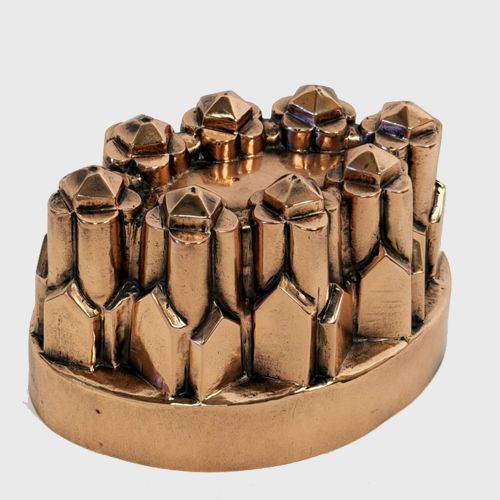
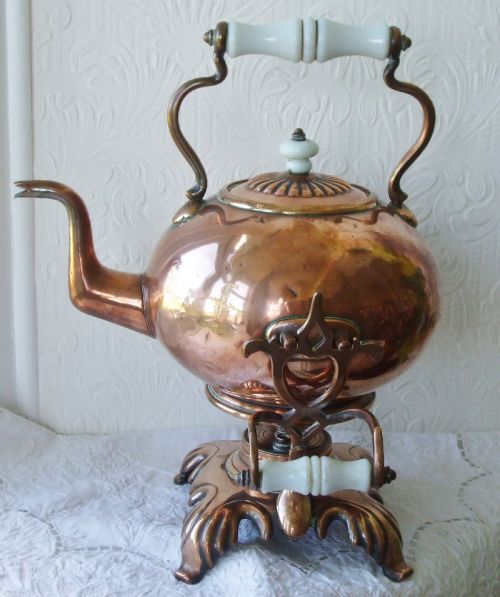
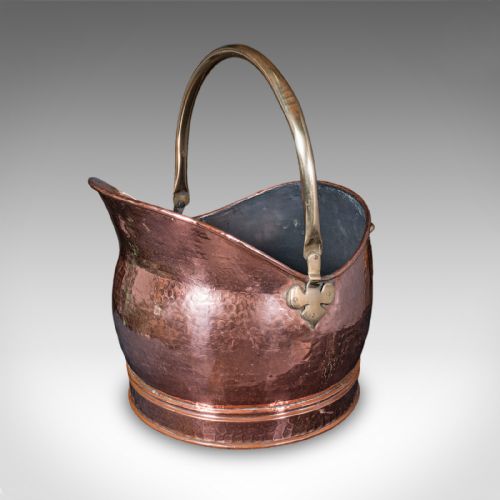
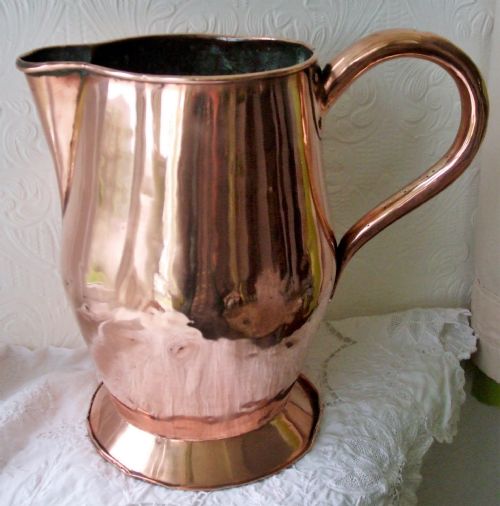
When you search for antique English copper, you encounter domestic vessels and kitchenware shaped across the Georgian, Victorian, and Edwardian eras. The selection spans utilitarian forms such as one-gallon measures, cream setting pans, kitchen moulds, and coal scuttles alongside beverage vessels including coffee pots, tea urns, and spirit kettles.
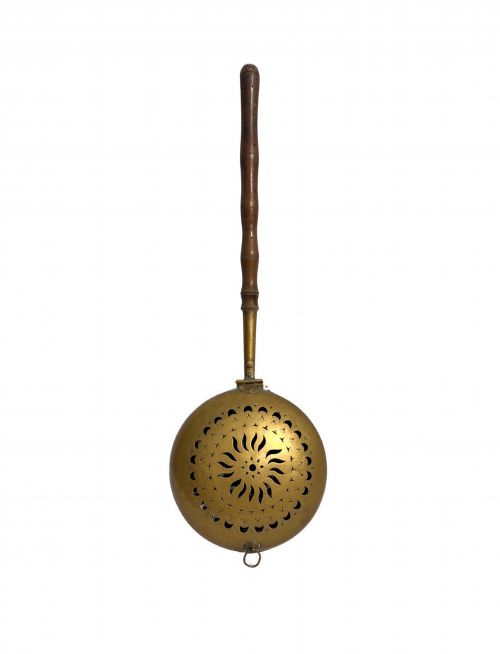
Vessels from the 18th and 19th centuries dominate the offerings, often pairing hammered or sheet copper bodies with brass mounts, iron handles, or turned wood details. Alongside hollowware, pieces extend to fireside items, church lights, lanterns, and wall art including copper engravings.
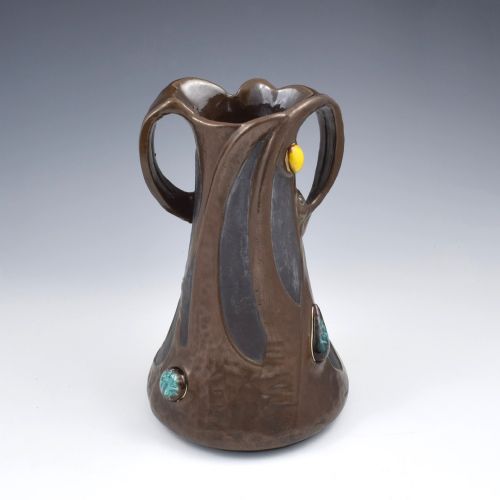
The aesthetic shifts from plain Georgian functionality and Regency formality to the decorative flourishes of Arts and Crafts and Art Nouveau interpretations. Buyers meet both heavy kitchen workhorses and refined display pieces bearing the marks of specialised makers and regional metalworkers.
Materials and Techniques
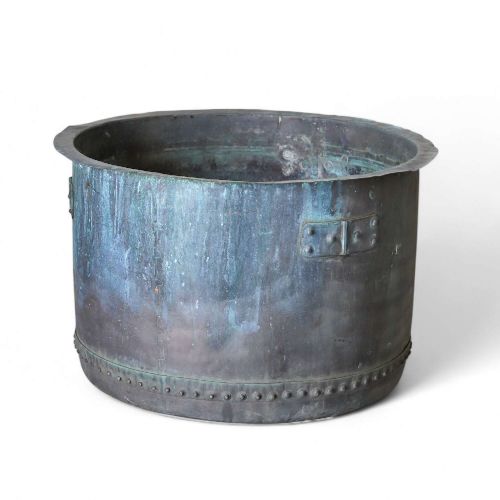
Makers fashioned these objects primarily from sheet copper, often utilising hand-riveting techniques to join seams on large vessels like planters, coal bins, and samovars. Brass frequently supplemented the construction for handles, taps, spouts, and feet, providing a contrasting metallic tone.
Surfaces bear the evidence of manual shaping, hammering, and finishing characteristic of pre-industrial and Victorian workshops. Many utilitarian items incorporated internal tinning to render the copper safe for food and liquid preparation.
Antique English Copper Retail Price Guide 2026
Typical asking prices for english copper among the pieces listed under this phrase on Sellingantiques today, from the lower quarter to the upper quarter. They describe what is for sale here now, not the wider market.
Listings feature 19th Century, 18th Century, Victorian, Georgian, and Edwardian periods across copper, brass, enamel, and ceramic materials.
Evaluating Craftsmanship
Quality rests in the integrity of the construction, such as the precision of hand-cut dovetails or the density and neatness of hand-applied copper rivets on large forms. Weight and gauge of the metal dictate the sturdiness of the vessel, separating heavy utilitarian items from lighter decorative pieces.
The survival of original surfaces, maker marks, and unaltered brass fittings elevates an object. Pieces that retain their balanced proportions and authentic patination demonstrate superior historic character over those subjected to aggressive modern polishing or modification.
William Soutter And Sons·Bretby Pottery·South Staffordshire·Bilston
The Antique English Copper Glossary
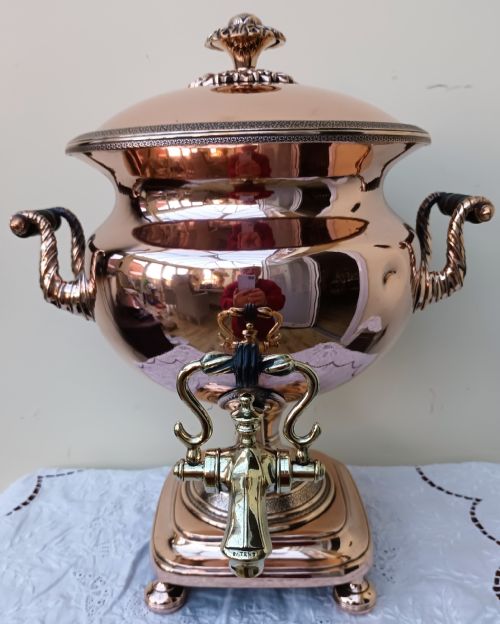
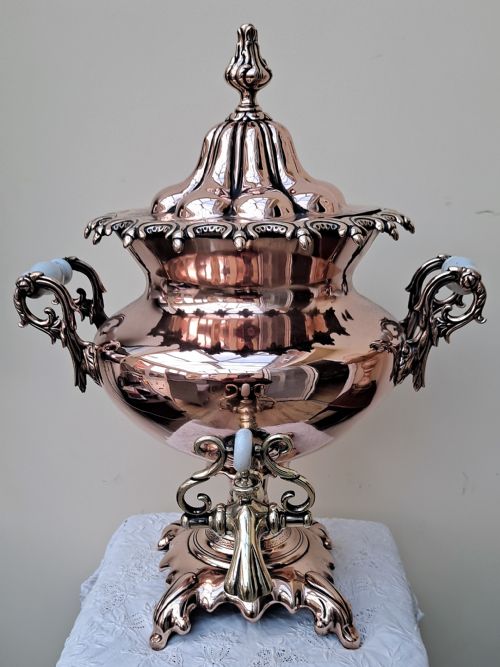
- Samovar
- A heated metal container traditionally used to boil water for tea, often featuring an internal vertical tube and a spigot. These large vessels frequently stand on decorative feet with brass spouts.
- Planter
- A large open container designed to hold potted plants or foliage. In copper, these often feature hand-riveted seams and substantial proportions.
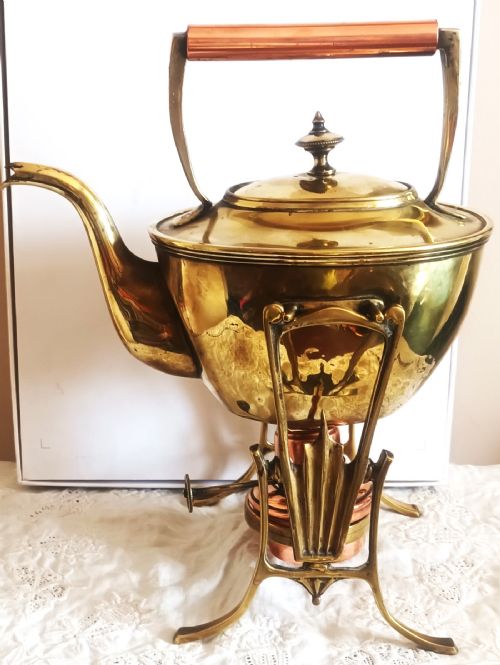
- Spirit Kettle
- A small water kettle mounted on a metal stand above a spirit burner. They were utilised for keeping water hot at the tea table.
- Old Sheffield Plate
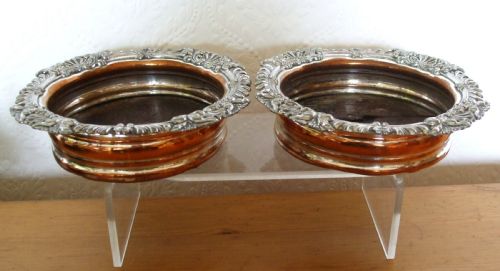
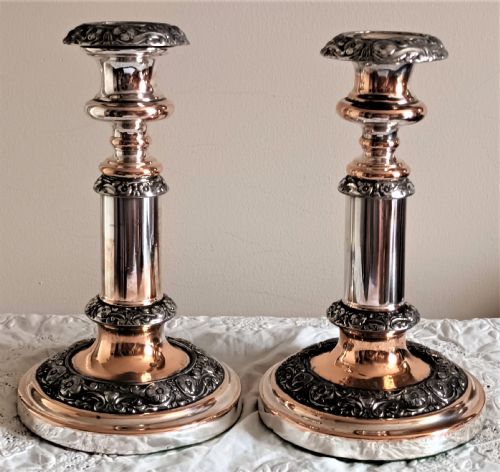
- A composite material formed by fusing a thin sheet of silver to a thicker copper base. It appears on tableware and decorative items.
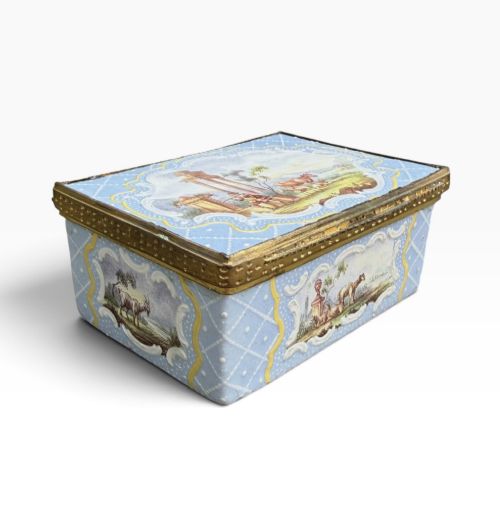
- Patch Box
- A small decorative container used in the 18th century to hold cosmetic patches for the face. They frequently feature enamel lids and copper or base metal bodies.
Antique English Copper: Frequently Asked Questions
How do I clean antique copper?
Most collectors prefer to leave a natural, undisturbed patina on old copper rather than polishing it to a bright shine. Gentle dusting with a dry cloth is usually sufficient for maintenance.
Avoid abrasive cleaners or modern chemical dips that strip away the historic surface appearance. Preserving the mellow tone maintains the visual integrity of the metalwork.
Were copper kitchen moulds used for cooking?
Victorian copper moulds served primarily for shaping jellies, aspics, and puddings in domestic kitchens. Their heavy metal construction ensured even heat distribution if placed near a fire or in water baths.
Many retain traces of internal tinning, which prevented food from contacting the toxic copper directly. Today, they are collected as decorative display objects rather than for culinary use.
How can I tell Georgian copper from Victorian?
Georgian copper pieces typically display simpler, utilitarian lines with hand-hammered surfaces and heavy gauge metal. They often include early coffee pots, measures, and samovars with restrained brass attachments.
Victorian pieces frequently show more standardised manufacturing methods alongside specialised decorative styles. Stamped maker marks and factory names become more common in the later nineteenth century.
Can I use an antique copper kettle?
Using antique kettles for boiling water is generally discouraged due to potential degradation of internal linings and historic solder joints. Thermal shock can crack old seams or loosen spouts.
They function best as decorative elements in kitchens, hearths, or living spaces. Displaying them safely preserves their physical structure for the future.