


Antique Enamel Display Urn
These antique enamel display urn vessels and vases bring rich hand-painted palettes and intricate metalwork into a room.
Antique Enamel Display Urn
When a collector searches for an antique enamel display urn, they encounter an array of decorative jars, vases, and covered vessels spanning the nineteenth and early twentieth centuries. These objects range from monumental Japanese satsuma wares and Chinese export porcelains to English art pottery and etched European glassware.
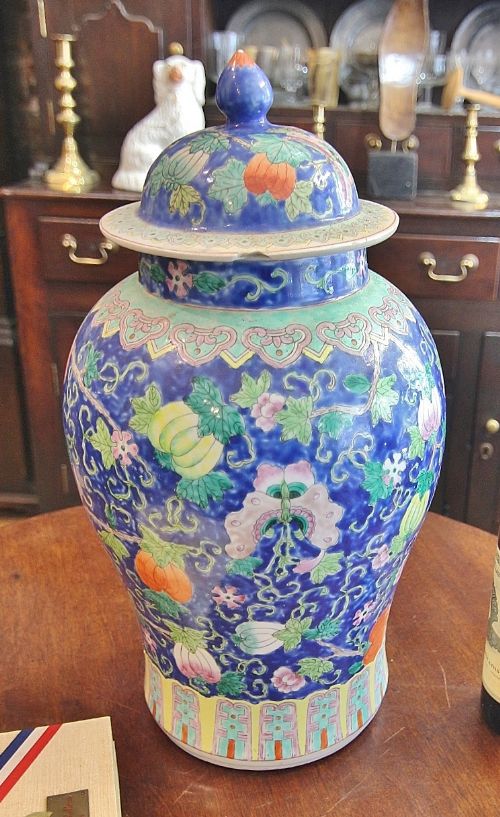
The selections on this page lean heavily toward Asian export traditions alongside Victorian and Art Deco European pieces. Buyers find items shaped as moon flasks, jardinières, and lidded jars designed strictly for ornamental display rather than utilitarian storage.
Origins stretch across Japanese Meiji workshops, Chinese Qing dynasties, and English potteries such as Minton and Wedgwood. Each regional tradition brings distinct forms, from heavy gilt court figures to geometric etched glass panels.
Materials and technique
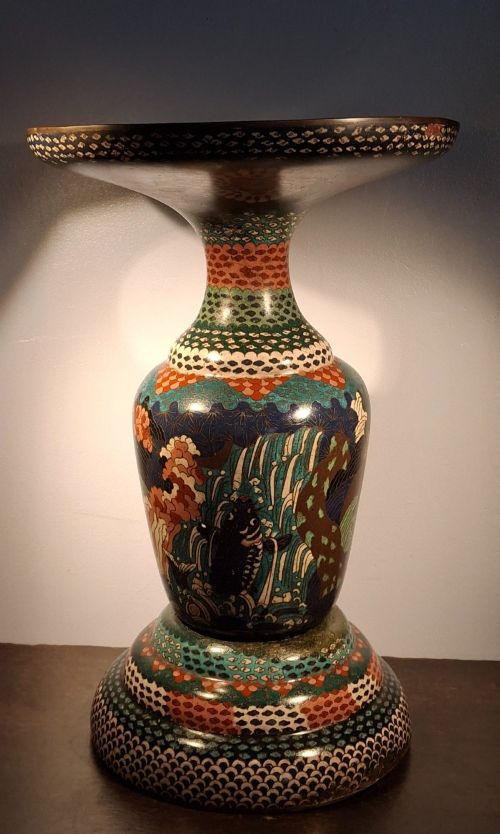
Makers utilised a base of porcelain, earthenware, copper, brass, or opaque glass, applying coloured enamels and gold leaf by hand. Japanese cloisonné pieces built intricate wire cells to hold distinct pools of enamel before firing, while satsuma items combined earthenware bodies with raised moriage paste and heavy gilding.
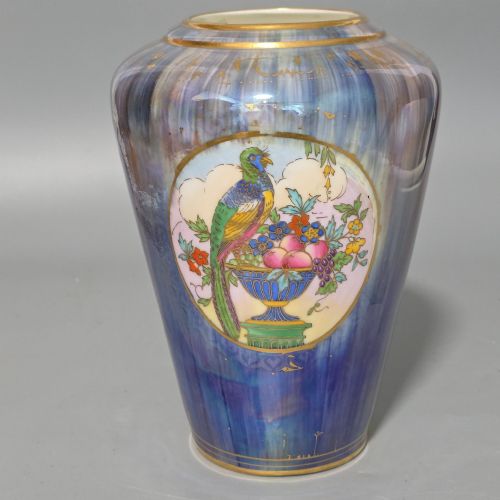
European workshops relied on hand-painted enamel on glass or earthenware blanks, incorporating lustre glazes and acid-etched geometric lines. The integration of iron-red pigments and cobalt grounds provided intense contrast across both Eastern and Western items.
Evaluating craftsmanship
Quality rests in the precision of the hand-painted brushwork and the complexity of the enamelling technique. Superior examples display crisp detail in facial expressions, controlled application of gold gilt, and balanced composition across complex vessel shapes.
The weight of the body and the depth of the glaze layers differentiate standard decorative wares from exhibition-quality pieces. Finer items maintain sharpness in every wire cell or painted flowerhead without bleeding of colours at the edges.
Minton·Kinkozan·Seiko-en Chokei·Hododa
The Antique Enamel Display Urn Glossary
- Cloisonné
- A metalwork technique where flat metal wires are soldered to a base to form compartments filled with enamel paste. This method creates defined patterns of coloured glass across vases and jars.
- Moriage
- A Japanese ceramic technique using piped clay slip to create raised, three-dimensional decorative effects. Artisans often highlight these textured areas with gold gilt.
- Famille Rose
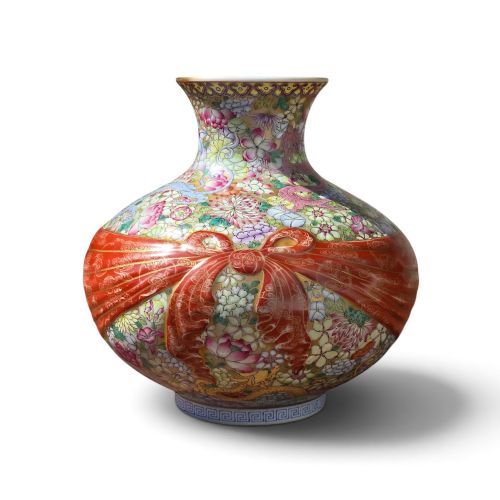
- A Chinese porcelain palette dominated by opaque pink enamel, introduced during the Qing dynasty. The style includes soft pinks alongside greens, yellows, and blues.
- Kakiemon
- A style of Japanese enamel decoration featuring asymmetrical designs of birds and flowers on a milky white porcelain ground. The palette typically employs iron red, soft blue, green, and yellow.
- Satsuma
- Japanese earthenware with a crackle-glaze ivory ground, richly decorated with polychrome enamels and gold. These wares became prominent during the Meiji period for export markets.
Antique Enamel Display Urn: Frequently Asked Questions
Where were antique enamel urns displayed?
These vessels were placed on mantelpieces, pedestals, and entrance tables in Victorian and Edwardian drawing rooms. Their primary purpose was visual enrichment rather than holding cut flowers.
Larger floor-standing jars occupied corners of formal reception rooms, while smaller cabinet pieces sat securely on enclosed shelves.
How do I distinguish Japanese satsuma from Chinese porcelain?
Japanese satsuma uses a cream-coloured earthenware body featuring a fine network of crackled glaze and raised moriage details. Chinese porcelain utilises a harder, denser white body with smoother glazed surfaces.
Satsuma pieces frequently depict dense court figures and mon emblems, whereas Chinese export wares often employ famille rose palettes or ribbon-wrapped floral motifs.
Are these urns suitable for holding water?
Most of these decorative vessels are designed for display only and lack interior waterproofing. Placing water inside earthenware or cloisonné urns can damage the metalwork, glazes, and porous clay bodies.
Display them empty or utilise internal glass liners if fresh stems are necessary.
How do I clean enamel surfaces safely?
Dust these pieces gently with a dry, soft feather duster or a clean artist paintbrush. Avoid chemical cleaners, abrasive cloths, or immersion in water, which can lift delicate gold leaf and enamel.
Gentle maintenance preserves the integrity of both the metallic wires and the hand-painted pigments.