


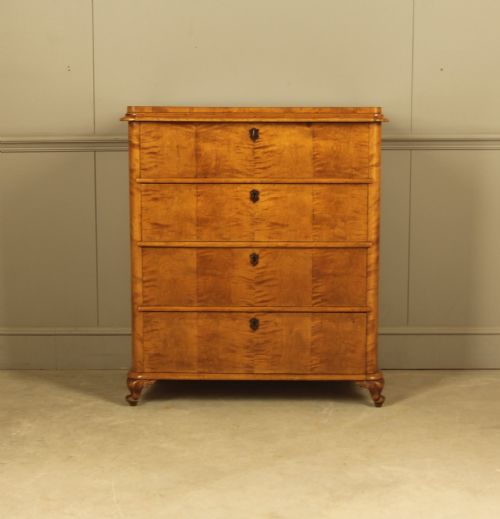


Antique Empire Tallboy
An antique empire tallboy combines soaring vertical presence with striking wood grains, offering substantial storage for the modern home.
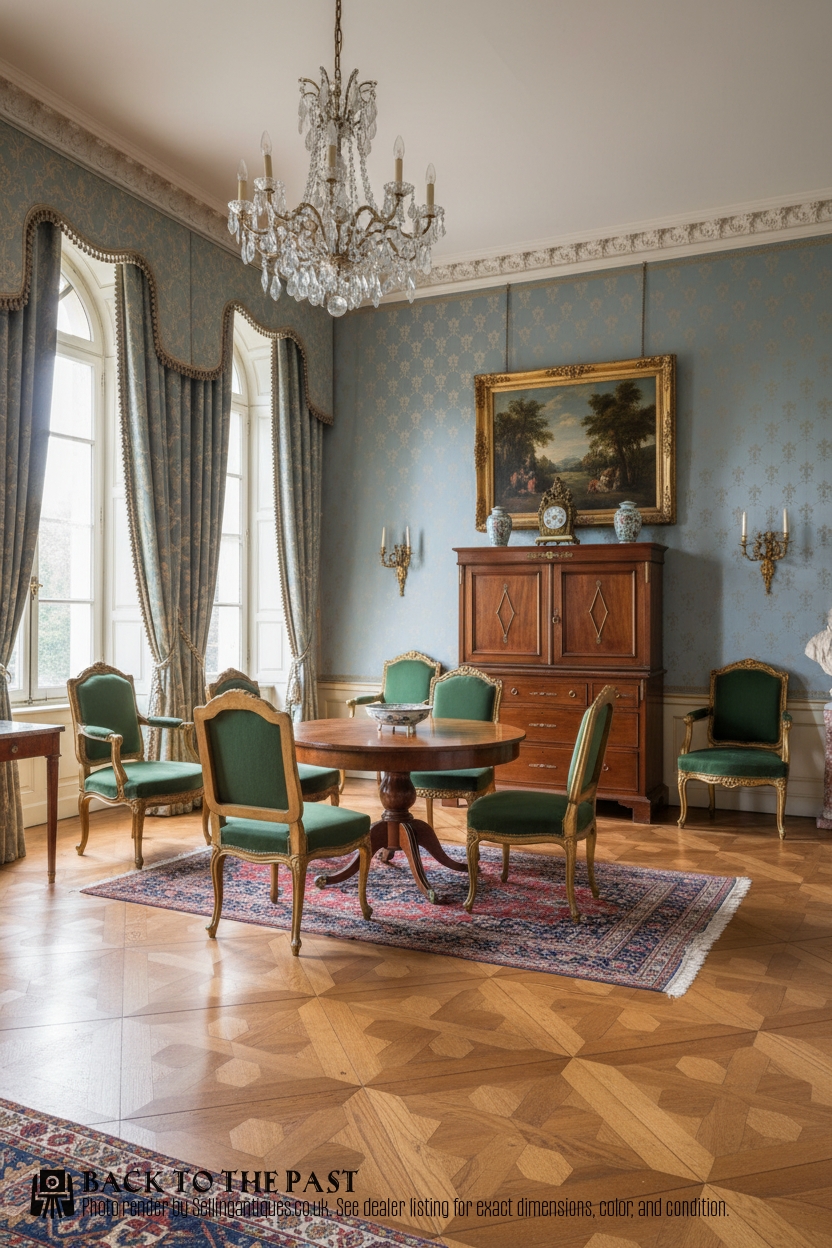
Antique Empire Tallboy
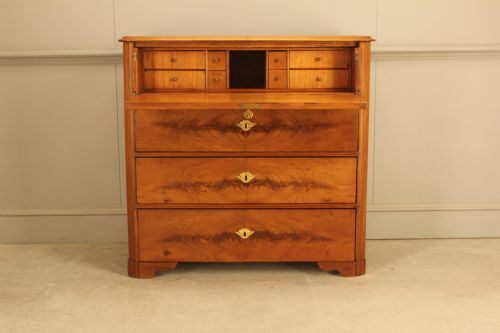
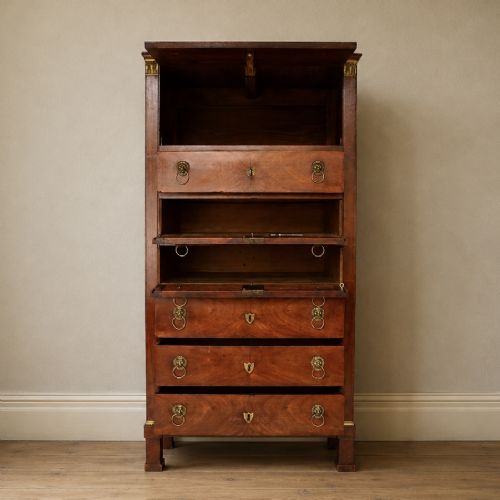
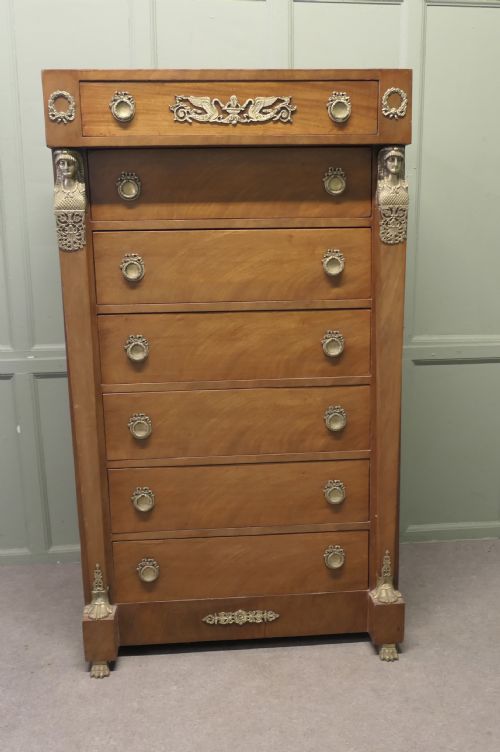
An antique empire tallboy stands as a commanding vertical storage piece, appearing most frequently in French and Swedish variants spanning the nineteenth century. These towering chests of drawers and secretaire cabinets combine functional capacity with the architectural lines characteristic of the empire style.
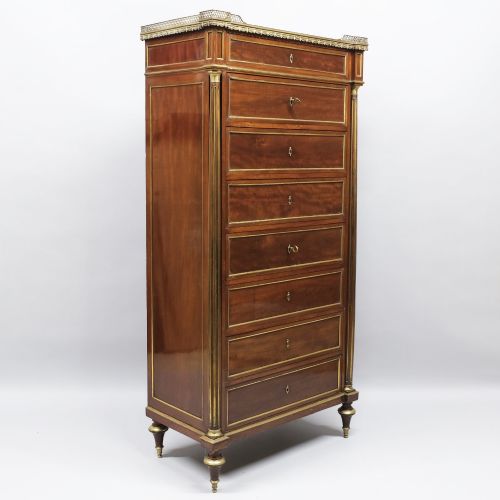
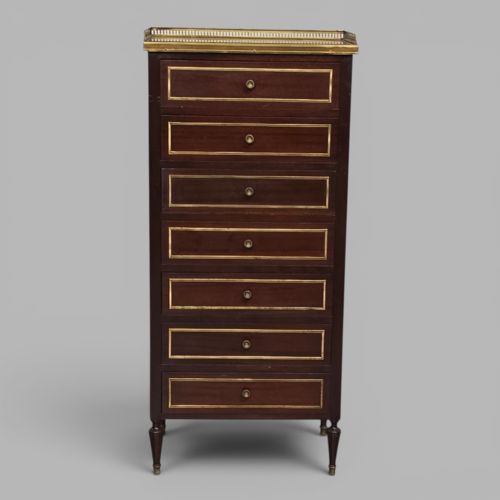
Makers utilised various native and exotic timbers to construct these tall forms, often arranging drawers in vertical banks that include the seven-drawer semainier format. The inventory reveals pieces ranging from the early nineteenth century through to the revival periods of the early twentieth century.
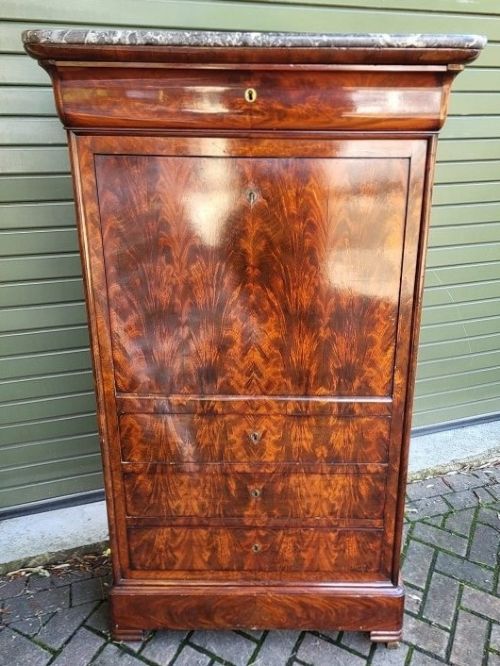
The phrase encompasses tall chests, secretaire cabinets, and semainiers executed in walnut, mahogany, birch, and oak. French examples frequently feature ormolu mounts and marble tops, while Swedish pieces showcase the dramatic grain patterns of flame and tiger birch.
How they were made
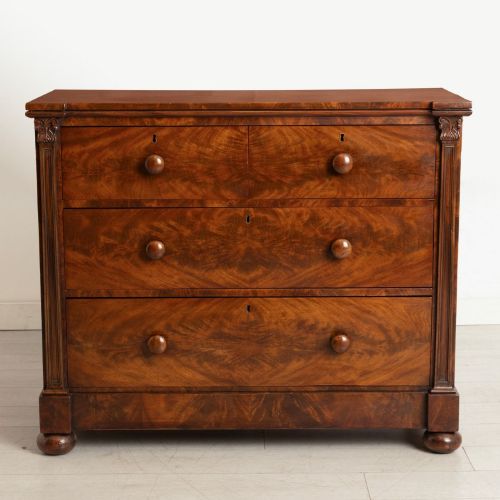
Cabinet makers built these tall carcases using solid woods like oak and pine for internal structure, applying rich veneers of mahogany, walnut, and birch to the exterior surfaces. Bookmatching techniques created symmetrical grain patterns across drawer fronts, particularly on walnut and mahogany examples.
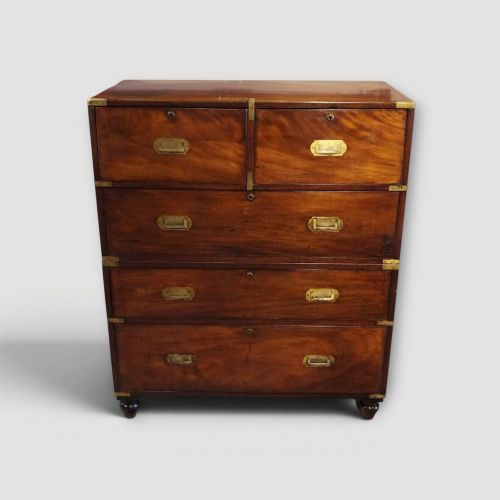
Metal ornamentation played a crucial role in construction, with cast brass, gilt bronze, and ormolu mounts applied to frame drawer banks and accent key corners. Marble slabs frequently topped French semainiers, requiring robust internal framing to support the stone weight.
Antique Empire Tallboy Retail Price Guide 2026
Typical asking prices for empire tallboy among the pieces listed under this phrase on Sellingantiques today, from the lower quarter to the upper quarter. They describe what is for sale here now, not the wider market.
What varies in quality
The precision of veneer selection and application separates standard pieces from finer examples, especially where bookmatched walnut or figured birch creates complex visual patterns. Superior execution shows in the seamless alignment of grain across multiple vertically stacked drawers.
The refinement of hardware and mounts defines the upper tier of production, distinguishing cast gilt bronze or ormolu details from simpler metalwork. Structural integrity in towering forms depends on the thickness of internal carcase timbers and the stability of the tall frame over time.
The Antique Empire Tallboy Glossary
- Tallboy
- A tall chest of drawers, often formed by stacking one cabinet upon another or building a single high carcase to maximise vertical storage.
- Semainier
- A tall chest of seven drawers traditionally designed to hold a week of garments, frequently found in French nineteenth-century furniture.
- Secrétaire
- A cabinet or chest featuring a drop-down writing flap that conceals a fitted interior of small drawers and pigeonholes.
- Ormolu
- Gilt bronze ornamentation applied to furniture mounts, cast and chased to provide metallic contrast against dark woods.
- Bookmatching
- A veneer technique where adjacent slices of wood are mirrored to create symmetrical patterns across drawer fronts.
Antique Empire Tallboy: Frequently Asked Questions
What is an empire tallboy used for?
These tall pieces provide vertical storage capacity for clothing, linens, or papers while occupying a compact floor footprint in a room.
Secretaire variants additionally offer a fold-down writing surface with internal compartments, combining desk utility with drawer storage.
How do French and Swedish pieces differ?
French tall cabinets frequently incorporate dark mahogany or walnut woods accented by gilt bronze mounts, ormolu, and marble tops.
Swedish pieces tend to showcase lighter birch timbers, such as flame or tiger birch, highlighting natural wood grain over applied metal ornamentation.
What is a semainier?
A semainier is a specific type of tall chest containing seven distinct drawers, historically associated with French cabinet making.
The vertical format allows for substantial storage within a narrow structural width.
How do you date an empire tallboy?
Dating relies on examining construction methods, timber choices, and stylistic markers such as neoclassical proportions or revival influences.
Porter marks, hardware styles, and regional wood preferences help narrow the period from early nineteenth-century origins to later revival eras.