


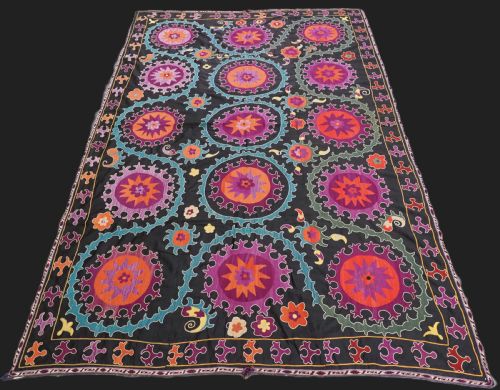


Antique Embroidered Bedspread
An antique embroidered bedspread brings tactile warmth and historic pattern to a room through centuries of hand-stitched needlework.
Antique Embroidered Bedspread
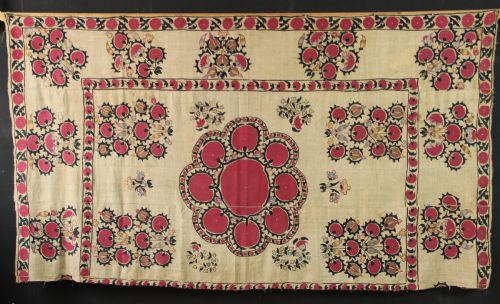
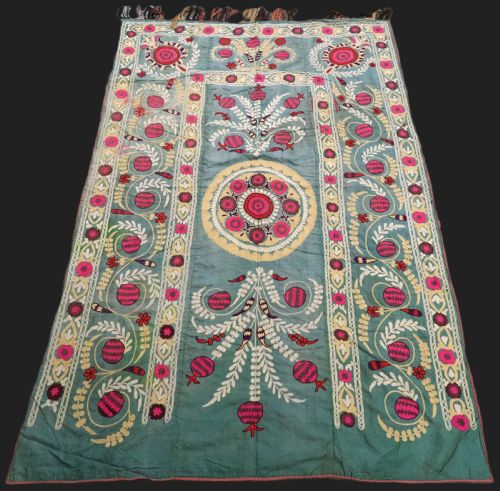
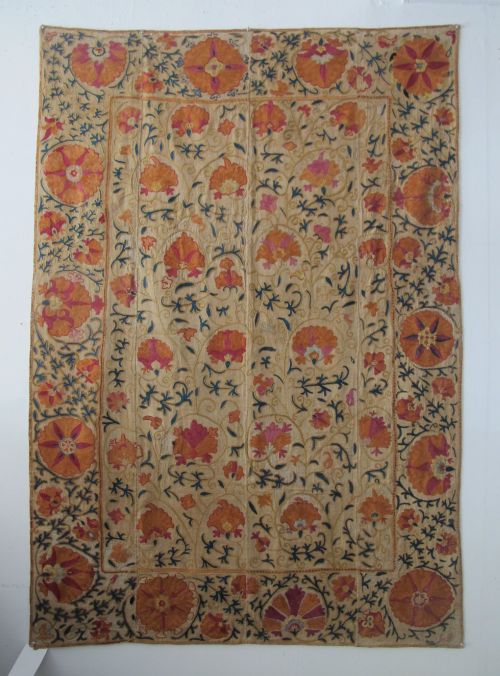
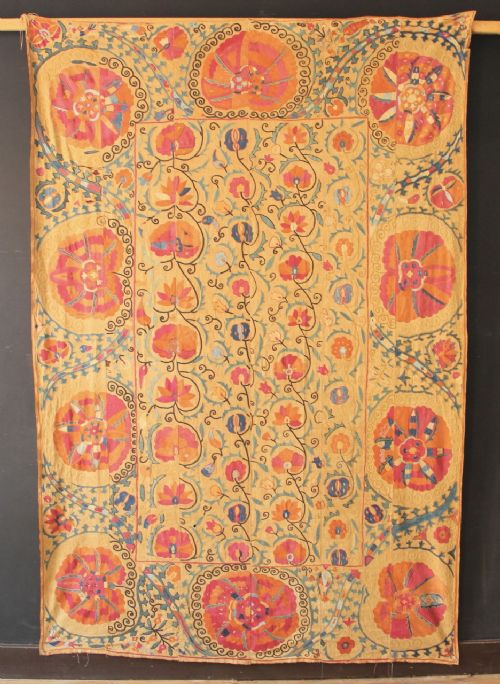
An antique embroidered bedspread typically takes the form of a suzani or a quilted coverlet originating from Central Asia or Britain. These textiles span periods from the eighteenth century through to the early decades of the twentieth century, encompassing regional traditions such as Uzbek folk art and Georgian needlework.
The version most frequently met on this page is the Uzbek suzani, worked in vibrant silk thread upon grounds of cotton, silk, or adras. Such pieces include specific regional types like Ura Tube, Bukhara, Samarkand, and Tashkent works, alongside pieces attributed to the Lakai tribe.
Buyers also encounter British examples, notably eighteenth-century linen coverlets that demonstrate flat quilting and fine needlework. These objects function as decorative textiles, wall hangings, and bedcovers within modern interiors.
Materials and construction methods
Needleworkers utilised natural fibres, stitching silk thread onto foundation fabrics of woven cotton, linen, or mixed adras. Ground fabrics range from stark white linen to dyed cotton backgrounds in red, yellow, and black.
Stitching techniques vary from full-work embroidery that densely covers the ground cloth to lighter medallion variants and nim suzani formats. Artisans in regions like Samarkand and Bukhara executed these complex compositions by hand.
Nomadic embroiderers occasionally incorporated slight geometric irregularities into their floral medallions to ward off the evil eye.
Factors determining the standard of execution
Quality rests upon the density of the embroidery and the complexity of the design layout, such as full-work suzanis versus simpler compositions. The fineness of the silk thread and the precision of the needlework dictate the visual impact.
The preservation of the ground material and the vibrancy of the dyed silk threads determine the overall condition. Regional attribution and age, stretching from mid-nineteenth-century pieces back to eighteenth-century linen work, heavily influence the character of each textile.
The Antique Embroidered Bedspread Glossary
- Suzani
- An embroidered tribal textile from Central Asia, traditionally worked in silk on a cotton or linen ground. These large panels were often made as part of a bride's dowry.
- Adras
- A traditional Central Asian fabric woven from a mixture of silk and cotton yarns. It provides a textured foundation for heavy embroidery.
- Nim Suzani
- A half-size suzani or smaller embroidered cover format. These pieces were quicker to produce than full-scale wall hangings or large bedcovers.
- Coverlet
- A decorative bed covering designed to lie over the uppermost blankets or sheets. Eighteenth-century British examples often utilised flat quilting on linen.
- Ru-i-jo
- A specific type of Central Asian bed cover suzani. These textiles were made to be laid over the bedding in traditional households.
Antique Embroidered Bedspread: Frequently Asked Questions
How were antique embroidered bedspreads used originally?
These textiles served primarily as ceremonial bed covers and dowry items in Central Asian households, displayed on special occasions or hung upon interior walls.
British linen coverlets similarly provided practical warmth and decorative layering for beds in eighteenth-century homes.
Can I use an antique suzani on a bed?
Many buyers place these textiles across the foot of a bed or utilise them as decorative throws in low-traffic rooms.
Due to the delicate nature of nineteenth-century silk threads, gentle handling ensures the embroidery remains protected from excessive friction.
How do I hang a textile on the wall?
Mounting is best achieved by attaching a non-damaging sleeve to the reverse and supporting the weight evenly along a concealed wooden batten.
Avoid using direct nails or clips that pinch the historic cotton and silk fabrics.
What is the difference between a suzani and a coverlet?
A suzani is a Central Asian embroidered panel typically worked in brightly coloured silk thread on a cotton or adras ground.
A coverlet is a western quilted or embroidered bed cover, often found in plain linen during the eighteenth century.