







Antique Embroidered Armchair
An antique embroidered armchair brings rich textile history and structural warmth to a room.
Antique Embroidered Armchair
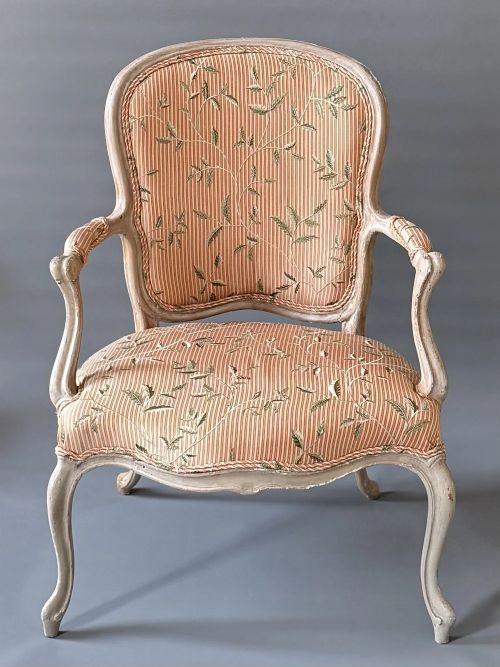
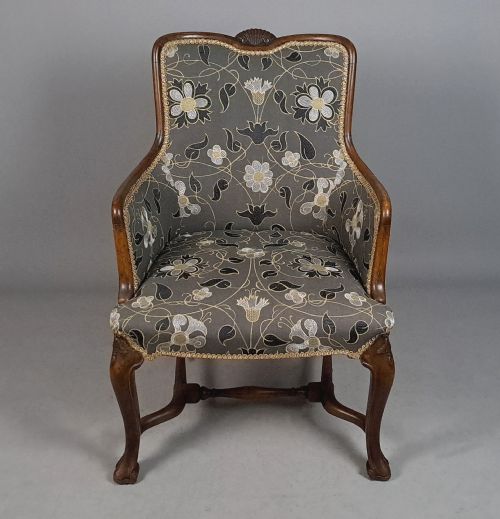
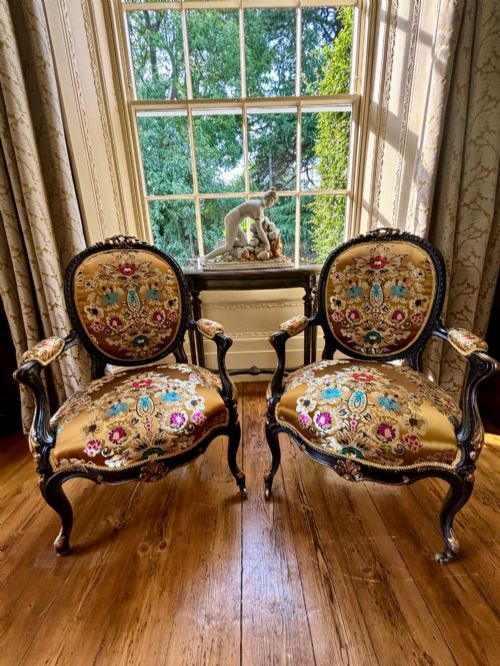
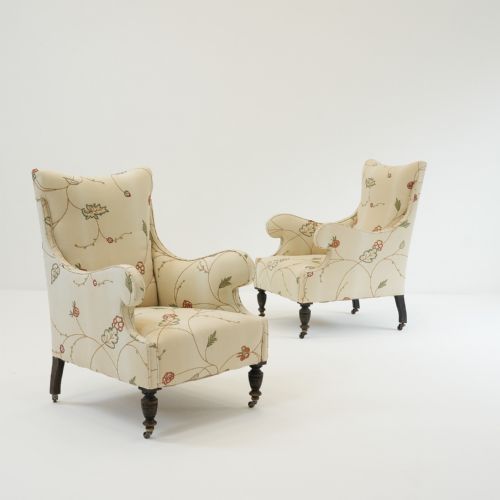
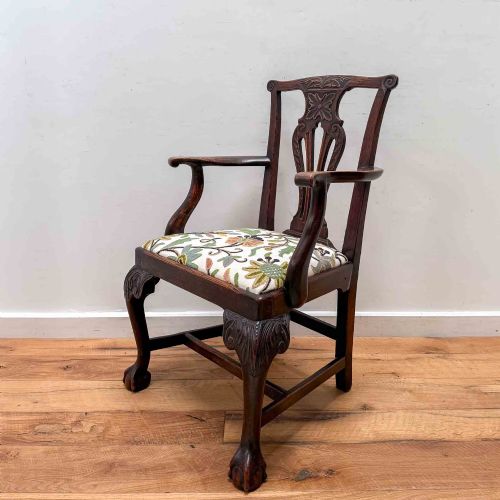
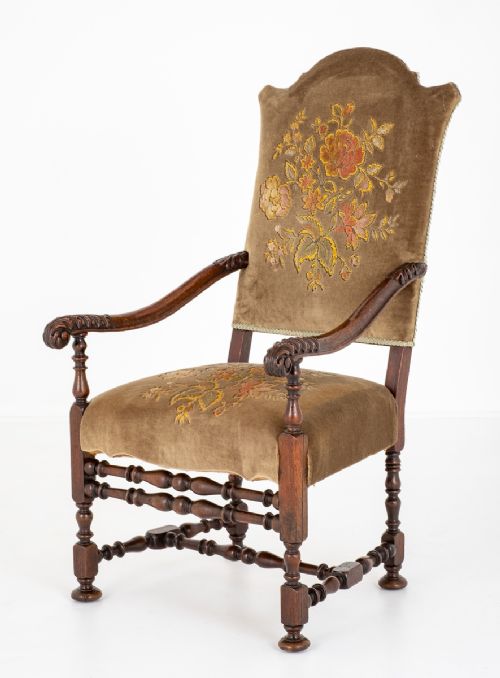
An antique embroidered armchair combines sturdy timber framing with hand-worked textile panels, needlepoint, or crewelwork. These seating pieces span multiple eras, offering deep upholstery paired with decorative needlework.
The versions most commonly met on this page range from Victorian creations to eighteenth-century revival styles. Makers across the nineteenth century utilised mahogany, walnut, oak, and giltwood to build these substantial chairs.
Forms include open armchairs, wingback fireside chairs, and slipper chairs. Each example integrates textile artistry directly into the structural frame of the furniture.
Materials and construction methods
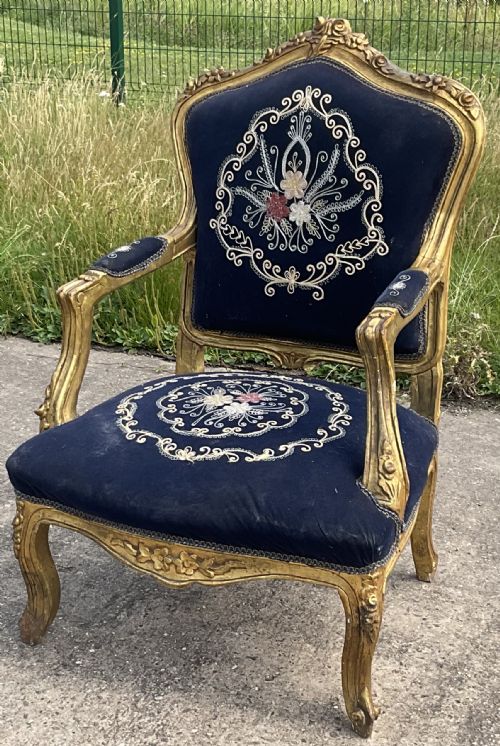
Cabinetmakers constructed the foundational frames using solid timbers such as mahogany, walnut, and oak, often shaping the wood into revival styles like Queen Anne, Sheraton, and Louis XV. Brass hardware and giltwood enrichment frequently appear on formal French and Victorian seating.
The textile elements rely on needlepoint, petit point, and crewelwork executed on heavy fabric grounds. Upholsterers secured these embroidered panels directly onto the sprung or padded framework using traditional stuffing materials.
Listings feature walnut, mahogany, oak, brass, and giltwood combined with velvet, textile, and fabric upholstery across multiple centuries.
Distinctions in construction and textile execution
The division between standard and superior pieces rests heavily on the density and fineness of the needlework. Petit point panels with intricate pictorial or floral shading demand significantly more labour than coarser crewelwork embroidery.
Frame integrity and timber selection separate finer seating from basic examples. Original carved mahogany or walnut frames with crisp joinery demonstrate superior cabinetmaking compared to softer secondary woods or later alterations.
The Antique Embroidered Armchair Glossary
- Petit point
- Needlework stitched on a fine canvas grid using small tent stitches. This technique allows for high detail and shading in upholstery panels.
- Needlepoint
- A broad category of hand-stitched canvas embroidery. It forms the primary decorative surface on many Victorian and French period chairs.
- Giltwood
- Timber treated with a thin layer of gold leaf or metallic gilt paint. This finish appears on decorative framework from revival periods.
- Slipper chair
- A low-set upholstered chair traditionally used in bedrooms. These pieces typically feature no arms and stand closer to the floor.
Antique Embroidered Armchair: Frequently Asked Questions
Where were these chairs placed?
These chairs served primarily in drawing rooms, parlours, and bedrooms as comfortable seating options. Wingback versions frequently stood near hearths to block drafts.
Smaller slipper chairs functioned in private dressing rooms and bedchambers. Their compact proportions suited intimate domestic spaces.
How do I clean the embroidery?
Textile panels require gentle surface cleaning using soft brush attachments on low suction. Professional textile conservators should handle historic wool and silk threads.
Avoid liquid cleaners and harsh detergents on aged embroidery yarn. Moisture can destabilise historic backing fabrics and stuffing materials.
Are frames solid wood?
Primary structural elements utilise hardwoods including mahogany, walnut, oak, and beech. These dense timbers provide the necessary strength for weight-bearing chair legs and arms.
Secondary internal bracing may incorporate softer timbers depending on the period. Exterior show-wood surfaces showcase the primary carved or polished grain.
Can these chairs be used daily?
Historic seating accommodates regular sitting provided the internal webbing and joints remain stable. Heavier usage requires periodic inspection of the frame construction.
Fragile needlepoint panels benefit from careful treatment to prevent yarn abrasion. Gentle daily rotation helps preserve antique textiles over time.