


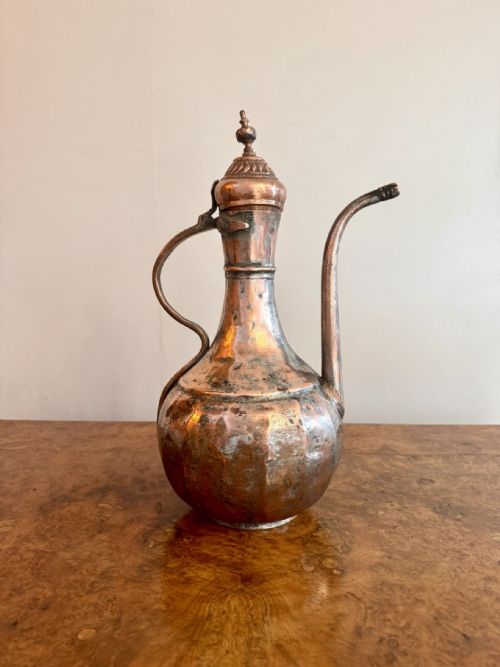


Antique Eastern Metalwork
These items of antique eastern metalwork bring intricate brass, copper, and bronze craftsmanship into modern rooms.
Antique Eastern Metalwork
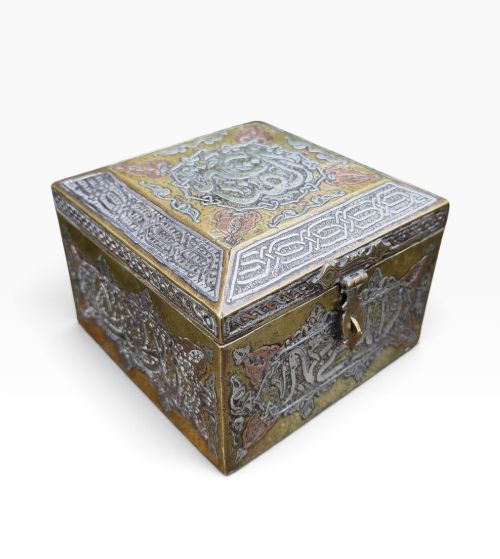
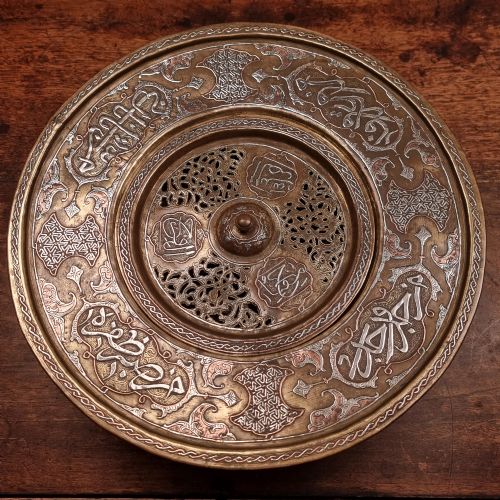
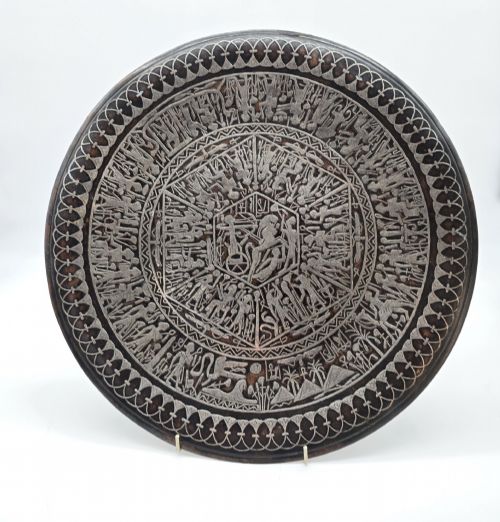
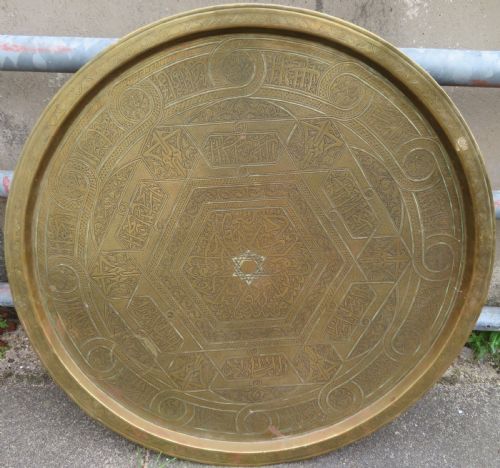
Antique eastern metalwork encompasses decorative vessels, tables, and wall chargers originating from Middle Eastern, Persian, Indian, and Tibetan traditions. Buyers searching this phrase will find a strong representation of Cairo Ware items, alongside Persian copper dishes and Mamluk revival pieces.
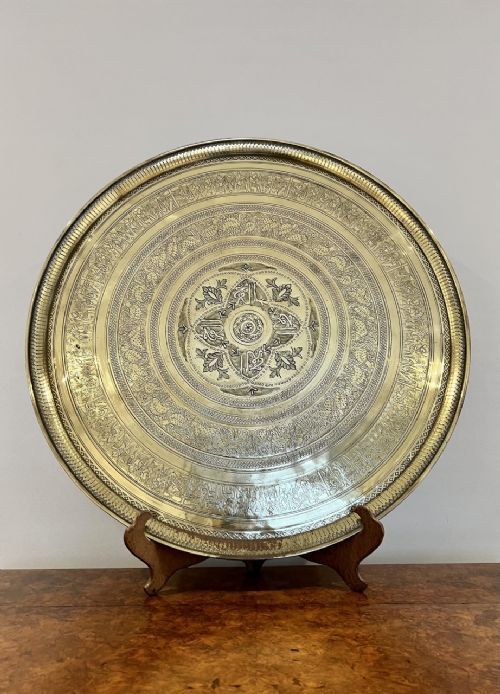
The objects span domestic and ritual forms, including occasional tables known as kursi, engraved basins, coffee pots, and occasional trays. Nineteenth-century examples predominate, though earlier sixteenth-century basins and candlesticks appear.
Regional styles range from Anglo-Indian piercing and Sino-Tibetan bronze work to Ottoman and Qajar Persian engraving. These pieces reflect distinct regional techniques developed across centuries of metalworking heritage.
Materials and construction techniques
Makers utilised copper, brass, and bronze as base metals, frequently incorporating mixed metals, white metal, and silver inlays to create high-contrast surface patterns. Patinated copper and copper alloy also appear across various regional items.
Surface decoration relied heavily on detailed hand engraving, repousse work, and openwork piercing. Craftsmen inlaid contrasting metals into recesses and applied enamel work to brass and copper substrates.
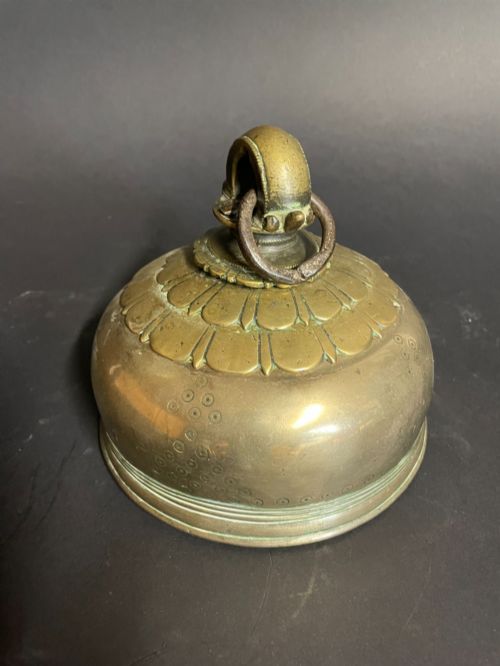
Construction methods varied from casting heavy figures and bells to fabricating tables, trays, and vessels through sheet metal shaping, joining, and intricate surface tooling.
Several copper coffee pots and Jewish vases bear personal text and ownership inscriptions, capturing the distinct voices of past households.
Distinctions in quality and execution
The standard of hand engraving determines much of the visual depth, with superior pieces displaying crisp, deeply cut lines and balanced geometric or figurative compositions. Simpler items rely on shallow tooling that lacks the same definition.
Material integration separates standard production from exceptional work, particularly in the precision of silver and copper inlays within brass grounds. Cleanly fitted metal threads and secure openwork piercing indicate higher workshop proficiency.
The Antique Eastern Metalwork Glossary
- Cairo Ware
- Nineteenth and early twentieth-century metalwork produced in Egypt, typically constructed from brass and inlaid with silver and copper. These items often emulate earlier Mamluk designs for Western export.
- Kursi
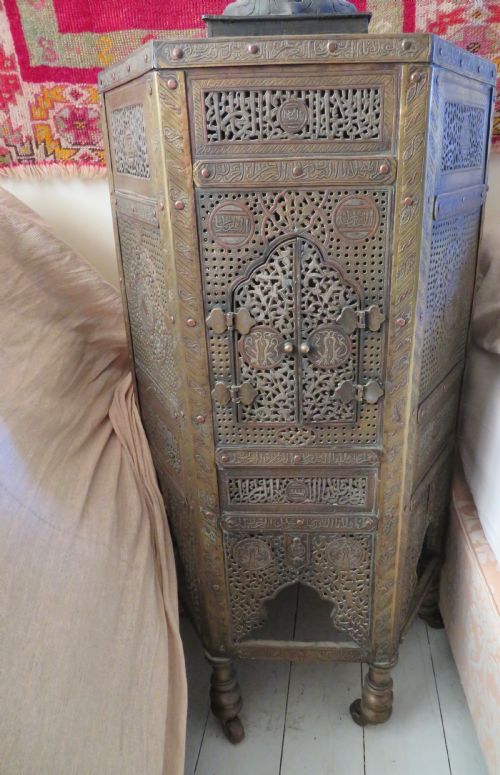
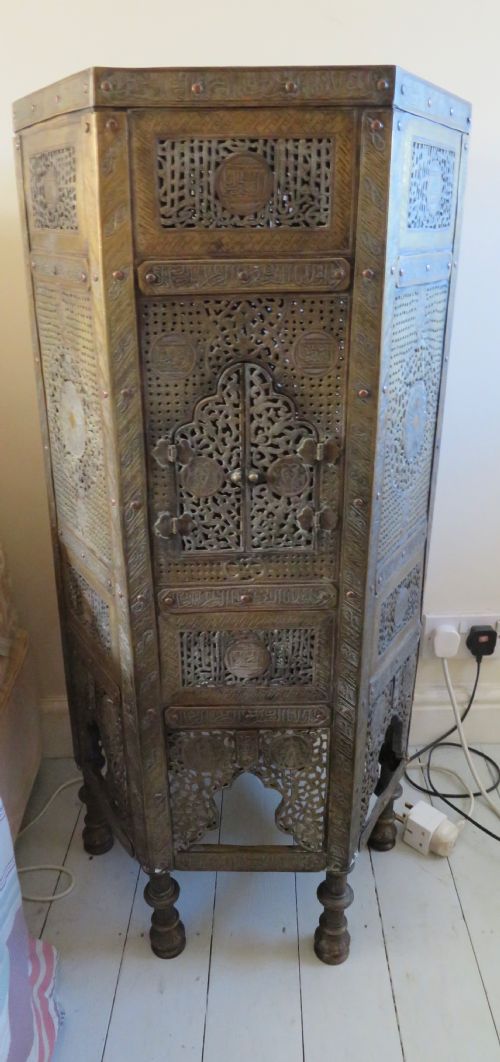
- A hexagonal occasional table or stand utilised in Middle Eastern interiors, frequently featuring openwork brass panels and metal inlay.
- Repousse
- A metalworking technique where the artisan hammers the design from the reverse side to form raised relief patterns on the front.
- Wall Charger
- A large decorative plate designed to be hung for display rather than used at the dining table.
- Veneto-Saracenic
- Metalwork produced in Islamic lands during the medieval period specifically for trade with the Venetian Republic.
Antique Eastern Metalwork: Frequently Asked Questions
What is Cairo Ware?
Cairo Ware refers to brass and copper metalwork created in Egypt during the late nineteenth and early twentieth centuries. These objects frequently feature intricate silver and copper inlay.
Craftsmen produced these pieces for both local use and the Western market, adapting traditional Mamluk motifs into trays, tables, and lamps.
How were occasional tables used?
Hexagonal occasional tables, known as kursi, served practical and decorative functions in traditional Middle Eastern interiors. They often held Qurans or supported small lamps and vessels.
The openwork construction allowed light to pass through the patterned panels while providing a sturdy surface for domestic items.
How do I identify Persian metalwork?
Persian pieces often display distinct calligraphic inscriptions, floral scrolls, and dense Qajar or Safavid engraving styles. They frequently utilise copper or brass as primary materials.
Dishes and candlesticks from this region rely heavily on hand-pounded surfaces and deeply incised geometric borders rather than heavy metal inlays.
Can these metal objects be cleaned?
Standard metal polishes should be avoided on antique pieces to preserve the historic patina and delicate inlay work. Gentle dusting with a soft cloth is sufficient for daily care.
Harsh abrasive cleaning removes the aged surface tones that develop over centuries of handling and environmental exposure.