

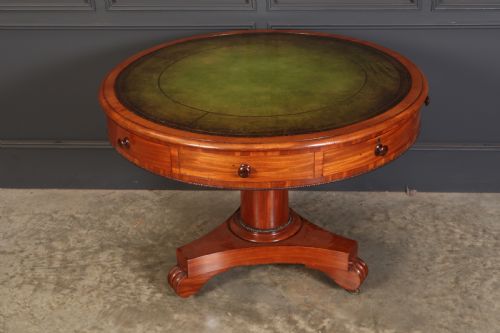


Antique Drum Writing Table
An antique drum writing table stands as a circular marvel of library furniture, rotating on a central pillar to offer workspace and drawers to scholars.
Antique Drum Writing Table
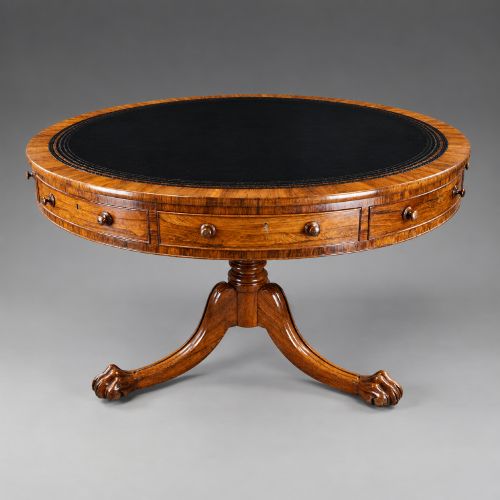
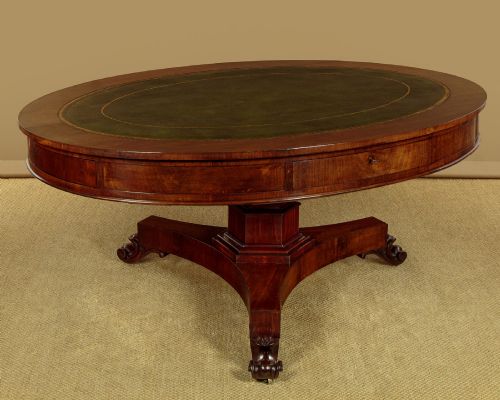
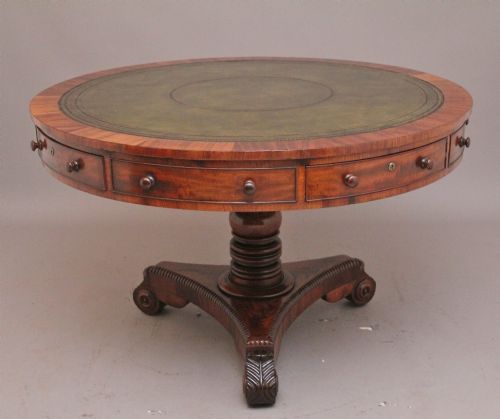
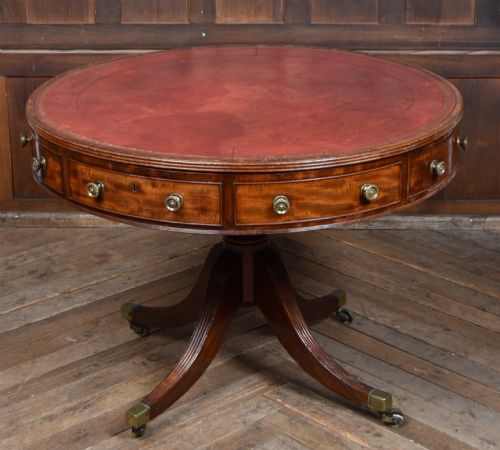
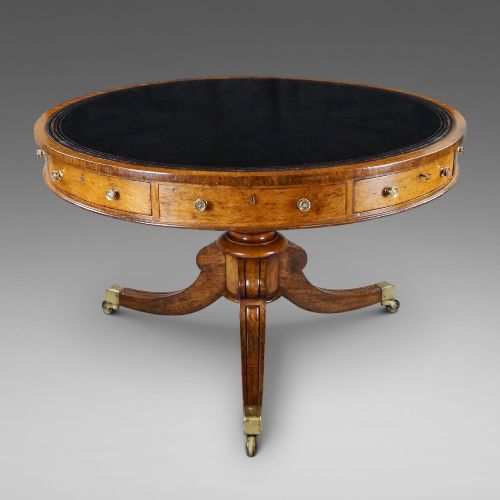
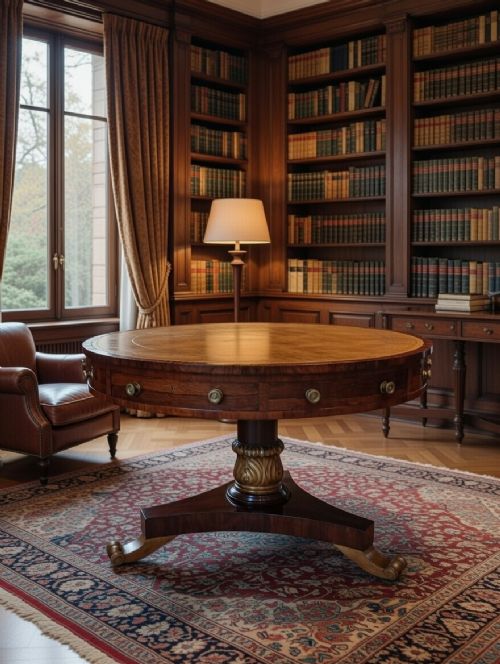
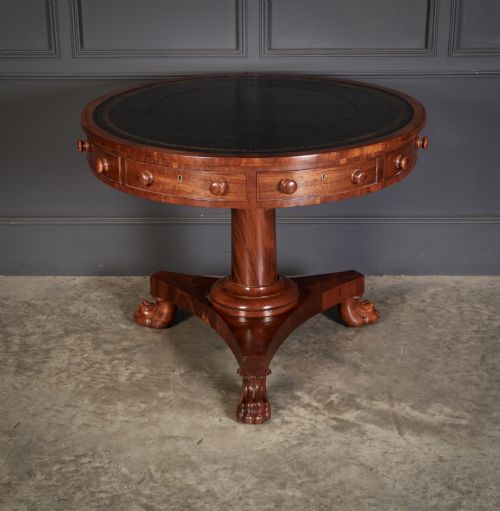
An antique drum writing table is a circular library table designed with a deep top and multiple frieze drawers, often rotating on a turned central pedestal. The examples seen on this page span the Georgian, Regency, and Victorian periods, with occasional Edwardian and later twentieth-century interpretations.
Mahogany and rosewood dominate the materials, alongside oak and walnut, frequently paired with inset leather working surfaces. Forms range from standard round tables to oval and octagonal shapes, serving as functional desks or centre tables in studies and libraries.
Materials and construction
Leather forms the inset writing surfaces on the tops, commonly tooled with gold borders. Construction relies on a central pillar resting on tripod or quadruped legs, incorporating a revolving mechanism that allows the entire top to turn.
Estate stewards once sat spinning these tables to collect tenant rents from hidden drawers.
Judging quality in drum tables
The refinement of the timber figure dictates much of the visual weight, with well-matched flame mahogany or richly grained rosewood marking superior examples. Figured veneers and careful timber selection separate standard pieces from more ambitious cabinet work.
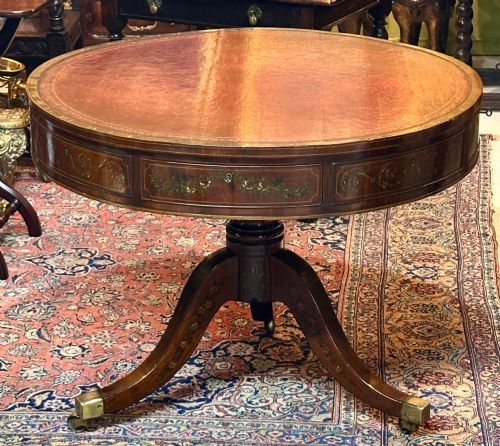
The smoothness of the revolving mechanism and the subtlety of the brass inlays or turned pedestals indicate the standard of manufacture. Well-executed drawer construction and balanced proportions define the more accomplished pieces.
The Antique Drum Writing Table Glossary
- Drum table
- A circular library table with a deep top containing alternating drawers and dummy drawers. It usually rotates on a central pillar.
- Rent table
- Another term for a drum table, historically used by estate stewards to collect rents in the fitted drawers. The rotating top allowed access to different compartments.
- Flame mahogany
- A veneer cut from the fork of the mahogany tree, producing a dramatic flickering flame pattern. Cabinet makers used it on prominent surfaces like table tops.
- Centre table
- A freestanding table finished on all sides to stand in the middle of a room. Many drum tables function in this capacity.
- Pollard oak
- Oak timber taken from trees that have been pollarded, creating a dense, knobbly growth pattern full of small knots. It yields a highly decorative veneer.
Antique Drum Writing Table: Frequently Asked Questions
What is a drum table used for?
An antique drum writing table served historically as a library desk or centre table where papers and books could be kept close at hand. The deep frieze drawers provided secure storage for documents while occupying a compact circular footprint.
Today, these pieces function effectively as freestanding centre tables or executive desks in studies. Their rotating tops allow users to reach different drawers without moving around the furniture.
How do I identify a Regency drum table?
Regency examples typically feature rich mahogany or rosewood veneers, sometimes accented with brass inlay or mounted on robust pillars with splayed legs. They date from the early nineteenth century and often display clean classical proportions.
Look for the characteristic drum-like depth of the top and the quality of the turned central pedestal. The combination of brass details and dark timber points firmly to this period.
Do all drum tables rotate?
Most traditional drum tables incorporate a revolving mechanism beneath the top, allowing the entire surface to spin on its pedestal. This feature enabled users seated in one spot to access multiple drawers.
Some later or alternative library tables might be stationary, so checking the pivot mechanism helps determine the specific function and period of the piece.
What woods were used for drum tables?
Mahogany is the predominant timber found in these listings, frequently enhanced by flame mahogany veneers that create striking visual patterns. Rosewood also appears regularly, alongside oak and walnut in various nineteenth-century pieces.
Secondary woods like oak often appear inside the drawer construction, while inset writing surfaces are traditionally finished in leather.
How do I care for the leather top?
The leather inset requires gentle cleaning with a dry or barely damp cloth, avoiding harsh chemicals that might strip the original tooling or colour. Periodic application of specialist leather balms helps maintain suppleness.
Keeping the table away from direct sunlight and excessive heat prevents the leather from drying out and cracking over time.