


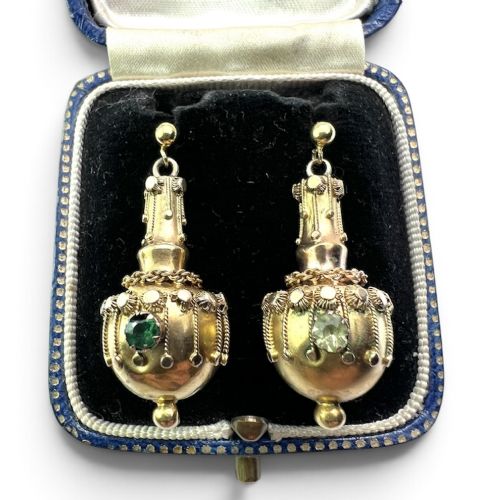
Antique Drop Pendant
An antique drop pendant hangs with the poised grace of the Edwardian and Victorian eras, bringing gems and precious metals close to the collarbone.
Antique Drop Pendant
The prevailing style relies on a central suspended element, whether a single gemstone, a floral cluster, or a cross. Pieces span from simple gold and turquoise halos to elaborate multi-gemstone arrangements.
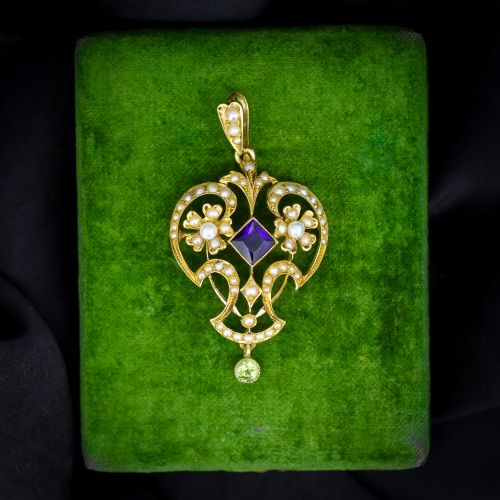
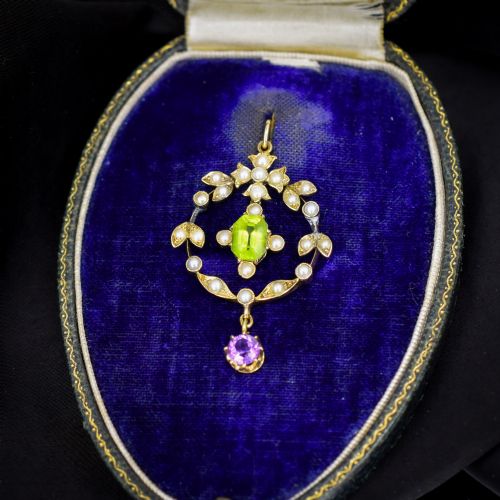
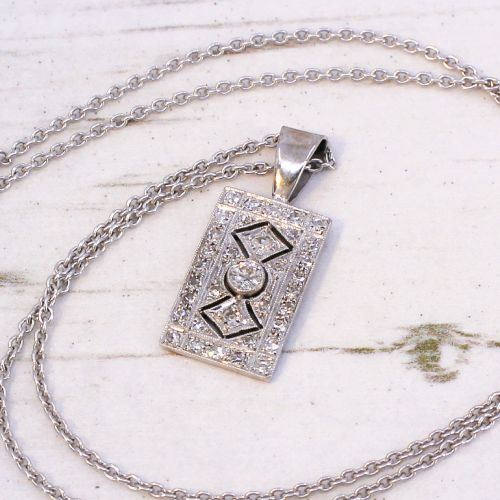
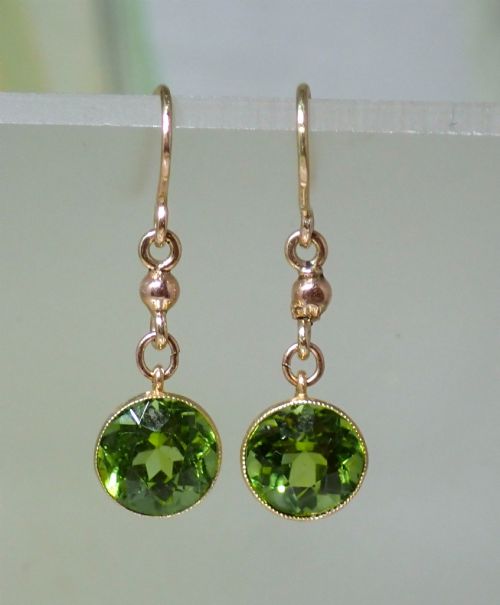
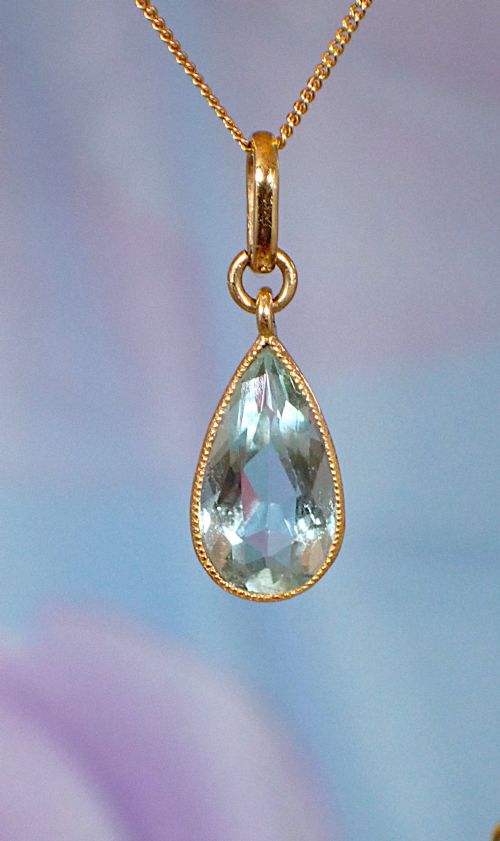
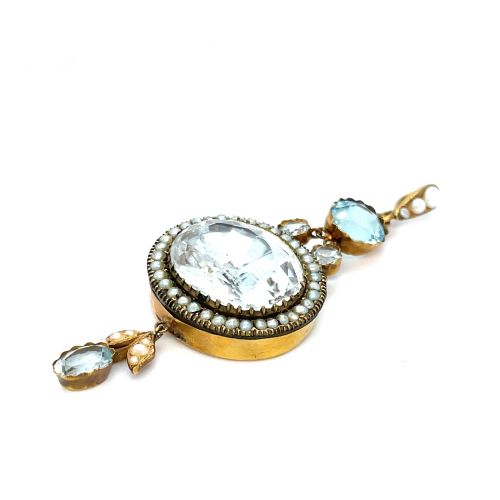
Edwardian examples frequently employ light stones like aquamarine, moonstone, peridot, and pearl set in platinum or gold. Victorian predecessors often favour heavier gold work, sterling silver, or striking blue enamel.
How they were made
Goldsmiths and jewellers constructed these pendants using precious metals including platinum, 9ct gold, 15ct gold, 18ct gold, and sterling silver. Stones were meticulously cut and secured into settings that often featured fine granulation, engraved detail, or knife-edge supports.
Techniques varied from delicate millegrain edges on Edwardian platinum mounts to substantial solid cast crosses and guilloche enamel work in Victorian designs. Combinations of gold and silver frequently appear in earlier pieces to enhance the brilliance of diamonds and other gemstones.
The listings show pieces spanning the Edwardian and Victorian periods, utilising platinum, gold, silver, diamond, turquoise, pearl, sapphire, aquamarine, moonstone, opal, peridot, rock crystal, coral, paste, marcasite, and enamel.
What varies in quality
Quality rests in the precision of the metalwork and the selection of materials. Finer examples display balanced proportions in their drop assemblies, secure stone settings, and harmonious gem pairings such as matched sapphires and pearls.
The distinction between standard production and superior work lies in the subtlety of the execution, from crisp engraving on gold crosses to the delicate transparency of guilloche enamel and the clean articulation of dangling elements.
E. Dropsy
The Antique Drop Pendant Glossary
- Drop pendant
- A necklace ornament featuring a central element that hangs downward from a fixed bail or chain.
- Guilloche
- An intricate mechanical engraving technique producing precise, repetitive patterns beneath translucent enamel.
- Millegrain
- A decorative technique creating a raised border of tiny metal beads along the edge of a setting.
- Knife edge
- A very thin, tapered bar of metal used in necklaces to give the optical illusion that a pendant floats unsupported.
- Halo
- An arrangement of smaller gemstones encircling a larger central stone.
Antique Drop Pendant: Frequently Asked Questions
How do I date an antique drop pendant?
Dating relies on the combination of materials, hallmarks, and stylistic traits. Edwardian pieces often utilise platinum and lighter pastel gems, whereas Victorian items frequently feature heavier gold, silver, or turquoise.
Examining the construction of the jump rings, settings, and any accompanying chains provides further clues to the period of origin.
Can I wear an antique drop pendant every day?
While these pieces were made for regular wear, their age requires mindful care. Softer stones like pearls, opals, and moonstones need protection from harsh impacts and chemicals.
Removing the pendant during strenuous activities or swimming ensures the delicate gold, silver, or platinum settings remain secure.
What is the difference between Victorian and Edwardian drops?
Victorian drops tend to feature robust forms such as solid engraved crosses, heavy gold, and rich blue enamel. They often project a bolder physical presence.
Edwardian drops favour lighter aesthetics, frequently employing platinum, diamonds, aquamarines, and peridots in airy floral or knife-edge designs.