

Antique Drinks Frame
An antique drinks frame or companion piece brings the hospitality of past centuries into a modern room with timber, glass, and metal.
Antique Drinks Frame
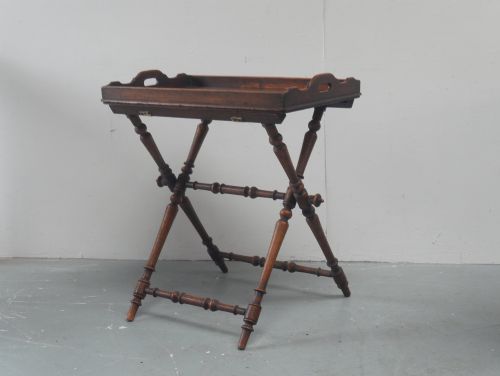
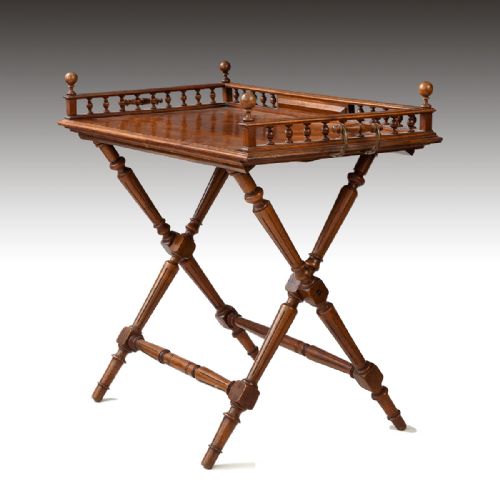
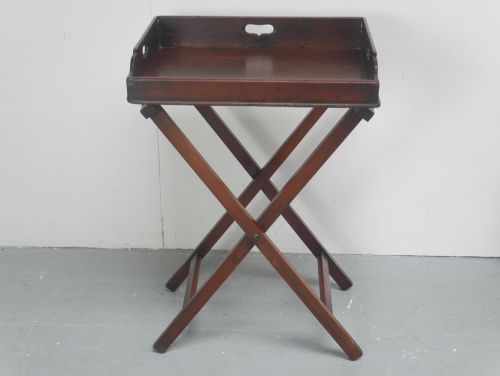
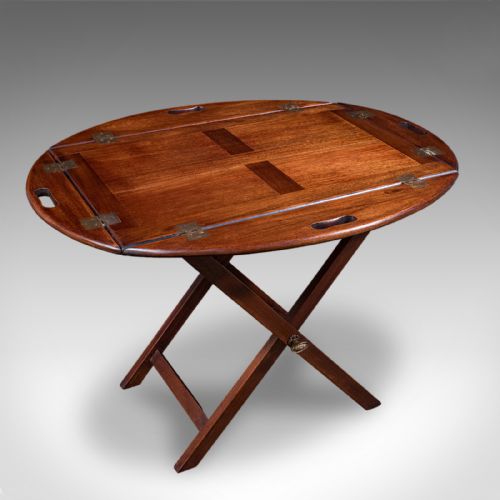
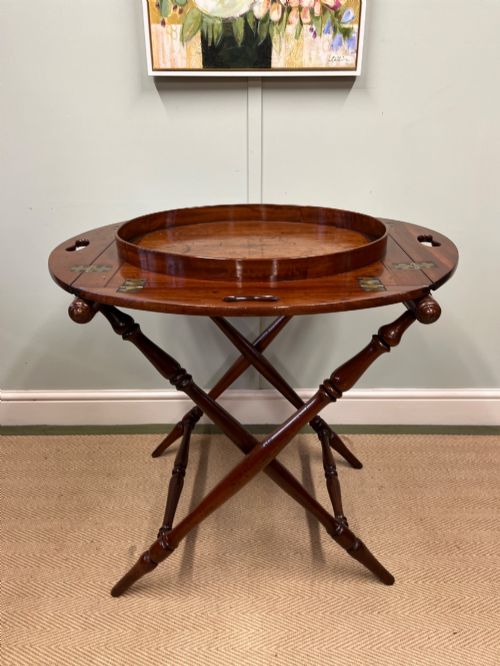
When you search for an antique drinks frame, you encounter a selection centred heavily on butler's trays on folding stands, secure tantalus sets, and fitted serving stands. These items span periods from the Georgian era through the Victorian and Edwardian decades, reflecting the social habits of their times.
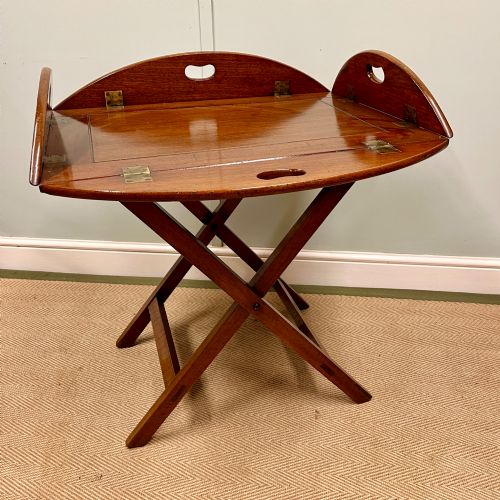
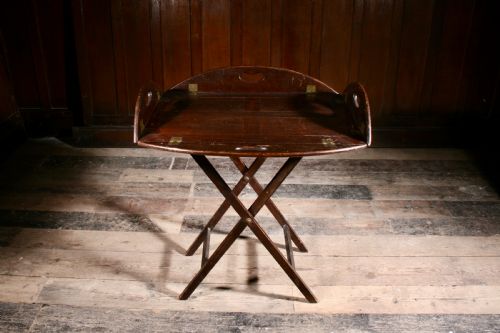
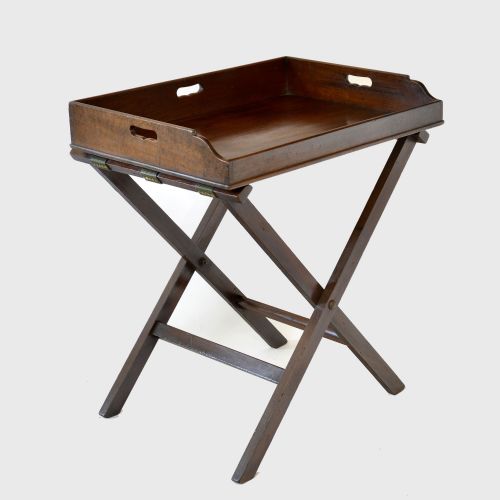
The most common forms on this page include mahogany and oak butler's trays raised on stands, alongside silver-plated or brass-framed decanter holders. They served practical roles in domestic hospitality, moving easily from cellarettes or sideboards to reception rooms.
Originating mostly in British and European workshops, these pieces range from austere utilitarian serving trays to elaborate lockingtantaluses trimmed in crystal and silver plate.
Materials and construction
Makers relied on dense hardwoods such as mahogany, oak, walnut, and occasional exotic veneers like coromandel for the structural frames and tray bodies. These timbers provided the weight and durability needed for holding heavy glassware and decanters.
Metal components involved cast brass, silver plating, and silver gilt, utilised for hinges, handles, and secure locking mechanisms on tantalus frames. Cut glass and crystal formed the accompanying decanters and bottles, shaped with heavy bases and stoppers.
Joinery techniques combined traditional cabinet-making methods with folding hinges and collapsible stands designed for efficient storage when not in use.
Some Victorian butler's trays have travelled from Swedish castles to British drawing rooms, proving that good hospitality knows no borders.
Distinctions in craftsmanship
Quality rests in the selection of timber grain, the precision of the dovetail or hinge joinery, and the weight of the metal hardware. Superior pieces display thoughtful proportion and rich, patinated wood surfaces rather than hurried assembly.
Decanter sets and locking tantaluses show differentiation in the clarity of the cut glass and the sturdiness of the locking mechanisms. Original matching bottles and fully functioning keys elevate the integrity of a piece.
The Antique Drinks Frame Glossary
- Tantalus
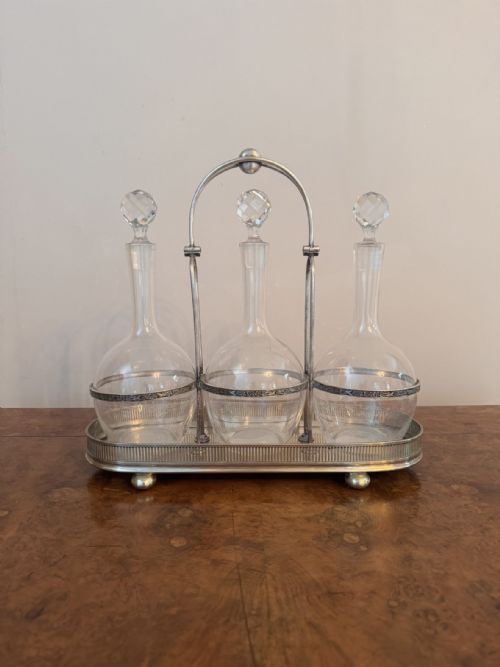
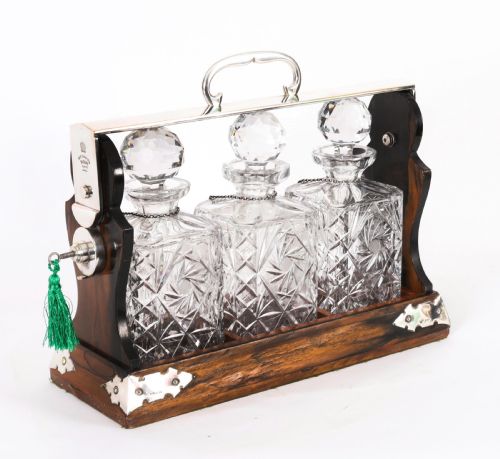
- A locked cabinet frame holding decanters visibly while preventing access to the contents without a key. It typically employs a metal bar passing across the necks of the glass bottles.
- Butler's tray
- A removable wooden tray with hinged or fixed sides, designed to sit upon a folding X-frame stand. It was used in large households for serving drinks and clearing glasses.
- Silver plate
- A layer of silver fused to a base metal, commonly copper or nickel brass, used extensively for durable hardware and serving stands. It offers the appearance of solid silver with greater structural strength.
- Cut glass
- Glass decorated by grinding facets or patterns into the surface using a wheel. High-clarity crystal enhances the brilliance of these geometric cuts.
- Etagere
- A set of open shelves or tiers used for displaying small items or serving drinks. These multi-level tables appear in brass-framed and wood configurations.
Antique Drinks Frame: Frequently Asked Questions
What is a tantalus?
A tantalus is a locking drink container frame that secures crystal decanters beneath a metal bar. This design allowed hosts to display their spirits while restricting unauthorized access by household staff.
The name derives from Greek mythology, referring to the torture of Tantalus who was kept just out of reach of water and food.
How were butler's trays used?
Butler's trays functioned as portable serving surfaces that could be lifted off their folding stands and carried by staff. They were brought into reception rooms for serving afternoon tea or evening beverages.
Once the gathering concluded, the tray returned to its stand or the stand folded flat for storage against a wall.
How do I date an antique tray?
Dating relies on examining the timber species, the style of the joinery, and the hardware fixings. Georgian and Regency examples often feature lighter mahogany with subtle edge mouldings, while Victorian versions incorporate heavier oak or rosewood.
Screws, hinge types, and handles also provide chronological clues, as machine manufacturing replaced hand-forged metal parts toward the end of the nineteenth century.
Are the decanters original?
Many surviving sets retain their original cut glass decanters, though replacements are common due to breakage over decades of use. Matching stoppers and consistent wear patterns on the base of the glass indicate originality.
When bottles fit snugly into the dedicated compartments of a tantalus or frame, they are typically contemporaneous with the housing.
How do I care for wood and metal?
Maintaining these pieces involves regular dusting with a soft cloth and occasional application of traditional beeswax to nourish the timber. Avoid modern silicone polishes that can degrade antique finishes.
Metal hardware and silver plate benefit from gentle cleaning with specialised cloths to prevent tarnish buildup without scratching the underlying metal.