


Antique Drapers Counter
An antique drapers counter is a sturdy commercial workspace designed for displaying and measuring cloth, bringing exceptional length and rustic utility to modern interiors.
Antique Drapers Counter
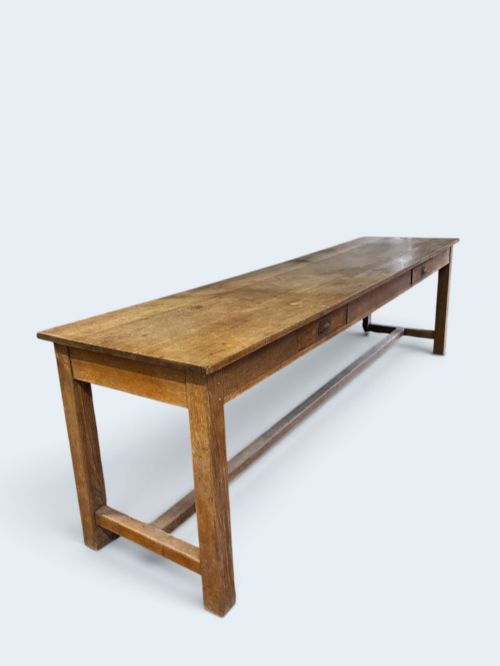
When you search for an antique drapers counter, you are looking at substantial commercial furniture built to handle textiles in nineteenth and early twentieth century shops. These pieces range from monumental French oak drapers tables to compact haberdashery cabinets and banks of narrow drawers.
The version you are most likely to meet on this page is a substantial timber table or counter originating from France or England. They appear across periods including the Victorian and Edwardian eras, as well as specific decades like the 1880s and 1920s.
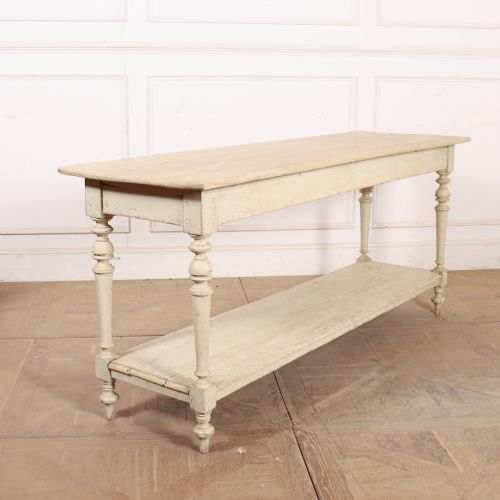
Beyond standard tables, the selection includes specialised shop fittings such as display stands, console tables, and serving tables. Their robust construction and generous proportions make them highly practical for contemporary kitchens and living spaces.
Materials and construction
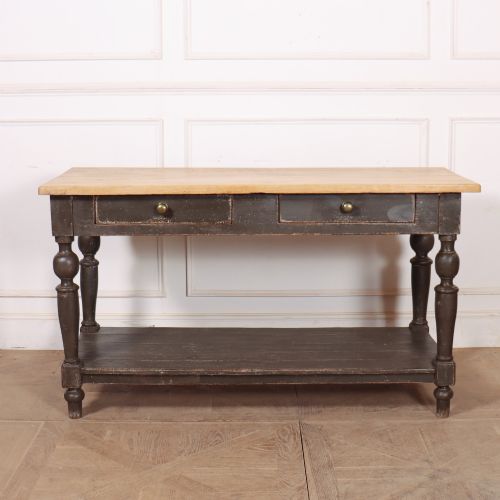
These pieces were constructed from durable timbers suited to heavy commercial use, predominantly oak, pine, and mahogany. Carpenters often finished surfaces with paint or bleached the natural wood to achieve a lighter appearance.
Metal components such as brass and cast iron appear on specific items like display stands and shop fittings, providing structural support and mechanical adjustment. Cabinet makers incorporated banks of small drawers to organise needles, ribbons, and fabric samples efficiently.
Many counters bear the subtle dents and ink marks left behind by a century of measuring cloth and counting coins.
What separates the fine examples
Quality in these counters lies in the integrity of the timber and the scale of the piece, particularly regarding length and proportion. Monumental examples that retain their original unpainted surfaces or authentic bleached oak finishes demonstrate superior presence.
The sophistication of the joinery and the retention of original hardware, such as brass fittings and functional drawer banks, distinguish utilitarian workshop survivors from finer retail display furniture.
The Antique Drapers Counter Glossary
- Haberdashery cabinet
- A multi-drawer unit originally utilised in shops for storing small sewing items like buttons and thread. These cabinets feature numerous shallow drawers for organised stock holding.
- Bleached oak
- Timber treated to lighten its natural dark tone, creating a pale surface finish. This treatment is frequently seen on nineteenth century French tables.
- Shop counter
- A heavy piece of furniture positioned to serve customers and handle transactions in a retail environment. They often incorporate adjustable feet for uneven shop floors.
- Display stand
- A raised metal or wooden fixture designed to showcase merchandise clearly to shoppers. These utilise brass and cast iron elements for structural longevity.
Antique Drapers Counter: Frequently Asked Questions
What is a drapers counter used for?
These counters were originally utilised in retail drapery shops for cutting, measuring, and displaying bolts of fabric to customers. The expansive flat tops and numerous drawers provided practical workspace and storage.
Today, buyers repurpose these substantial tables as kitchen islands, sideboards, or large console tables in spacious living areas. Their durable timber construction easily accommodates modern domestic demands.
How do I identify a Victorian drapers counter?
Victorian examples typically feature dense native timbers like mahogany or oak, often constructed with heavy proportions and robust joinery. Look for utilitarian details such as adjustable feet designed for nineteenth century shop floors.
French provincial variants from a similar period frequently utilise pine or oak with softer, painted or bleached finishes. Comparing the wood species and hardware style helps determine the likely origin and period.
Where should I place a drapers counter?
Because of their generous length and depth, these counters require substantial room to breathe within a floor plan. They function exceptionally well as central islands in large kitchens or as serving tables in dining rooms.
Ensure you measure both the length of the counter and the surrounding clearance space for movement and seating. Their commercial origins mean they demand a focal point with adequate surrounding clearance.
Are drapers counters made of solid wood?
Commercial furniture from the nineteenth and early twentieth centuries was constructed using heavy solid timbers to withstand constant daily retail use. You will frequently encounter heavy oak, pine, and mahogany across these tables and cabinets.
Surfaces may feature applied paint or bleached finishes, but the structural frames rely on solid timber joinery. This sturdy construction explains their survival and continued usability today.