




Antique Double Candelabrum
These antique double candelabrum pieces bring dual-branch illumination to a table, combining period craftsmanship with practical symmetry.
Antique Double Candelabrum
When searching for an antique double candelabrum, collectors encounter twin-branch lighting pieces spanning the seventeenth through to the twentieth centuries. The selection includes silver plated designs, brass formations, and cut glass pairings suited for formal dining settings or side tables.
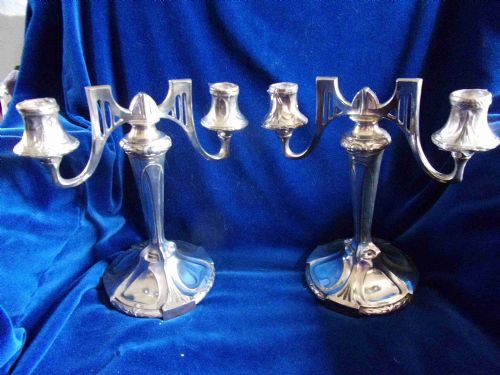
Most examples date across the Victorian, Art Nouveau, and Art Deco eras, presenting dual candle sockets configured on single pedestals or arms. Forms range from low table branches to wall sconces and figurative spelter models produced across European workshops.
Materials and construction methods
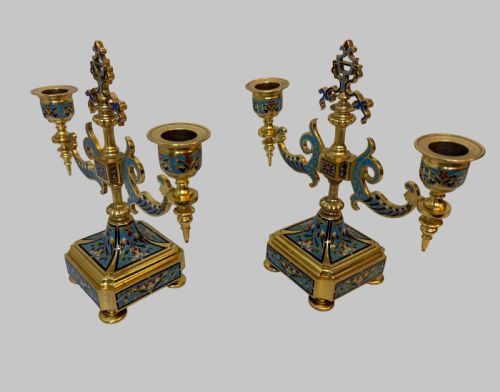
Construction relies heavily on metals such as brass, bronze, silver plate, and wrought iron, often finished with champleve enamel or gilt highlights. Heavier foundational materials provide stability for twin branching arms supporting the candles.
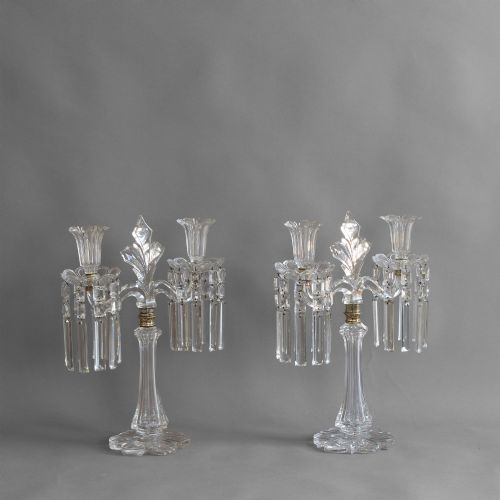
Glass elements incorporate cut glass and crystal components, seen particularly in lustres and Cricklite assemblies. Manufacturing techniques combine metal casting, plating, and hand-cutting glass to achieve the desired ornamentation.
Current listings feature double candelabrum options executed in brass, silver plate, cut glass, and wrought iron across multiple European styles.
Evaluating standard and finish
Quality separates through the crispness of metal casting and the depth of surface plating or gilding. Finer pieces demonstrate precise chasing on bronze and brass, alongside intact enamel work and unblemished crystal droplets.
Structural integrity of the twin branches and the weight of the base dictate durability. Superior examples maintain balanced proportions across both arms and retain original components without replacement sockets or mismatched fittings.
The Antique Double Candelabrum Glossary
- Candelabrum
- A large branched candlestick holding multiple candles on a single base. Dual-branch versions are frequently termed double candelabra.
- Champleve
- An enamelling technique where troughs are dug into a metal surface and filled with vitreous enamel before firing. It appears on nineteenth-century decorative metalwork.
- Spelter
- A zinc alloy used as a cost-effective substitute for bronze in decorative figures and lamp bases. It takes finishes like bronze paint or electroplating well.
- Lustre
- A candelabrum or candlestick hung with cut glass prisms or pendants. These pendants refract candlelight to enhance visual brilliance.
Antique Double Candelabrum: Frequently Asked Questions
How do I clean an antique double candelabrum?
Dust metal surfaces gently with a soft dry cloth to preserve patination. Avoid harsh chemical dips that strip silver plating or damage enamel.
For glass prisms, remove them carefully and wash in lukewarm soapy water before drying thoroughly. Keep moisture away from any glued joints or weighted bases.
Are these candelabra wired for electricity?
Most period examples are designed strictly for wax candles as originally manufactured. Some twentieth-century pieces or later adaptations incorporate twin branch lamp fittings.
Check the listing details to confirm whether a piece retains its original candle sockets or has received electrical conversion.
What periods do these candelabra come from?
The available selection spans from seventeenth-century wrought iron pieces through nineteenth-century Victorian and French designs. Twentieth-century examples extend into Art Nouveau and Art Deco periods.
Stylistic markers and materials generally align with the manufacturing decade noted in each individual description.
Can I use standard taper candles in them?
Most antique sockets accommodate standard dinner tapers, though older hand-forged or European sockets can vary slightly in diameter. Measuring the nozzle width ensures proper fit.
Using dripless wax reduces the risk of residue accumulation on delicate brass, silver plate, or enamel surfaces.