




Antique Domestic Scene Painting
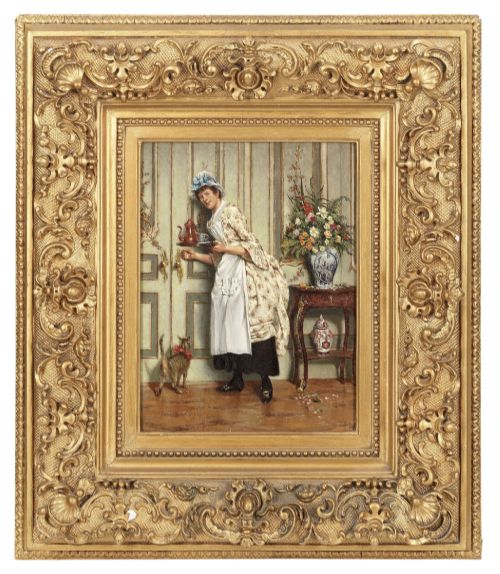
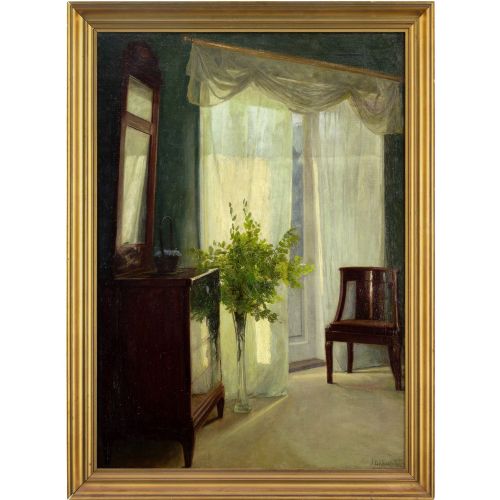
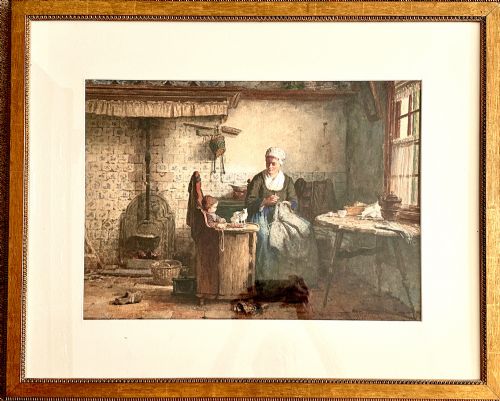
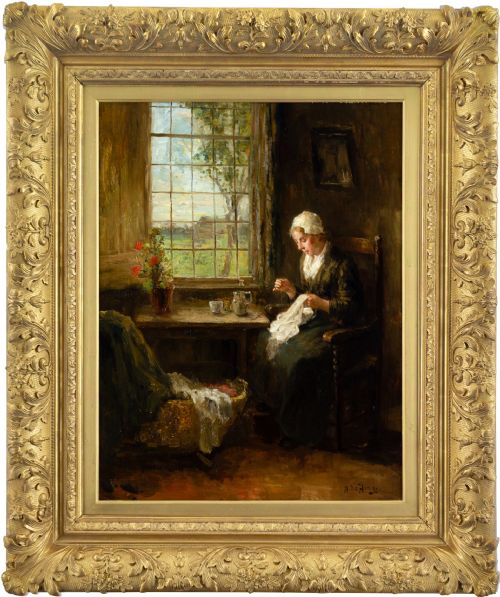
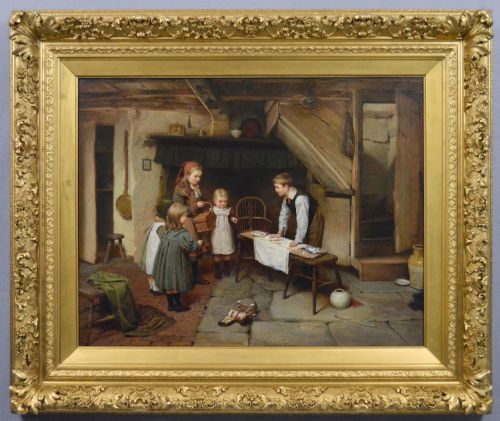
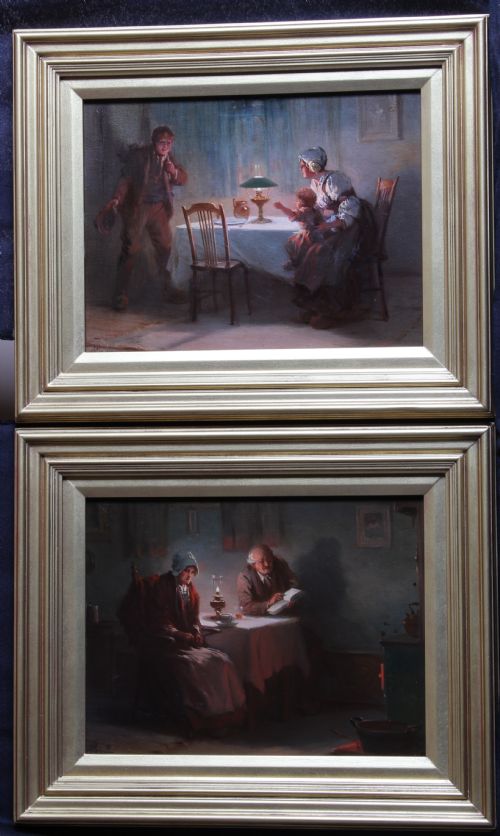
These antique domestic scene painting works capture quiet family moments in cottages and country houses.
Antique Domestic Scene Painting
An antique domestic scene painting brings the everyday life of past centuries into the present room, depicting intimate household moments. When browsing this selection, collectors encounter framed artworks recording scenes such as tea times, fireside rests and cottage interiors.
The works span the nineteenth century into the early twentieth century, taking the form of oil paintings, watercolours and oil on panel pieces. These depictions range from detailed Victorian genre paintings to impressionist canvases and Scandinavian realism.
Many of these works focus on family life, showing mothers, children and domestic workers engaged in daily tasks like spinning wool or reading. Such pieces provide a window into historical home environments, captured through the eyes of artists working across Britain and continental Europe.
Materials and methods
Artists relied primarily on oil paint applied to canvas, wood panels or copper, building up rich surfaces that hold their depth over time. Watercolours on paper also feature prominently, offering a lighter medium for capturing interior light and shadow.
Many of these works are housed in their original frames finished with gesso and gold leaf, which provide structural support and complement the tones within the painted composition.
A gentleman's shaving ritual interrupted by his wife makes domestic friction surprisingly charming on canvas.
Assessing the work
Quality in these works rests upon the artist's handling of light and space within a confined interior, where natural illumination from a window or hearth defines the mood. Stronger pieces demonstrate a confident control of narrative detail, capturing posture and expression without slipping into sentimentality.
The harmony between the painted subject and its framing contributes significantly to the presence of the piece on the wall. Works that retain their original period frames and retain clear surface integrity offer a more complete historical record.
Stephen Samuel Lewin·John Lübschitz·Hendrik Valkenberg·Bernard De Hoog·James Hayllar·Harry Brooker·Alexander Rosell·James Kyd·George Smith·Théophile Emmanuel Duverger·Henry Spernon Tozer·Rolinda Sharples·Pauline Delacroix Garnier·Alfred Provis·Henry Silkstone Hopwood·Jonathan Pratt·Pierre-Louis Bouchard·Charles Lewis
The Antique Domestic Scene Painting Glossary
- Genre painting
- Depiction of aspects of everyday life by depicting ordinary people engaged in common activities. These works focus on domestic interiors, street scenes and social gatherings rather than grand historical or mythological subjects.
- Oil on panel
- A painting executed on a flat wooden board rather than stretched canvas. This rigid support was favoured by many artists for smaller interior scenes.
- Gesso
- A plaster-like mixture applied to wood or canvas as a base for painting or moulding into decorative frames. It provides a smooth surface for gilding with gold leaf.
- Watercolour
- A painting method in which the paints are made of pigments suspended in a water-based solution. Works in this medium are typically executed on paper and mounted behind glass.
Antique Domestic Scene Painting: Frequently Asked Questions
What periods do these paintings cover?
The selection spans the nineteenth century through the early decades of the twentieth century, capturing distinct aesthetic movements from Victorian genre painting to impressionism.
Creators working during these decades recorded domestic life using traditional media such as oil and watercolour on canvas, panel, or paper.
Where were these domestic scenes typically set?
Many compositions take place within rural cottages, Highland dwellings, or country house interiors, focusing on firesides, dining tables, and garden doors.
These settings allowed artists to study how natural light falls across household objects and family members during daily routines.
How do I care for an antique painting?
Keep works out of direct sunlight and away from sources of excessive heat or dampness to protect the paint surface and support.
Dust frames gently with a dry, soft cloth and avoid using liquid cleaners on either the canvas or the gilt gesso work.
Are these works signed by the artist?
Several pieces feature original signatures or inscriptions left by the painter, while others are attributed through historical style or gallery records.
Labels on the reverse sometimes provide additional provenance regarding past owners or exhibition history.