



Cottage Interior Narrative Painting
These cottage interior narrative painting works capture domestic domestic life in oil on canvas and panel, offering a window into rural Victorian living.
Cottage Interior Narrative Painting
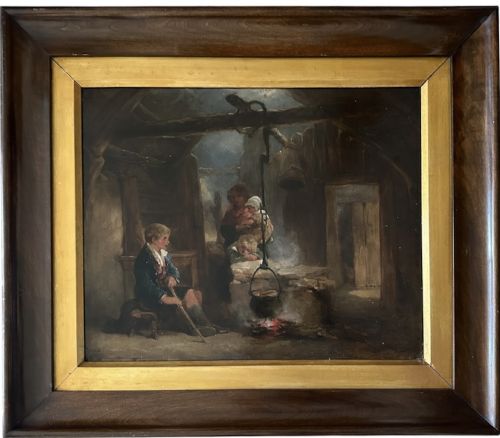
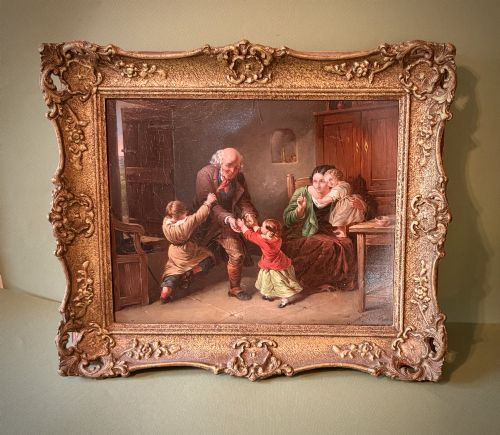
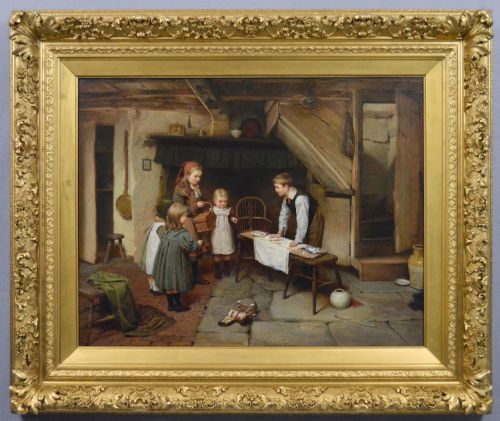
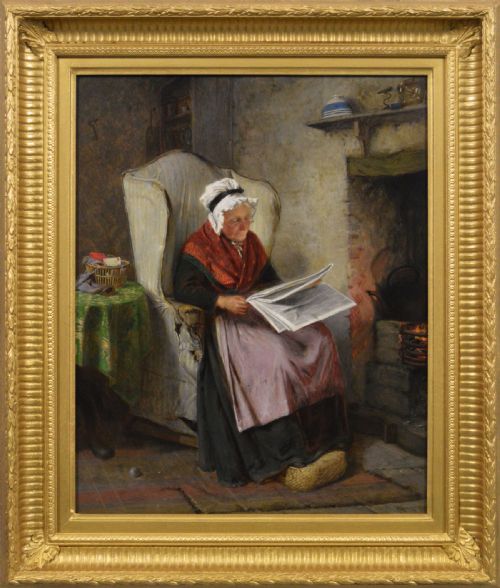
A cottage interior narrative painting portrays domestic scenes within rural homes, featuring figures such as children, mothers, and elderly residents. These works draw viewers into intimate moments of family life, quiet tea times, and fireside gatherings.
The pieces available here hail primarily from the Victorian era, spanning dates from the 1860s through to the early 20th century. Painters focused heavily on genre realism, recording the daily routines and modest surroundings of country folk with attentive detail.
Buyers will encounter both small cabinet panels and larger canvases, often framed in gilt wood or gold leaf. The subjects range from solitary figures resting by the hearth to bustling rooms populated by children and domestic animals.
Materials and technique
Artists relied primarily on oil paint applied to prepared canvas or wooden panels to achieve rich textures and deep tones. This medium allowed painters to build subtle layers of light and shadow, essential for rendering dim cottage interiors lit by hearths or small windows.
Finished works were frequently housed in elaborate frames constructed from wood and finished with gold leaf or gilt. These traditional mountings served to protect the painted surface while enhancing the domestic warmth of the scene within.
Listings feature works created between eighteen sixty and nineteen hundred, utilising oil paint on canvas and wood panel.
Judging the quality
Quality in these works rests on the artist's ability to render human expression and narrative interaction convincingly within a confined domestic space. Superior examples manage complex groupings of figures and animals, balancing the composition against the dark interior background.
The handling of light remains a crucial differentiator, as finer paintings successfully capture the ambient glow of a fire or a single shaft of window light. Frame preservation and the original condition of the oil paint surface also play significant roles in establishing the merit of a piece.
George Whitton Johnstone·Harry Brooker·Haynes King·George Smith·Alfred Provis·Ralph Hedley·Robert Gemmell Hutchison·Charles Hunt Jnr
The Cottage Interior Narrative Painting Glossary
- Genre painting
- Depiction of aspects of everyday life by portraying ordinary people in contemporary situations. These scenes form the backbone of domestic narrative art from the period.
- Oil on canvas
- Pigment mixed with drying oil applied to stretched fabric. This support became the standard medium for fine art painting through the nineteenth century.
- Panel
- A flat piece of wood used as a rigid support for oil paint. Smaller cabinet works were frequently painted on panels rather than canvas.
- Gilt wood
- Wood carved and covered with a thin layer of gold leaf or metallic gilt. Elaborate gilt wood frames are typical accompaniments to Victorian fine art.
- Victorian realism
- An artistic movement focused on the truthful and unidealised depiction of contemporary life. Painters in this style observed everyday subjects with careful attention to detail.
Cottage Interior Narrative Painting: Frequently Asked Questions
What is a cottage interior narrative painting?
These works are nineteenth century oil paintings that depict domestic scenes inside rural homes. They typically show figures engaged in daily routines, family interactions, or quiet rest by the hearth.
Artists during the Victorian period used these narrative compositions to record the character and atmosphere of traditional country life.
How do I identify a Victorian genre painting?
Victorian genre paintings are recognised by their realistic portrayal of everyday human subjects rather than historical or mythological themes. Look for clothing, furniture, and settings that reflect nineteenth century domestic environments.
Most pieces from this era are executed in oil paint upon canvas or wooden panels, often bearing the artist's signature or exhibition history.
Where should I hang an oil painting?
Oil paintings on canvas or panel require walls protected from direct sunlight and excessive moisture. Keeping them away from sudden temperature fluctuations helps preserve both the paint surface and the wooden support.
Displaying the work at eye level allows the viewer to appreciate the fine brushwork and detailed narrative elements within the interior scene.
Why do some paintings feature animals?
Domestic animals such as dogs, pigs, donkeys, and rabbits frequently appeared in genre scenes to enhance the realism of rural cottage life. These creatures added movement and narrative warmth to the compositions.
Artists used animals to reflect the close proximity between humans and livestock in nineteenth century agricultural settings.
How should I clean a gilt wood frame?
Gilt wood and gold leaf frames require gentle maintenance using a soft, dry brush to remove accumulated dust. Avoid using water or chemical cleaning solutions, as moisture can damage the delicate metallic surface.
Regular dusting protects the antique frame and maintains the rich appearance surrounding the oil painting.