
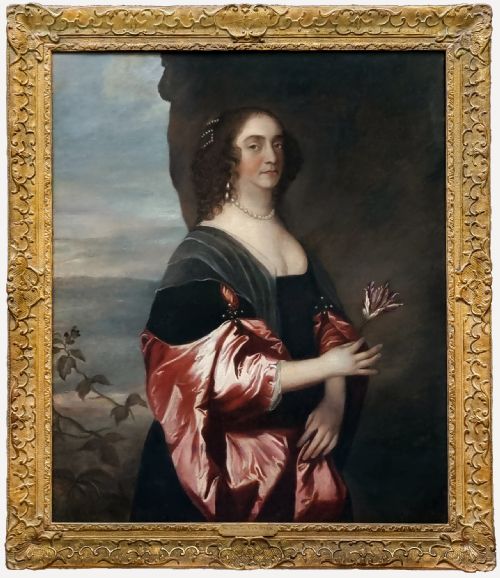
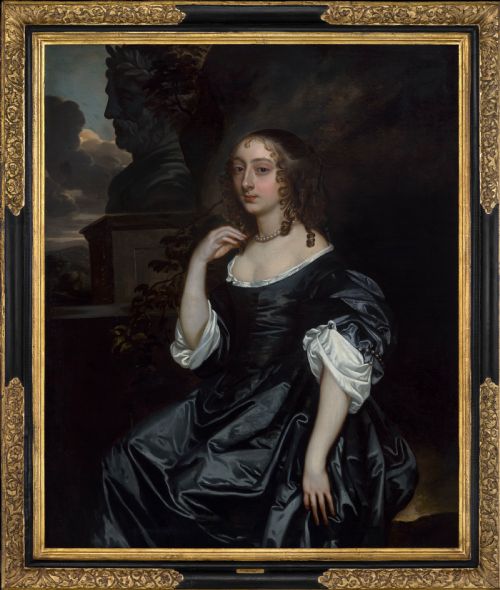
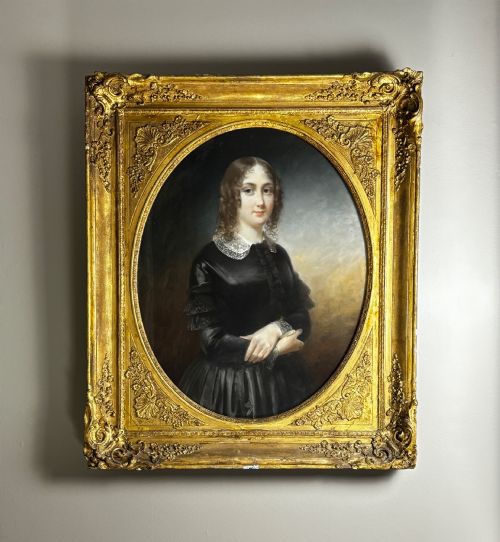


Black Dress Female Portrait
A black dress female portrait captures character and costume across centuries, offering collectors a striking study in historical fashion and portraiture.
Black Dress Female Portrait
A black dress female portrait brings together notable figures and unknown sitters captured in oil on canvas or wood panel. These works span the seventeenth century through to the twentieth century, encompassing Baroque, Victorian, and Impressionist styles.
The selections range from seventeenth-century depictions of aristocratic ladies in sumptuous attire to later nineteenth-century and Georgian studies of young women. Buyers will encounter both grand studio pieces and intimate domestic portrayals.
Materials and construction
Painters utilised oil paint applied to canvas or wood panels, often framing the finished works in gilt timber or gold leaf moulding. The physical support typically dictates the period, with early seventeenth-century works favouring wooden panels before canvas became standard.
Pigments and glazes were layered to render the deep tones of black fabric alongside contrasting lace, pearls, and red satin sleeves. The application of oil allowed artists to build rich textures in both the sitter's costume and the surrounding background.
The listings combine canvas and wood panel supports with oil paint media across seventeenth-century, Victorian, and mid-century realist styles.
Assessing quality and execution
The distinction between workshop productions and circle pieces lies in the subtlety of facial modelling and the handling of textiles. Superior examples demonstrate a confident mastery in rendering the fall of light across silk and the intricate detail of lace.
Condition plays a central role, particularly regarding the stability of the canvas or panel and the survival of original paint layers. Works retaining their early gilt frames often present a more complete historical object.
Sir Peter Lely·Cornelius Johnson·John Raphael Smith·Georges Goursat·Sonia Mervyn
The Black Dress Female Portrait Glossary
- Panel painting
- A work executed on a wooden board rather than canvas. This substrate is particularly common in early seventeenth-century works.
- Circle of
- A designation indicating the artist worked closely within the immediate milieu of a master painter. It denotes period proximity and stylistic alignment.
- Gilt frame
- A wooden moulding coated in gold leaf or metallic paint. These frames enhance the visual weight of oil portraits.
- Baroque
- An artistic style of the seventeenth century characterised by dramatic use of shadow, rich colour, and ornate detail. It frequently appears in formal portraiture.
Black Dress Female Portrait: Frequently Asked Questions
What periods do these portraits cover?
The available works primarily stretch from the early seventeenth century through the Georgian and Victorian eras into the nineteen thirties. Seventeenth-century examples often feature panel supports and elaborate costume.
Later nineteenth-century and early twentieth-century examples shift towards impressionist or realist approaches while maintaining the focus on female subjects in dark attire.
How do I identify a seventeenth-century piece?
Seventeenth-century portraits frequently utilise wooden panel supports or early canvas with distinctive craquelure patterns. The sitters are typically identified by rigid lace collars, pearl necklaces, and structured bodices.
Attributions to circles of known painters or specific dates inscribed on the canvas further anchor these works in the period.
Are these works painted on canvas or wood?
The listings feature a mix of oil on canvas and oil on panel paintings. Wooden panels are more commonly associated with the earlier seventeenth-century pieces.
Canvas supports become more prevalent in the Georgian, Victorian, and later works.
How should I display an oil portrait?
Oil portraits benefit from placement away from direct sunlight and significant temperature fluctuations to protect the canvas and paint layers. Maintaining stable indoor humidity prevents warping in wooden panels and cracking in the paint.
Displaying the work in a suitable gilt frame helps support the historical context of the piece.