



Antique Dog Landscape Painting
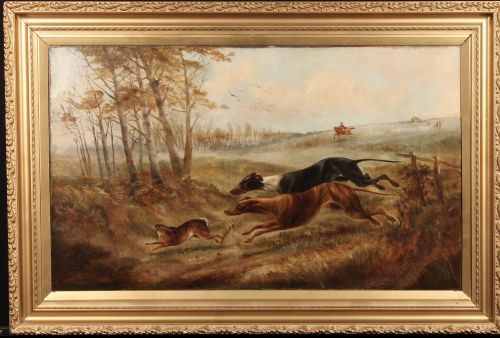
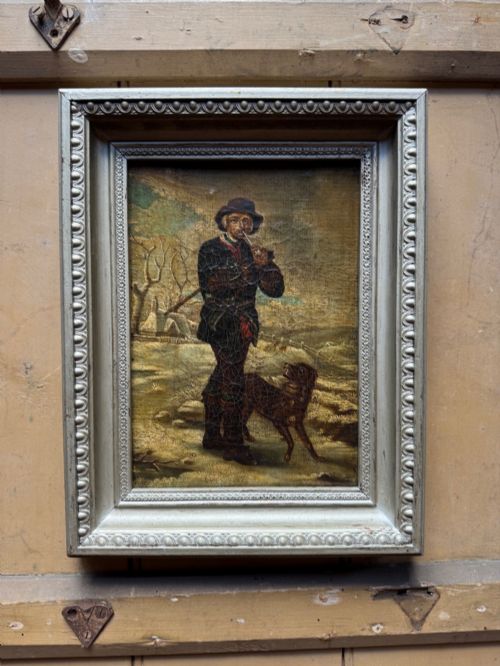
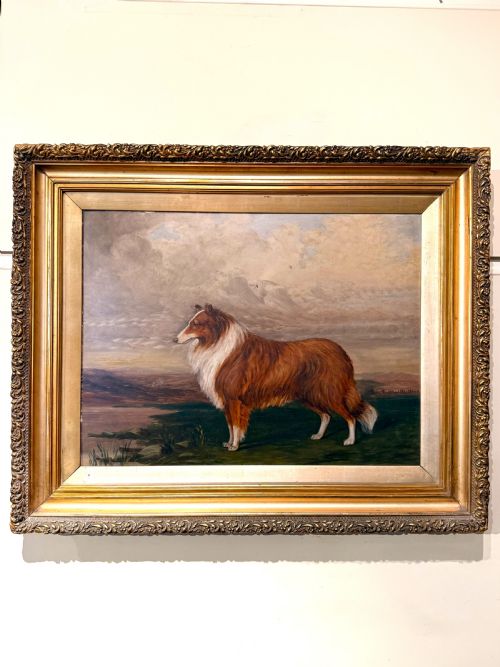
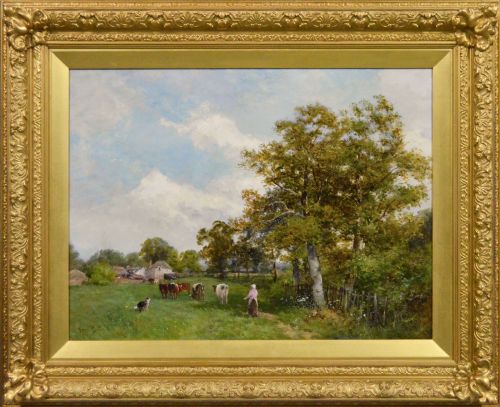
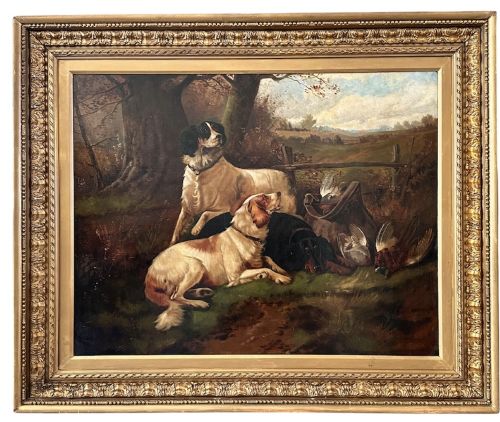
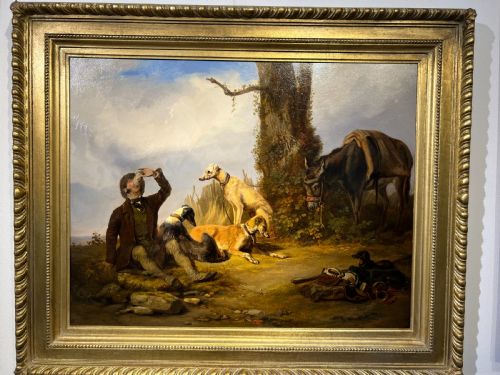
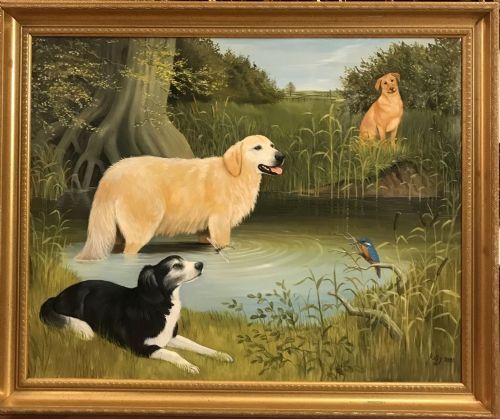
When you search for an antique dog landscape painting, you meet canvases that place spaniels, setters and hounds in pastoral settings.
Antique Dog Landscape Painting
An antique dog landscape painting combines natural history, portraiture and rural scenery from the eighteenth, nineteenth and early twentieth centuries. These works place working dogs, gun dogs and household pets firmly within expansive country views, moorland scenes and woodland backdrops.
The most common examples date from the Victorian period, reflecting a strong cultural appetite for sporting art, animal portraiture and rural genre scenes. Canvases range from intimate board studies to large exhibition pieces showing packs of hounds, terriers or individual collies in their working environments.
How they were made
Painters of this subject relied primarily on oil paint applied to stretched canvas or wooden panels, though watercolours on paper also occur. The physical structure of these works typically involves woven linen grounds prepared with gesso, supporting rich layers of pigment that capture the sheen of a dog's coat and the atmospheric light of the sky.
Framing forms an integral part of the physical object, with many surviving examples housed in original gilded wood or giltwood frames that reflect the decorative tastes of the period.
Listings feature works spanning the eighteenth, nineteenth and early twentieth centuries, executed primarily in oil paint on canvas or board.
What varies in quality
The division between standard works and exceptional examples rests upon anatomical precision, handling of light and the integration of the animal into its surrounding terrain. Master artists render bone structure, muscle movement and texture with a convincing vitality, whereas lesser hands produce stiff, formulaic representations.
Compositional balance also dictates standard, with superior canvases establishing a harmonious relationship between the central animal subject and the distant landscape elements, rather than treating the background as a generic backdrop.
Sir Edwin Henry Landseer·John Frederick Herring Senior·Thomas Hicks·Arthur Wardle·John Emms·James Ward·George Stubbs
The Antique Dog Landscape Painting Glossary
- Oil on Canvas
- A traditional painting medium where coloured pigments are suspended in a drying oil and applied to a stretched woven fabric support. This combination allows for subtle blending and rich tonal depth.
- Giltwood
- Timber carved and coated with a thin layer of gold leaf or gold powder. It provides a reflective, ornate border that complements nineteenth-century oil paintings.
- Gesso
- A plaster-like mixture used as a base coat on wooden panels or canvases before painting. It creates a smooth, stable surface for the oil pigments.
- Sporting Art
- A genre of painting dedicated to rural pursuits, including hunting, shooting and fishing, frequently featuring working dogs and horses. It flourished across the eighteenth and nineteenth centuries.
Antique Dog Landscape Painting: Frequently Asked Questions
What is an antique dog landscape painting?
It is an oil or watercolour artwork from the eighteenth to early twentieth centuries that depicts dogs within a natural outdoor setting, such as a moor, forest or country estate.
These pieces combine animal portraiture with landscape traditions, reflecting historical interests in hunting, farming and domestic pets.
How were these paintings used originally?
Landowners, sportsmen and affluent households commissioned or purchased these works to hang in country houses, libraries and drawing rooms.
They served as tributes to prized hunting dogs, working animals or beloved family pets, celebrating rural pursuits and rural property.
How do I identify the period of a painting?
Dating relies on examining the stretcher frames, canvas preparation, costume of any human figures present and the specific artistic conventions of the era.
Victorian and Georgian works display distinct brushwork techniques and pigment chemistry that separate them from later reproductions.
How should I care for an oil painting on canvas?
Keep the canvas away from direct sunlight, damp environments and extreme temperature fluctuations to prevent the paint from cracking or the wood from warping.
Dust the surface gently with a soft, dry brush and avoid using liquid cleaners on either the canvas or the gilt frame.