


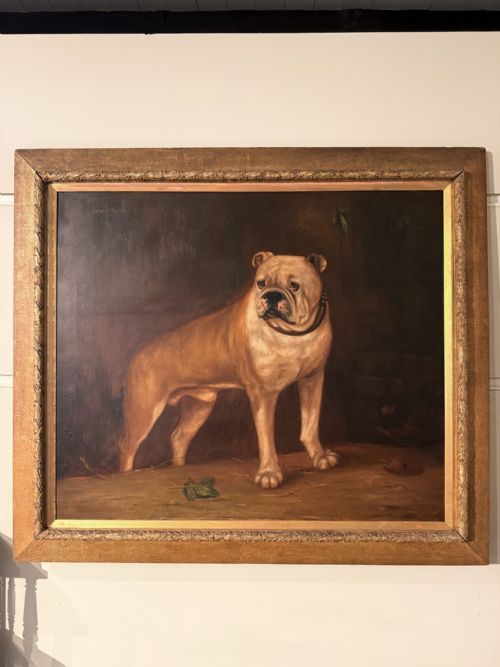
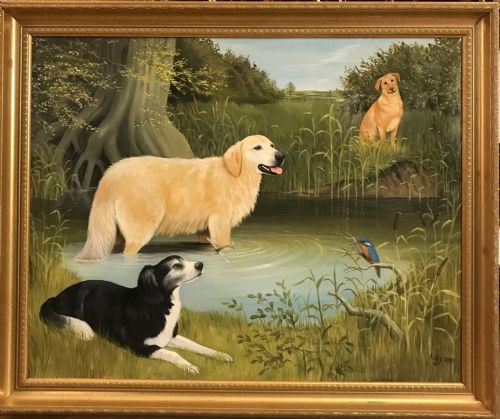

Antique Dog Canvas Portrait
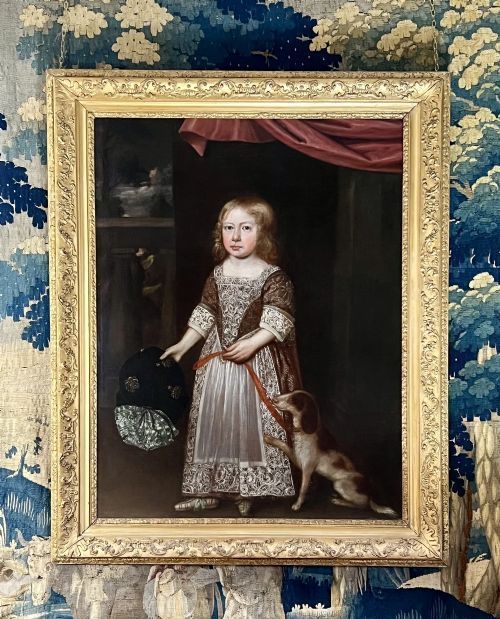
These antique dog canvas portrait pieces capture canine subjects in oils, offering a direct window into historical domestic and sporting life.
Antique Dog Canvas Portrait
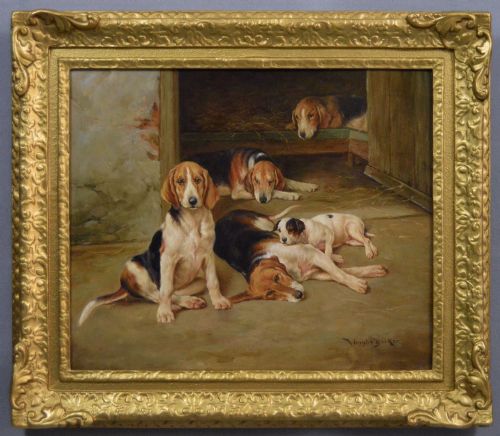
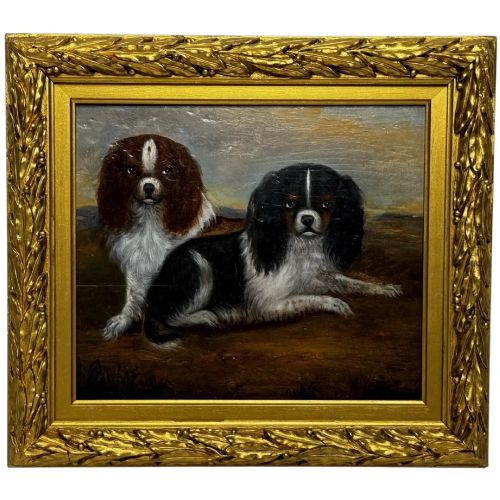
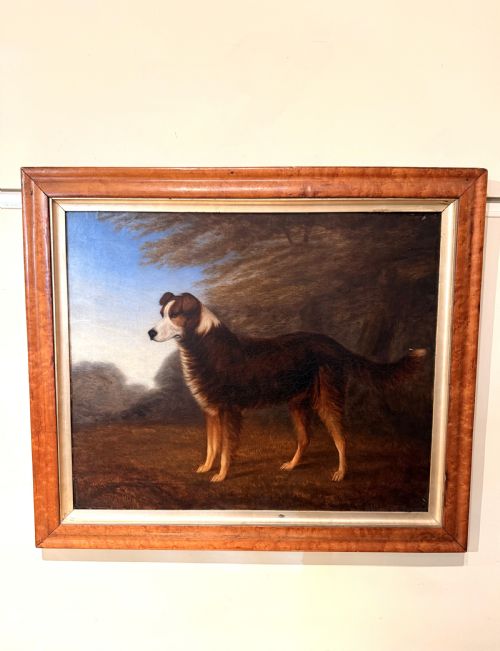
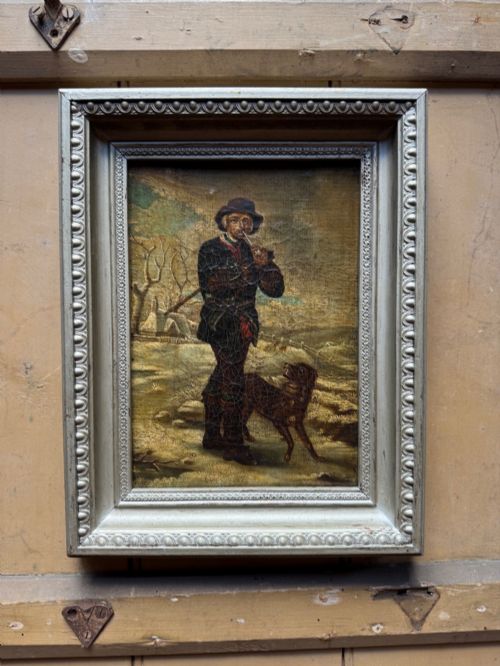
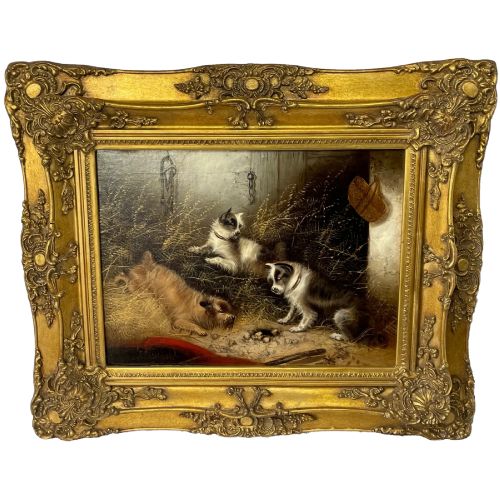
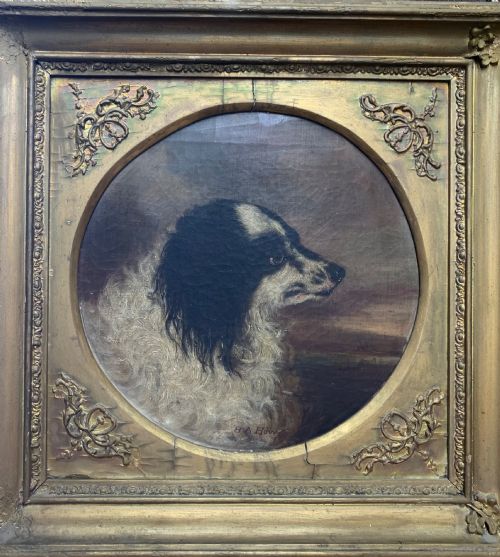
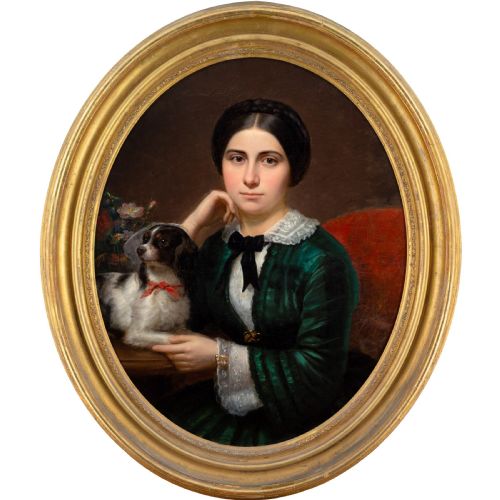
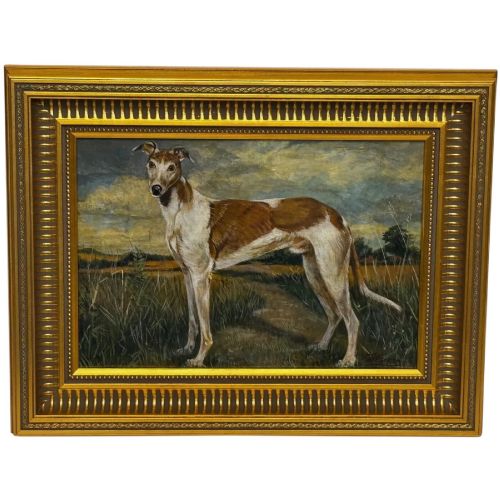
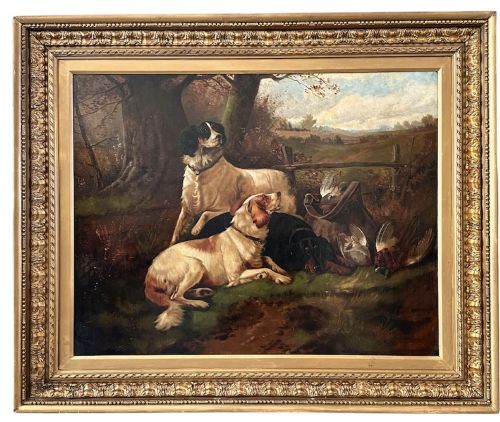
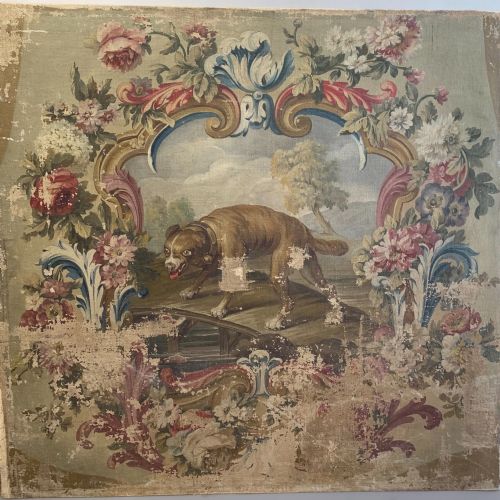
An antique dog canvas portrait represents historical canines rendered primarily in oil paint upon woven fabric supports, spanning various centuries of artistic production. These works range from formal Victorian sporting art depicting working terriers and spaniels to primitive 19th-century interpretations and intimate household studies.
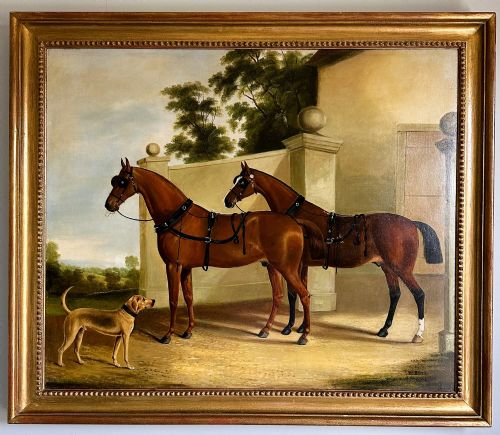
Buyers encountering this selection will frequently find Victorian pieces alongside earlier 19th-century examples, often framed in giltwood or plain wood. The subjects vary from single breed studies like collies and spaniels to complex compositions involving hunting hounds and carriage horses.
The origins stretch across British, French, and Northern European schools, recording specific named animals such as Lord Methuen’s favourite dogs or generic companions in landscapes. Formats span modest domestic canvases to large scale sporting paintings.
Distinctions in Quality
Quality rests upon the artist's anatomical accuracy in rendering the dog's form, bone structure, and intelligent expression rather than merely the decorative appeal of the frame. Superior examples demonstrate a secure grasp of perspective, light on fur, and integration of the subject within its landscape or interior setting.
Works by documented painters command distinct attention through their provenance and refined brushwork compared to unsigned primitive or naive pieces. The condition of the original canvas and stability of the oil paint layer further differentiate standard decorative items from fine art investments.
Antique Dog Canvas Portrait Retail Price Guide 2026
Typical asking prices for dog canvas portrait among the pieces listed under this phrase on Sellingantiques today, from the lower quarter to the upper quarter. They describe what is for sale here now, not the wider market.
Listings feature 19th-century British and French school paintings executed in oil on canvas, housed in period giltwood frames.
Wright Barker RBA·Edward Armfield·Valentine T. Garland·John Emms·Thomas Hicks·William Barraud·Sir Edwin Landseer·Colin Graeme Roe
The Antique Dog Canvas Portrait Glossary
- Oil on Canvas
- Pigments bound in a drying oil applied to a woven fabric support. This method became the primary medium for enduring animal portraits from the 17th century onward.
- Giltwood
- Timber carved and coated with a thin layer of gold leaf or metal gilt. These frames often accompany Victorian and Georgian paintings to enhance the visual weight of the artwork.
- Sporting Art
- Depictions of rural pursuits, horses, and hunting dogs. This genre documents the specific breeds utilised in field sports and rural estates.
- Primitive
- Art created outside academic traditions, often featuring flattened perspective and direct application. These works carry a distinct folk art charm independent of formal proportion.
Antique Dog Canvas Portrait: Frequently Asked Questions
What periods do these dog portraits span?
The inventory encompasses works originating from the 17th century through to the mid 20th century, with a strong concentration of Victorian examples.
Buyers will find pieces marked by distinct eras including the Georgian period, the 19th-century realist movement, and Edwardian sporting art.
How do I identify the breed in a painting?
Artists often recorded specific working and companion types with notable accuracy, depicting distinct traits of spaniels, terriers, collies, and hounds.
Historical context and breed standards of the canvas's era help clarify whether the animal represents a named pet or a working type.
Are the frames original to the canvases?
Many pieces retain period giltwood or wood frames that match the approximate age of the oil painting itself.
Framing styles changed from heavy Victorian moulding to simpler profiles, though later replacements frequently occur in historical artworks.
What is the difference between academic and naive works?
Academic paintings demonstrate formal training in anatomy, light play, and perspective by professional animal artists.
Naive works exhibit a charming disregard for strict proportion, relying on direct expression and flat planes characteristic of regional folk traditions.