



Brown Hound Canvas Artwork
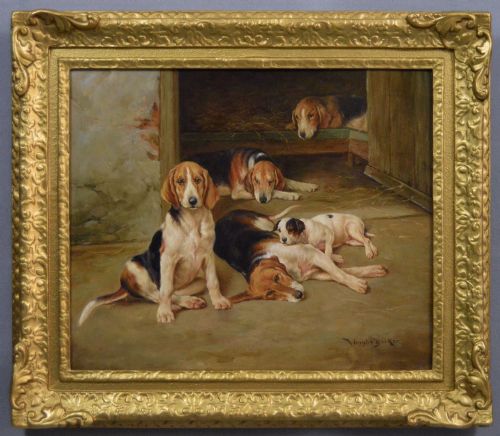
Brown hound canvas artwork captures canine subjects in oils from the nineteenth and early twentieth centuries.
Brown Hound Canvas Artwork
These pieces are period oil paintings on canvas depicting hounds, sporting dogs, and hunting scenes from Victorian and Edwardian Britain. A buyer searching for brown hound canvas artwork will encounter fine art paintings depicting individual dogs, packs on the scent, or animals within wider rural landscapes.
The most common examples on this page date from the nineteenth century, ranging from intimate portraits of retriever and terrier breeds to large sporting canvases. Works span the Victorian era, including pieces after Sir Edwin Landseer and signed works by named animal artists.
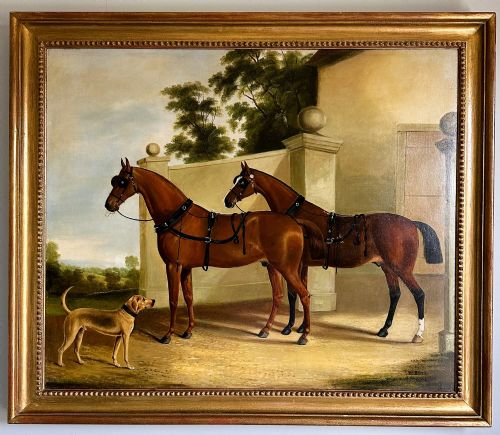
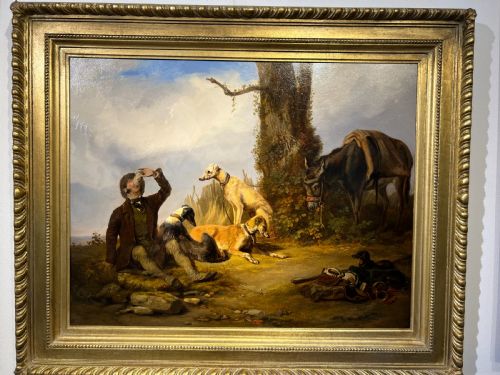
Subjects stretch beyond solitary hounds into carriage horses with hounds, huntsmen in winter snow, and rustic figures with attendant dogs. The styles reflect nineteenth century realism and Victorian sporting art traditions.
Materials and construction
These works are executed in oil paint upon woven canvas stretched over wooden frames, preserving the rich textures of nineteenth century pigments. Many paintings retain their period frames, constructed from wood finished with gold leaf or giltwood.
Artists built up these compositions using traditional oil techniques on canvas, capturing the deep brown tones of hound coats and the natural light of rural landscapes. The framing materials complement the period, utilising carved and gilded wooden surrounds typical of Victorian picture framing.
Brown Hound Canvas Artwork Retail Price Guide 2026
Typical asking prices for brown hound canvas artwork among the pieces listed under this phrase on Sellingantiques today, from the lower quarter to the upper quarter. They describe what is for sale here now, not the wider market.
Materials recorded across the archive include oil paint, canvas, gold leaf, and carved wood frames.
Assessing quality and execution
Quality in these paintings rests upon the anatomical accuracy of the hounds and the expressive detail in the brushwork. Master painters capture the texture of a curly coated retriever or the tension of hunting dogs in combat with distinct precision.
The distinction between standard works and finer pieces involves the handling of light, landscape depth, and provenance. Attributions to established painters or documented connections to period artists elevate the standing of a canvas.
Wright Barker RBA·Sir Edwin Henry Landseer·Fannie Moody·Henri Schouten·Philip Eustace Stretton·Henry Frederick Lucas-Lucas·Edward B Herberte
The Brown Hound Canvas Artwork Glossary
- Oil on Canvas
- Pigments bound in a drying oil medium applied to a woven fabric support. This traditional method allows for rich blending and deep tonal variations suited to animal portraits.
- Gilt Wood
- Wood carved and covered with a thin layer of gold leaf or metallic gilding. Frames of this material are frequently paired with nineteenth century fine art.
- Victorian Sporting Art
- A genre of painting focused on rural sports, horses, and hounds popular during the nineteenth century. These works often record prized hunting dogs and canine companions.
- Realism
- An artistic movement focused on depicting subjects with truthful accuracy rather than idealised styling. Nineteenth century examples concentrate on the genuine physical traits of animals.
Brown Hound Canvas Artwork: Frequently Asked Questions
What periods do these paintings date from?
The available canvases span from the eighteenth century through the Victorian era into the early twentieth century. Most pieces originate from the nineteenth century.
Dating is typically established through the style of the brushwork, the framing materials, and recorded artist timelines.
How were these hound paintings used?
Owners commissioned or purchased these canvases to display sporting achievements, beloved pets, or rural scenes in country houses. They served as decorative focal points in reception rooms and libraries.
Today, they function as historical fine art pieces that preserve nineteenth century sporting culture.
How should I care for an oil painting on canvas?
Keep the canvas away from direct sunlight and steady humidity levels to prevent pigment degradation or wood warping. Dust the surface gently with a soft, dry brush without applying pressure.
Avoid using liquid cleaners on either the canvas or the giltwood frame.
How do I identify a Victorian sporting art painting?
Look for characteristic subjects such as hunting hounds, horses, and rural landscapes rendered in nineteenth century realist styles. Pigment depth and canvas texture often match the period.
Signatures or attribution notes on the frame or stretcher bars can confirm the artist and origin.