


Antique Display Desk
An antique display desk combines working space with glazed storage, and collectors seek these pieces for their clever combination of practicality and elegance.
Antique Display Desk
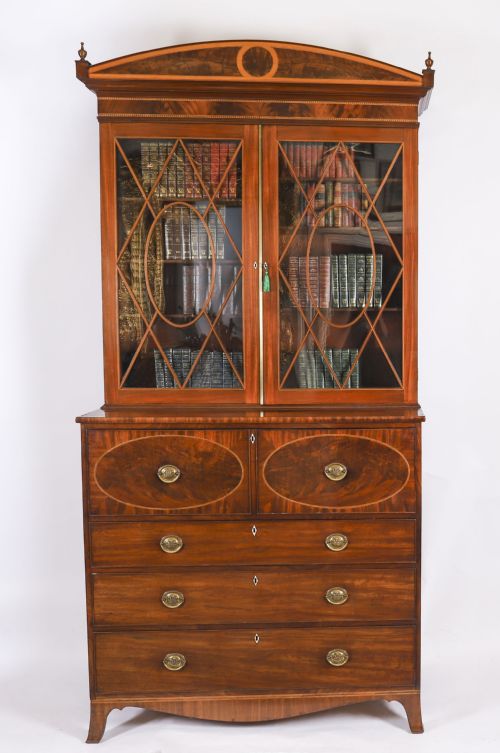
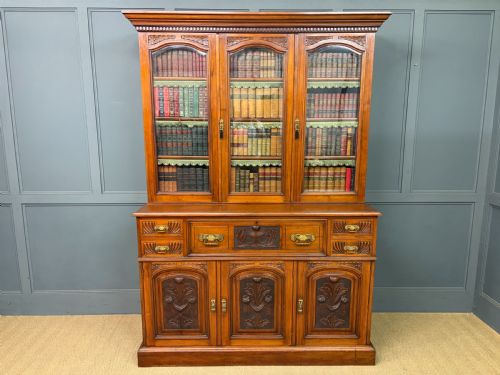
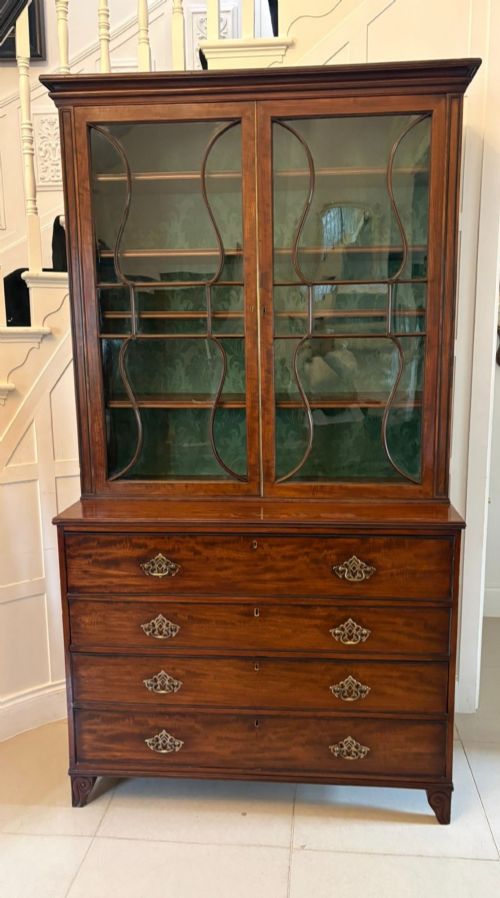
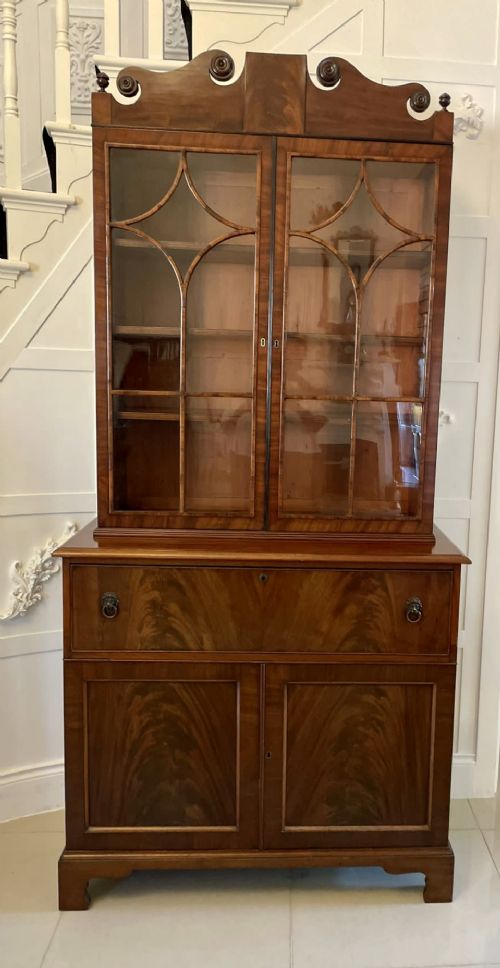
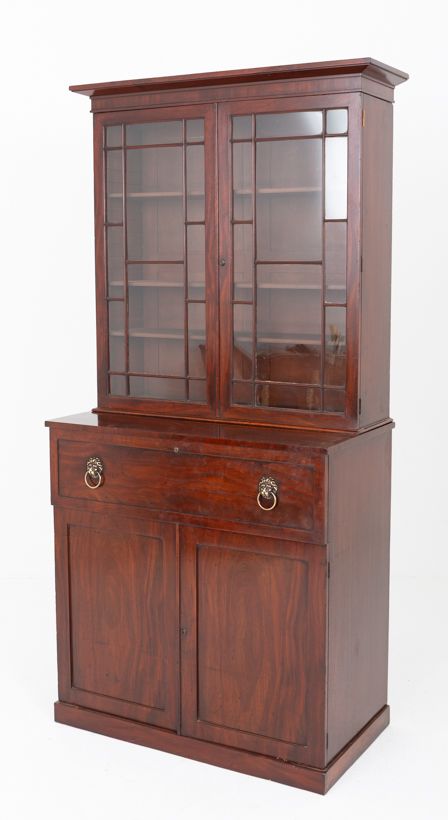
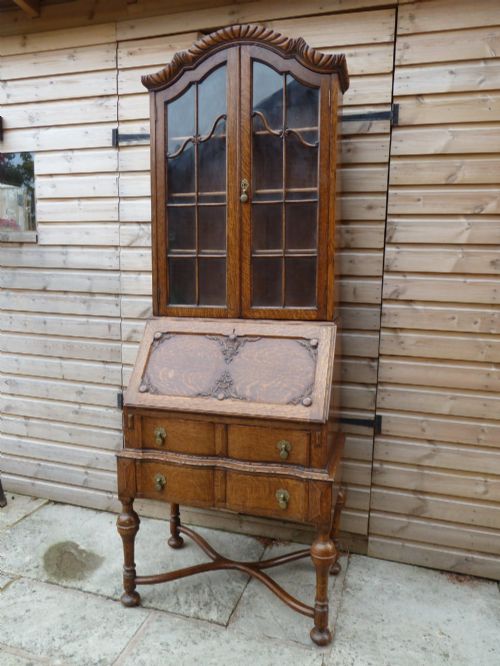
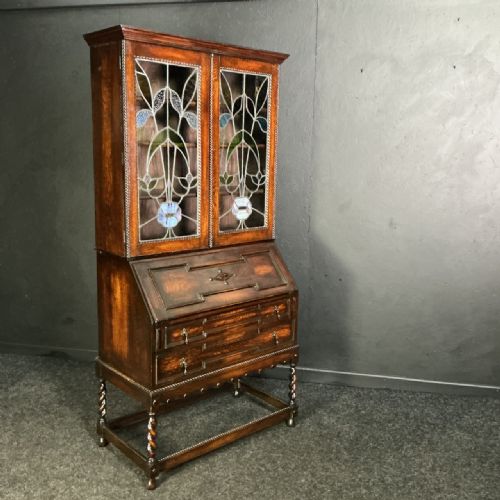
When you search for an antique display desk, you encounter large combination furniture that unites a writing surface with upper shelving or cabinet storage. The listings show that secretaire bookcases and bureau bookcases dominate this category, functioning as practical desks with drop-down writing flaps.
The examples span several centuries, with 19th-century mahogany and Edwardian satinwood or walnut pieces appearing frequently alongside earlier Georgian forms. These versatile items served libraries and parlours, providing a secure place for correspondence while exhibiting books or decorative objects behind glass doors.
Materials and construction methods
Cabinetmakers utilised durable hardwoods such as mahogany, oak, walnut and satinwood to construct the carcase and drawers of these large pieces. Flame mahogany veneers and intricate marquetry inlay frequently decorate the exterior surfaces, particularly on George III, Regency and Edwardian variants.
Glazed doors with wooden astragal bars protect the upper shelving sections, while fitted interiors often incorporate small drawers and pigeonholes accessed via a fall-front writing surface. Brass hardware and glass panels complete the construction, demonstrating traditional joinery techniques from the Georgian and Victorian periods.
Beside the heavy furniture, the archive includes a rotating display stand for a double-sided silk embroidery.
Distinguishing quality across examples
The degree of refinement in the timber selection and inlay work marks the difference between standard production and top-tier examples. Figured mahogany veneers, delicate marquetry and well-executed brass fittings elevate the visual impact of a piece.
Interior complexity also dictates quality, as fitted secretaire drawers with secret compartments and clever mechanisms require superior craftsmanship compared to plain writing surfaces.
Gillows·Maple and Co.·Mercier Frères·Mappin Bros·William Tonks of Birmingham·W.I.Broadway and Co
The Antique Display Desk Glossary
- Secretaire bookcase
- A tall cabinet featuring an integrated desk drawer with a drop-down front that conceals small drawers and pigeonholes. This form allows the piece to serve as both a bookcase and a writing desk.
- Astragal glazed
- A glass door divided into smaller panes by narrow wooden mouldings called astragals. These bars create geometric patterns across the upper display section.
- Marquetry
- Decorative veneer patterns formed by fitted pieces of coloured wood, ivory or shell applied to a furniture surface. It appears on Dutch and English cabinets to create floral or pictorial designs.
- Figured mahogany
- Mahogany timber exhibiting attractive natural grain patterns such as flame or fiddleback. Cabinetmakers reserved these cuts for prominent exterior surfaces.
Antique Display Desk: Frequently Asked Questions
What is an antique display desk?
An antique display desk is a hybrid furniture piece that combines a writing compartment with upper glass-fronted shelving for books or ornaments.
These items range from large secretaire bookcases to smaller bureau cabinets originating from the Georgian, Victorian and Edwardian eras.
How do I date an antique display desk?
Dating relies on observing the timber species, construction methods, hardware and decorative styles present in the piece.
For instance, flame mahogany and astragal glazing often point to Georgian or Regency periods, while lighter satinwood and marquetry frequently indicate Edwardian production.
How were these desks used originally?
Original users utilised the drop-down writing surface for handling correspondence, writing letters and managing household or business accounts.
The upper glass doors allowed owners to display valued book collections and decorative objects while protecting them from dust.
How do I care for wood and glass surfaces?
Maintenance involves keeping the timber away from direct sunlight and extreme temperature fluctuations to prevent veneer cracking.
Regular dusting with a soft, dry cloth preserves the polished finish of the wood and the clarity of the antique glass.