

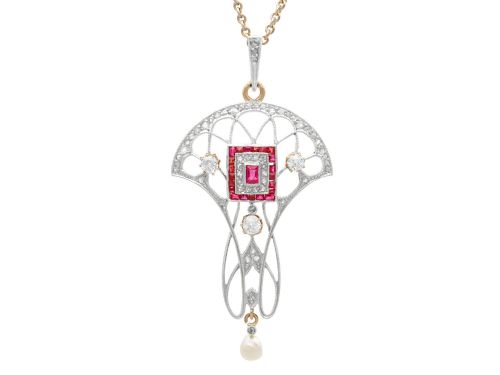
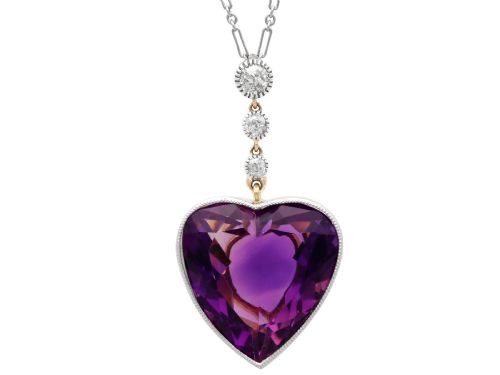
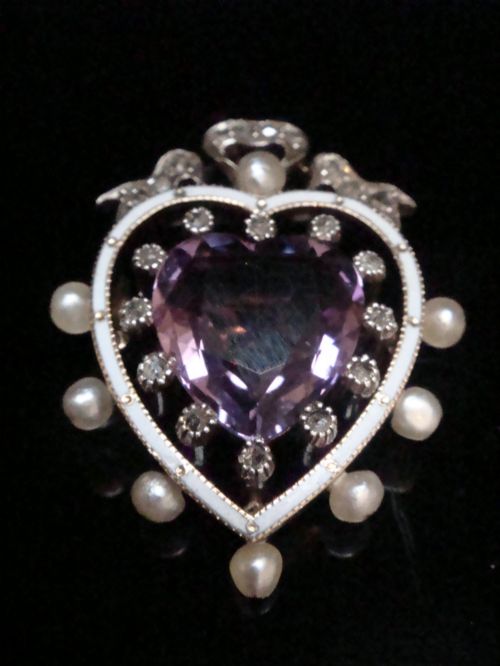


Antique Diamond Locket
An antique diamond locket holds a miniature portrait or lock of hair beneath glittering stones set in yellow gold.
Antique Diamond Locket
When you search for an antique diamond locket, you encounter pieces designed to hold personal mementos close to the heart. The selection spans the Victorian and Edwardian eras, incorporating late nineteenth-century styles alongside early twentieth-century work.
Heart shapes, puffy hearts, and stars dominate the forms, often configured as pendants or dual-purpose pendant brooches. These items combine hinged compartments for photographs with precious gemstones mounted in high-carat gold.
How they were made
Goldsmiths utilised fifteen-carat and eighteen-carat gold, occasionally mounting diamonds in silver to enhance their brilliance against the darker metal. Stones including old-cut diamonds, rose-cut diamonds, and pearls are flush-set or star-set directly into the metal surface.
Surface decoration frequently involves guilloche enamel or translucent blue enamel applied over engraved patterns. Hinged bezels and internal glass frames are meticulously integrated to secure photographic miniatures safely.
Antique Diamond Locket Retail Price Guide 2026
Typical asking prices for diamond locket among the pieces listed under this phrase on Sellingantiques today, from the lower quarter to the upper quarter. They describe what is for sale here now, not the wider market.
Listings feature yellow gold standards ranging from nine carat to eighteen carat, alongside fifteen carat pieces unique to the nineteenth century.
What varies in quality
The sophistication of the stone cutting and the purity of the gold define the upper tier of these pieces. Old-cut and rose-cut diamonds possess distinct hand-faceted proportions that differ from later commercial manufacturing.
Enamelling technique and the crispness of chased details such as star motifs or floral engravings separate standard production from finer workshop output. The structural integrity of the hinge and snap closure also indicates the maker's original standard of work.
The Antique Diamond Locket Glossary
- Guilloche enamel
- A decorative technique where translucent enamel is layered over engine-turned metalwork. This creates repeating geometric patterns that catch the light beneath the coloured surface.
- Old-cut diamond
- A hand-faceted diamond shape common in nineteenth-century jewellery. These stones feature smaller tables and higher crowns than modern brilliant cuts.
- Rose-cut diamond
- A flat-based diamond with a domed top covered in triangular facets. It produces a soft, starry shimmer rather than sharp scintillation.
- Puffy heart
- A three-dimensional hollow heart pendant formed from two domed metal plates soldered together. This volumetric shape is typical of sentimental Victorian pieces.
- Pendant brooch
- A versatile mounting fitted with both a folding loop and a pin finding. It allows the wearer to suspend the piece from a chain or fasten it directly to garments.
Antique Diamond Locket: Frequently Asked Questions
How do I open an antique locket?
Most lockets rely on a fingernail catch or a tiny push-button mechanism on the side. Gentle pressure is required to release the bezel without straining historical hinges.
If the cover remains stuck, old accumulation around the rim may need professional cleaning rather than forceful pulling.
Can I put a modern photo inside?
Photographs must be hand-trimmed to fit the exact internal aperture and retaining frame of the compartment. Thin archival paper works best against the original glass.
Avoid modern thick cardstock, which prevents the hinged bezel from snapping shut securely.
How do I clean enamel and diamonds?
Warm soapy water and a soft brush remove surface dust from gold and diamond surfaces. Enamel is sensitive to harsh chemical dips and extreme temperature changes.
Dry the piece thoroughly immediately after washing to protect internal steel hinge pins from moisture.
Were these pieces worn every day?
Victorian and Edwardian wearers frequently wore sentimental jewels as daily accessories, often suspended from heavy guard chains. High-carat gold and robust stone settings tolerated regular movement.
Fragile enamel and hollow puffy forms required more careful handling during daily social activities.