


Antique Desk Watch
An antique desk watch brings portable timekeeping into a static interior, offering mechanical precision housed in silver, brass, or enamel cases.
Antique Desk Watch
When you search for an antique desk watch, you encounter varied forms that adapt pocket watches, travel timepieces, and miniature clocks for stationary use. These pieces span periods from the eighteenth century through the 1930s, encompassing Georgian, Victorian, Edwardian, and later styles.
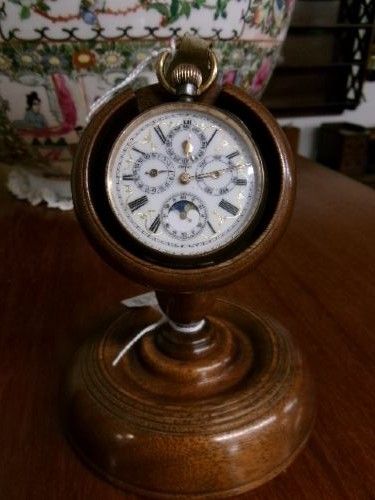
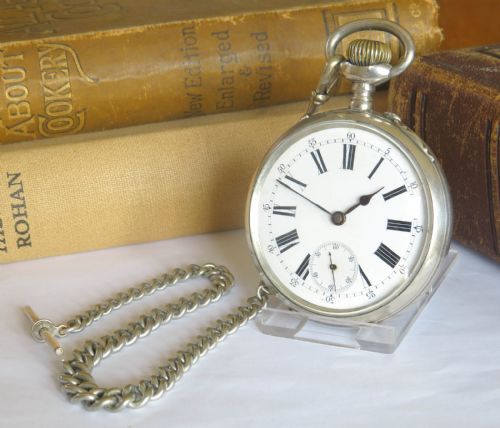
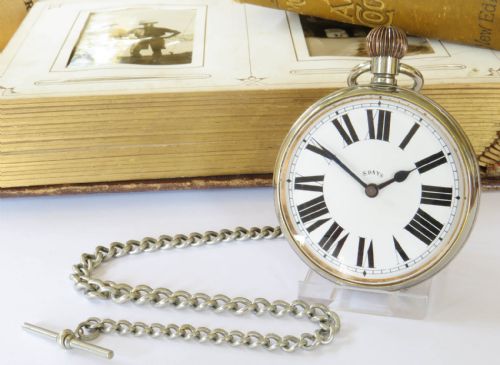
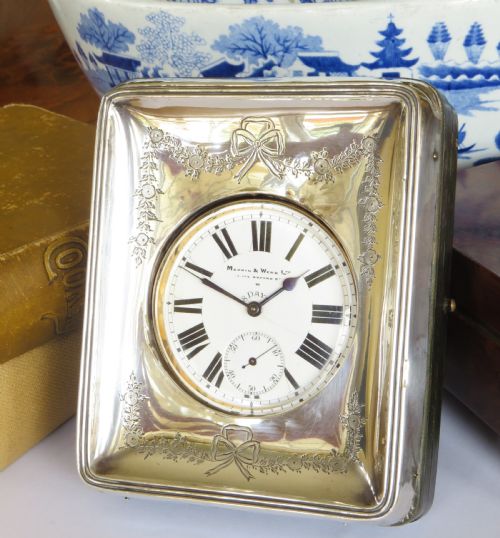
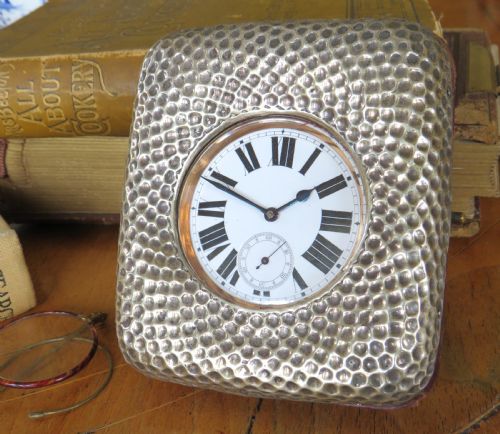
The most common versions on this page are goliath pocket watches mounted in travel cases, folding silver cases, or specialised holders made of brass, cast metal, and wood. Alongside these dedicated desk pieces, you find pocket watches paired with silver pocket watch holders and capstan inkwells.
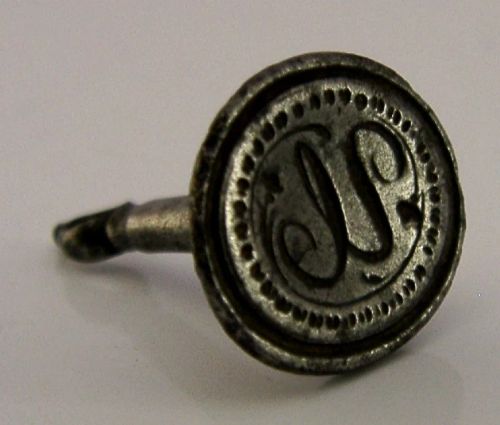
Origins range across English, French, and Swiss makers, reflecting diverse domestic and travel habits of the nineteenth and early twentieth centuries. The selection also touches upon related desk accessories, from wax seals to watchmakers' tables.
Materials and construction
Cases and holders utilise metals such as sterling silver, brass, gun metal, gilt bronze, and steel, frequently paired with glass crystals and wooden frames. Enamel work, particularly guilloche enamel, adds coloured decoration to travel clock cases and pocket watch stands.
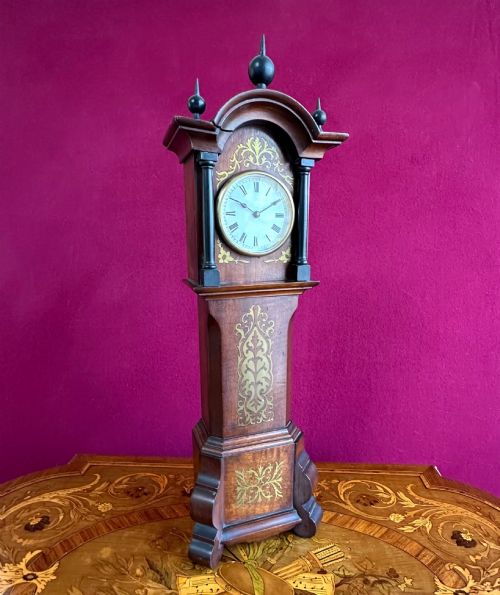
Movements rely on traditional mechanical engineering, seen in eight-day goliath pocket watches, calendar moonface complications, and miniature grandfather clocks. Precious metals like fifteen-carat and nine-carat gold appear in related fobs and seals, while cast brass and turned wood form the structural stands.
Listings feature items spanning the eighteenth century to the 1930s, utilising materials from sterling silver and gold to chalcedony, brass, and wood.
Judging quality and execution
The distinction between ordinary and superior pieces rests on the refinement of the housing and the quality of the movement. Solid sterling silver or champleve enamel cases demonstrate greater artisanal investment than simpler brass or plated alternatives.
Makers and retail houses elevate a piece through signed dials, hallmarked precious metals, and complex eight-day movements or calendar functions. The integrity of the original pairing between watch and case further separates standard utilitarian items from exceptional survivals.
Mappin & Webb·Crisford & Norris·Bellenot Paris·Barwise London·Ross of London·Jacot
The Antique Desk Watch Glossary
- Goliath pocket watch
- An oversized pocket watch, typically measuring around sixty millimetres or more in diameter, designed to sit in a travel case or desk stand rather than a waistcoat pocket.
- Guilloche enamel
- A decorative technique where a precise pattern is mechanically engraved into metal beneath a translucent layer of coloured enamel.
- Fob seal
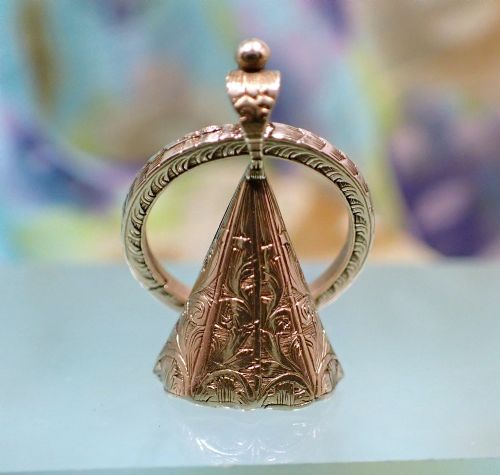
- A small pendant used for stamping sealing wax, often carved from carnelian, chalcedony, or bloodstone and mounted in gold or silver.
- Capstan inkwell
- A desk inkwell shaped like the nautical capstan, featuring a tapering cylindrical body that occasionally incorporates a pocket watch or clock into its design.
Antique Desk Watch: Frequently Asked Questions
What is a goliath pocket watch?
A goliath pocket watch is an exceptionally large timepiece made to be portable yet substantial enough for a desk or bedside table. They often feature eight-day movements that require less frequent winding.
These watches frequently sit inside dedicated leather travel cases or silver desk stands designed specifically for their generous dimensions.
How were desk watches used historically?
These timepieces served travellers, office workers, and domestic households who needed reliable time visible on a desk or bedside surface. Folding silver cases protected the glass and dial during journeys.
Stationary holders made of brass or wood kept the watch upright in studies and libraries for effortless timechecking.
How do I date an antique desk watch?
Dating relies on assay office hallmarks stamped on silver and gold cases, combined with stylistic cues from periods like the Edwardian era or the 1930s. Maker signatures and movement technology also help narrow the decade of manufacture.
Materials such as guilloche enamel and gun metal point toward specific late nineteenth or early twentieth-century production trends.
Can these desk clocks still keep accurate time?
Many mechanical antique desk watches remain operational and capable of keeping reliable time after proper servicing by a horologist. The eight-day movements found in many goliath examples were built for robust daily service.
Because of their age, professional cleaning ensures the internal gears run smoothly without excessive wear.