


Large Pocket Watch
These large pocket watch pieces offer substantial timekeeping heritage, ranging from robust goliath models to gold hunter cases desired for display and collection.
Large Pocket Watch
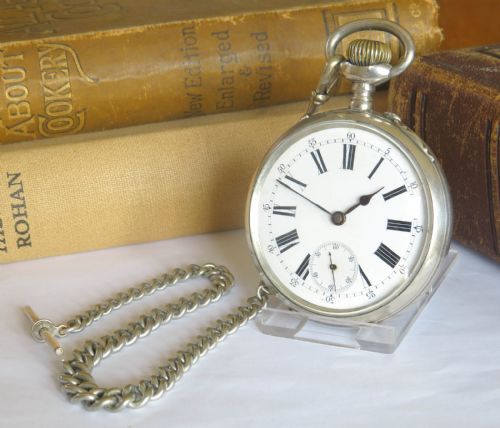
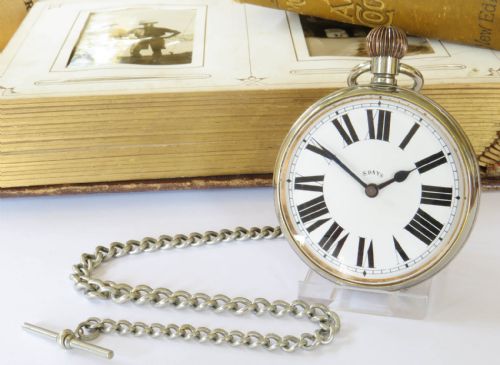
When you search for a large pocket watch, you encounter robust timepieces spanning the Victorian, Edwardian, and early twentieth century periods. The selection includes standard pocket watches alongside substantial goliath versions, often accompanied by watch chains or housed in dedicated watch holders.
The objects stem from diverse origins, encompassing English fusee movements, Swiss chronomètres, and American Waltham or Elgin productions. Alongside working timepieces, related items such as trade signs, watch chains, and altimeters appear within the broader category.
You are most likely to meet silver and gold cased pocket watches dating from the late nineteenth century to around 1920. These heavier formats provide a tactile experience distinct from standard wristwatch equivalents.
How they were made
Cases utilise metals such as brass, nickel, steel, and solid gold variants including 14k and 15ct yellow gold. Glass covers protect the enamel dials, while interior mechanisms rely on intricate steel and brass gear trains.
Techniques range from standard mechanical lever movements to specialised fusee setups designed to equalise the mainspring pull. Enamel dials feature hand-painted numerals fired under high heat for a durable, glossy finish.
Listings feature materials spanning 14k gold, 15ct gold, silver, brass, nickel, and steel across Victorian and Edwardian periods.
What varies in quality
The standard of a large pocket watch depends heavily on the complexity of its movement and the prestige of its maker. Simple lever escapements sit below intricate minute repeaters, chronographs, and eight-day goliath mechanisms.
Case materials also dictate the tier of the piece, moving from plated base metals up to hallmarked solid gold or heavy silver housings. Dial execution, from plain enamel to elaborate multi-dial telephone layouts, further separates standard production from superior examples.
Corgémont of Switzerland·Fattorini and Sons·William Ehrhardt·Rotherhams·Elgin·Waltham·Jaeger-LeCoultre
The Large Pocket Watch Glossary
- Goliath pocket watch
- An oversized pocket watch, often measuring significantly larger than standard specimens, requiring a dedicated stand or case for display.
- Fusee
- A conical pulley mechanism used in older watches to maintain even tension on the gear train as the mainspring unwinds.
- Hunter
- A pocket watch featuring a spring-loaded metal cover that protects the glass dial from scratches and impacts.
- Full hunter
- A style of pocket watch where the metal outer cover completely encloses both the front glass and the dial.
- Sub-seconds
- A secondary dial on the watch face dedicated to tracking seconds independently from the main hour and minute hands.
Large Pocket Watch: Frequently Asked Questions
How do you wind a goliath pocket watch?
Most goliath and standard large pocket watches feature a crown wind mechanism, where turning the top winder tightens the internal mainspring.
Some older fusee examples may require a separate key inserted directly into the backplate or dial to tension the spring.
What is an eight day pocket watch?
An eight day pocket watch contains an extended mainspring barrel designed to run continuously for over a week on a single wind.
These movements are typically found in larger goliath formats intended for desktop use or travel cases rather than waistcoat pockets.
How are pocket watch chains worn?
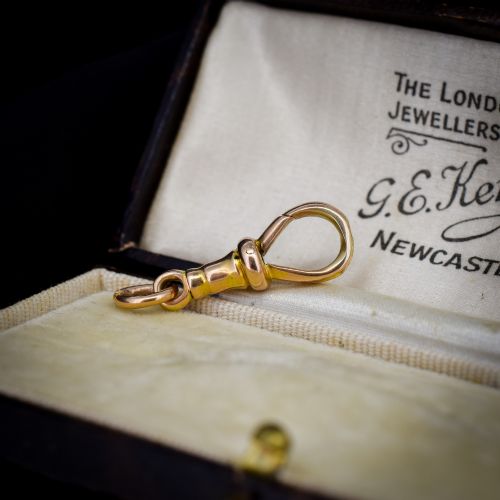
Watch chains, often called alberts, attach to the pocket watch at one end and secure through a buttonhole or into a pocket at the other.
They were traditionally paired with heavy silver or gold pocket watches to prevent accidental drops.
What is a fusee movement?
A fusee movement incorporates a conical drum and a chain to regulate power delivery from the mainspring.
This historical technique compensates for the decreasing torque of the spring as it unwinds, ensuring more consistent timekeeping.