





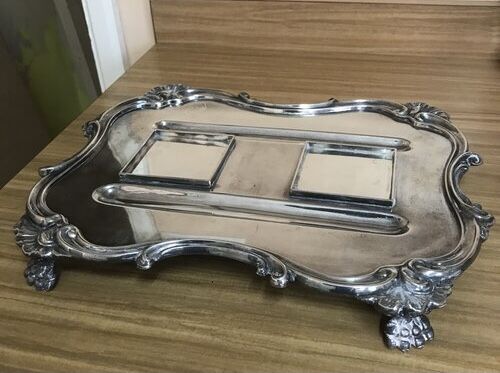


Antique Desk Tidy Stand
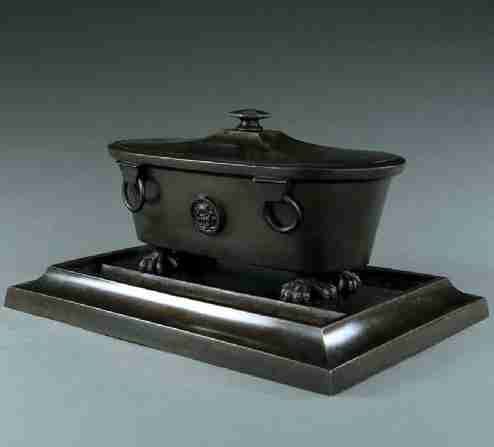
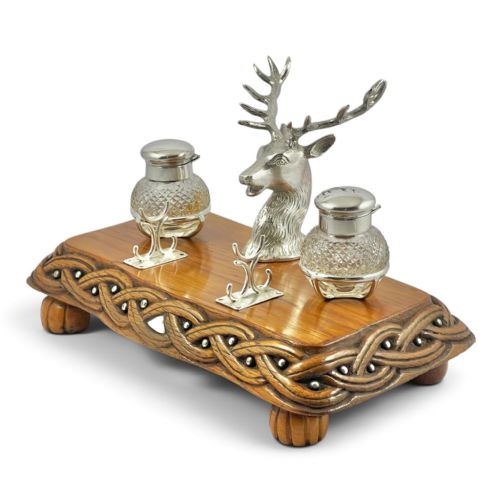
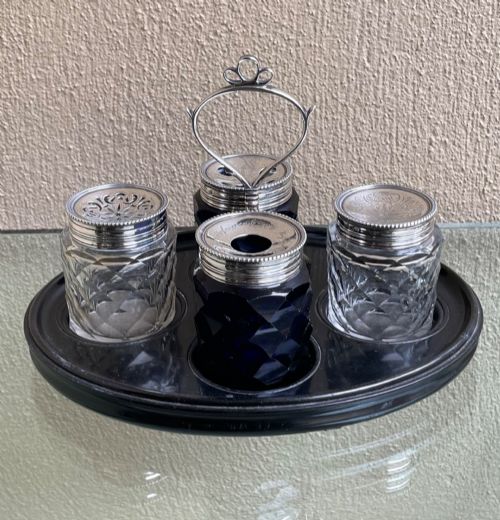
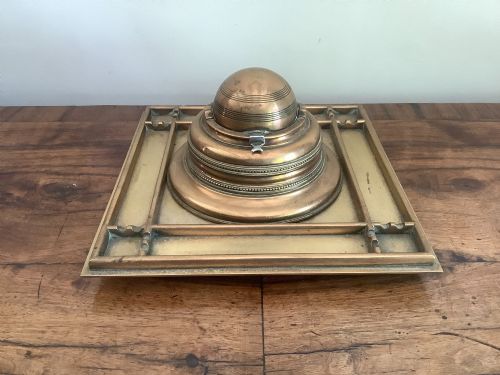
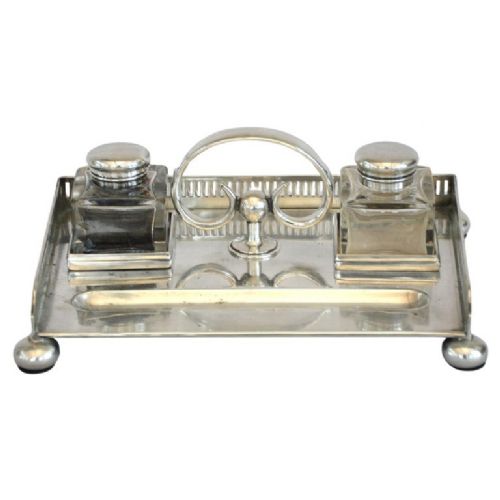
These pieces are antique desk tidy stands, bringing order to writing desks with fitted inkwells and pen rests.
Antique Desk Tidy Stand
An antique desk tidy stand gathers the necessary implements for correspondence into one organised platform. The pieces on this page span the Victorian and Edwardian eras down through the early twentieth century, alongside earlier Georgian examples.
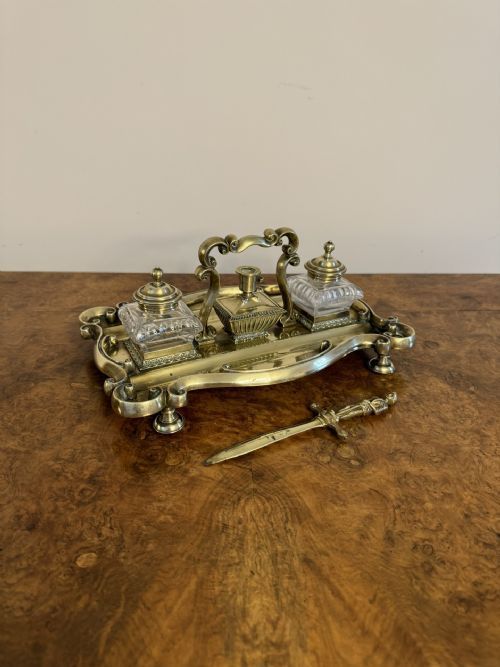
Most examples combine a tray or base with glass ink bottles, pen rests and occasionally letter racks or compartments for stationery. Buyers frequently encounter brass and mahogany versions produced during the nineteenth century.
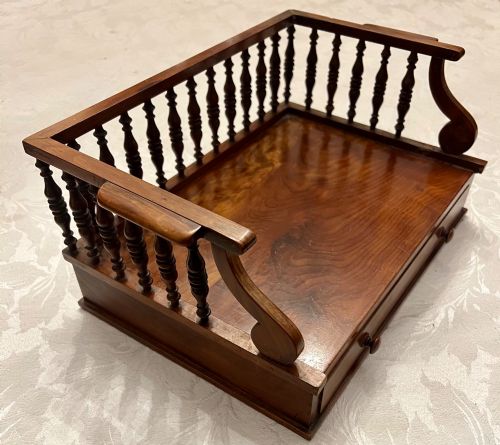
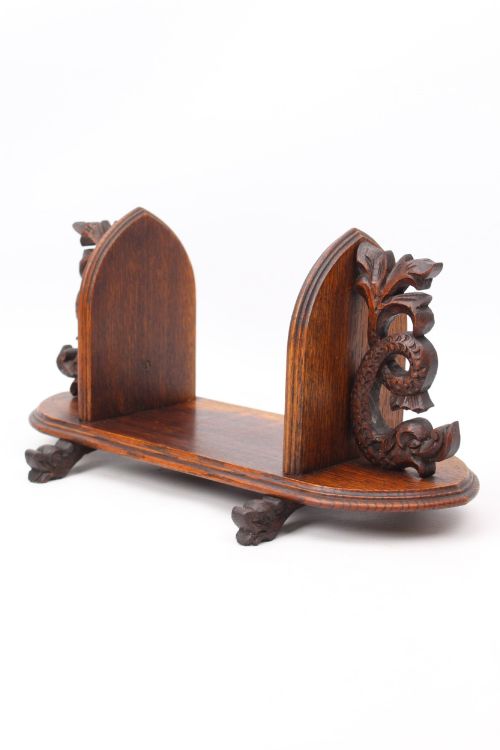
These items served both domestic writing tables and professional offices, reflecting the heavy reliance on handwritten letters before the typewriter became common. Surviving pieces range from simple wooden book stands to elaborate multi-material desk sets.
How they were made
Cabinet makers utilised dense hardwoods such as mahogany, walnut and coromandel, often incorporating brass mounts, marquetry inlay or tortoiseshell veneer. Metalwork elements typically involved cast brass, ormolu, silver plate or sterling silver.
Glass inkwells required skilled blowing and cutting to form heavy bottles with fitted collars, paired with hinged metal lids. Papier-mâché examples show hand-painted decoration finished with glossy lacquer over pressed paper layers.
Antique Desk Tidy Stand Retail Price Guide 2026
Typical asking prices for desk tidy stand among the pieces listed under this phrase on Sellingantiques today, from the lower quarter to the upper quarter. They describe what is for sale here now, not the wider market.
One extraordinary Edwardian letter rack takes the whimsical form of a cricket bat, ball and wicket.
What varies in quality
The degree of refinement in the metal casting and the weight of the timber dictate the grade of a stand. Heavier brass mountings, intricate hand-chasing and original cut glass bottles elevate an item above mass-produced counterparts.
Integration of materials also distinguishes the work; pieces combining lapis lazuli, onyx or boulle marquetry represent superior craftsmanship. The survival of matching original ink inserts and undamaged hinged lids determines the integrity of the ensemble.
Walker And Hall·Robert Garrard·Harrods
The Antique Desk Tidy Stand Glossary
- Inkstand
- A tray or stand holding one or more inkwells alongside pen rests and sometimes a taperstick. This term forms the core descriptor for desk-top writing equipment.
- Ormolu
- Gilded bronze or brass applied to decorative mounts and feet on nineteenth-century stands. The technique imparts a rich gold appearance to the metal surface.
- Boulle
- An marquetry technique using brass and tortoiseshell inlaid into wood furniture and desk accessories. It appears on French nineteenth-century luxury pieces.
- Pen rest
- A depressed channel or raised bridge on the stand designed to hold dipping pens off the desk surface. This prevents ink from staining surrounding papers.
Antique Desk Tidy Stand: Frequently Asked Questions
What is an antique desk tidy stand used for?
These stands held ink bottles, dip pens, blotting paper and stationery in a single neat location on a writing table. They kept ink away from important documents and organised the tools needed for daily correspondence.
Today, they function as decorative objects for studies or living rooms, holding modern pens or displaying original cut glass inkwells.
How do I date an antique desk tidy stand?
Dating relies on the prevailing design style, such as Georgian mahogany, Victorian brass work, or Edwardian silver mounts. Materials like coromandel and tortoiseshell point strongly to mid-nineteenth-century production.
Maker marks on silver components or registration numbers stamped into metal or wood provide more precise chronological markers.
Are original ink bottles usually included?
Many surviving stands retain their original matching glass ink bottles, often fitted with silver or brass collars. Finding a set with matching glass and undamaged lids adds considerable interest for collectors.
Replacement glass inserts appear frequently because original bottles suffered heavy use or accidental breakage over the decades.