





Silver Plate Double Inkwell
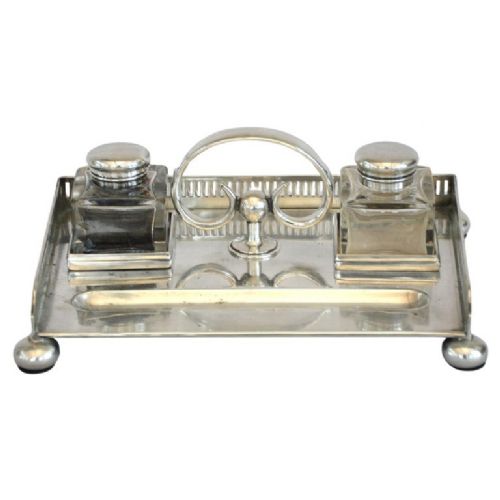
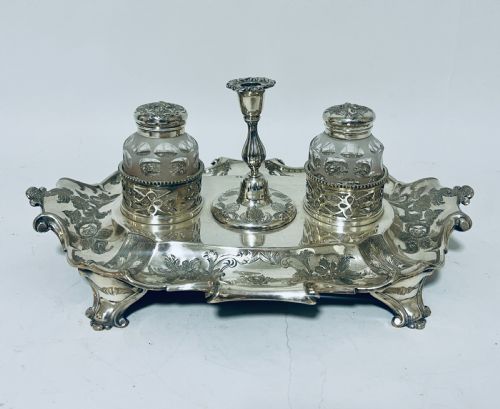
A silver plate double inkwell organises the nineteenth and early twentieth-century desk with two glass vessels housed in a fitted metal stand.
Silver Plate Double Inkwell
When you search for a silver plate double inkwell, you are looking at nineteenth and early twentieth-century desk accessories designed to hold two inkwells alongside pen rests and other desk furniture. The versions you are most likely to meet on this page include Victorian and Edwardian examples formed of silver plated metal fitted with cut glass bottles.
These desk sets appear in various forms, ranging from simple stands with two glass wells to substantial stands incorporating oak, horn, or Sheffield plate. Makers such as Walker and Hall, Martin Hall, Harrods, and Daniel Holy produced these pieces during the Georgian, Victorian, and Edwardian periods.
How they were made
The construction of these pieces combines silver plate or Sheffield plate over a base metal with fitted glass or cut glass inkwells. Some stands incorporate organic materials like oak or horn alongside the metalwork.
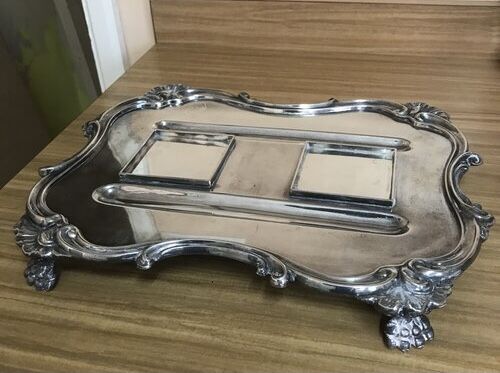
Makers shaped the metal using traditional manufacturing techniques of the nineteenth century, creating Rococo Revival, Regency, and Gothic Revival styles that housed heavy glass bottles securely.
Silver Plate Double Inkwell Retail Price Guide 2026
Typical asking prices for silver plate double inkwell among the pieces listed under this phrase on Sellingantiques today, from the lower quarter to the upper quarter. They describe what is for sale here now, not the wider market.
One notable piece combines silver plate with horn, proving that nineteenth-century desk items occasionally embraced unexpected natural textures.
What varies in quality
Quality in these items depends on the weight of the metal and the clarity of the cut glass inserts. Pieces by named makers or those employing early Sheffield plate methods stand apart from standard base metal items.
The integration of secondary materials like oak or horn and the crispness of decorative styles such as Rococo Revival or Regency dictate the overall calibre of a desk stand.
Walker And Hall·Daniel Holy·Martin Hall
The Silver Plate Double Inkwell Glossary
- Sheffield plate
- An early form of silver plating produced by fusing a sheet of silver to a copper ingot before rolling them together into a single sheet. This technique predates modern electroplating.
- Standish
- A portable desk stand or tray fitted with inkwells, pen holders, and sanders for writing materials. These pieces served as central desk furniture in studies and libraries.
- Desk tidy
- A compartmentalised desk accessory designed to hold stationery, pens, and inkwells in one place. These items kept writing desks organised during the Victorian and Edwardian eras.
- Cut glass
- Glass decorated by cutting geometric or floral patterns into the surface using a rotating wheel. This technique adds weight and brilliance to the inkwell inserts.
Silver Plate Double Inkwell: Frequently Asked Questions
What is a silver plate double inkwell?
A desk accessory featuring a metal stand with two separate glass wells for ink. These pieces served writers in the nineteenth and early twentieth centuries.
They sit upon a desk to provide dual ink supplies for correspondence.
How do I date an antique inkstand?
Dating relies on stylistic clues, materials like Sheffield plate versus later silver plate, and maker marks stamped into the metal.
Georgian and Victorian pieces display distinct decorative motifs that help establish their period of manufacture.
Were these used in offices or homes?
These desk sets belonged in private studies, libraries, and formal offices where correspondence required regular writing.
Their substantial construction suited stationary placement on heavy wooden desks.
What materials accompany the silver plate?
Many stands feature heavy cut glass inkwells fitted into the metal frame. Some examples also incorporate oak, horn, or base metal elements.
These mixed materials contributed to the durability and appearance of the desk accessories.