
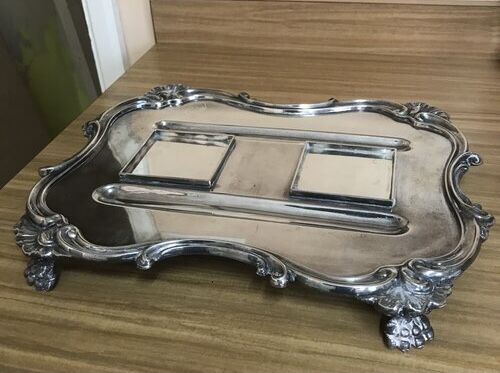
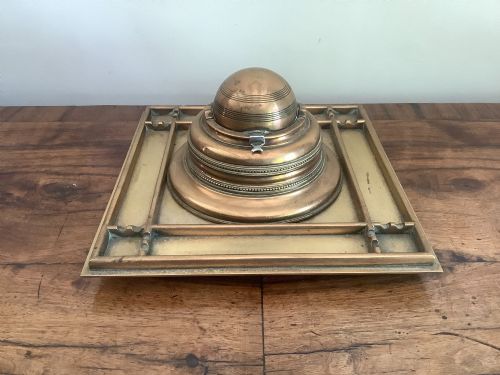


Antique Desk Pen Stand
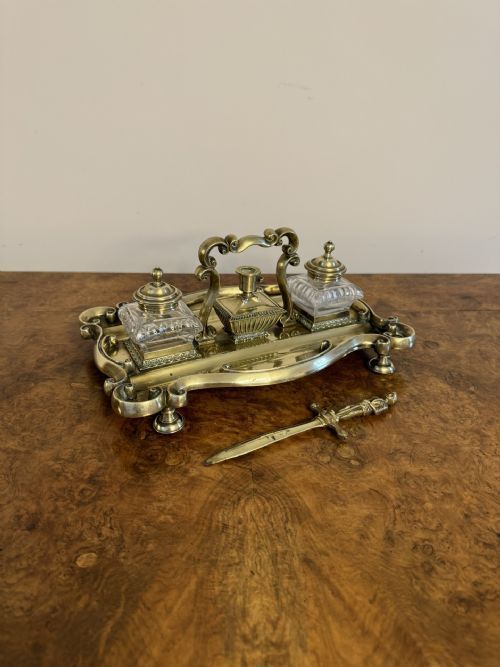
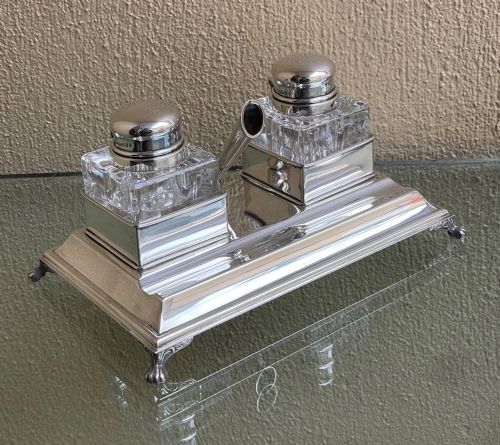
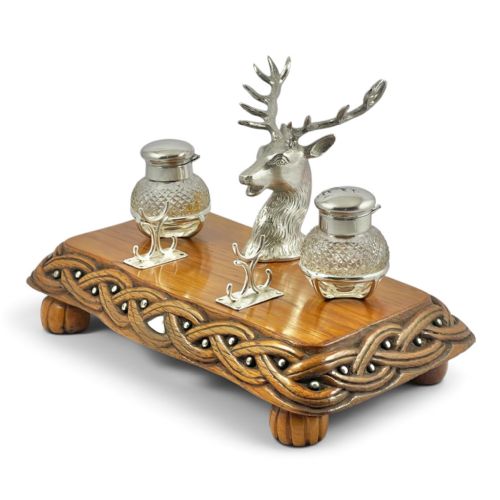
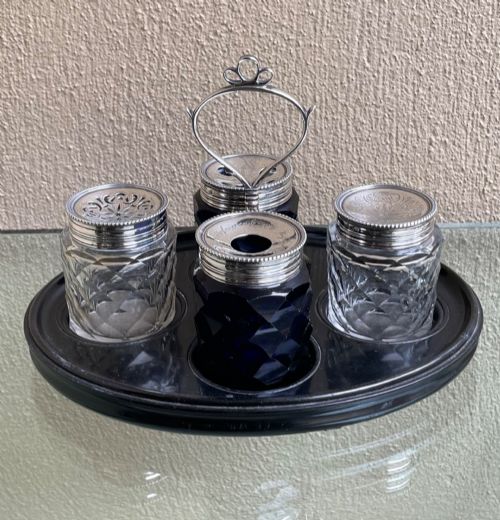
An antique desk pen stand organises writing tools on a surface, combining practical ink storage and pen rests in materials like brass, silver, and wood.
Antique Desk Pen Stand
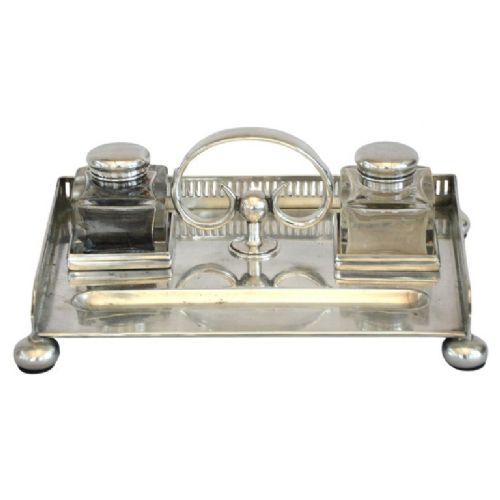
An antique desk pen stand functions as a central desk accessory designed to hold writing instruments, inkwells, and small stationery items in order to keep a writing surface orderly. These pieces frequently incorporate dedicated pen rests alongside glass or ceramic ink containers.
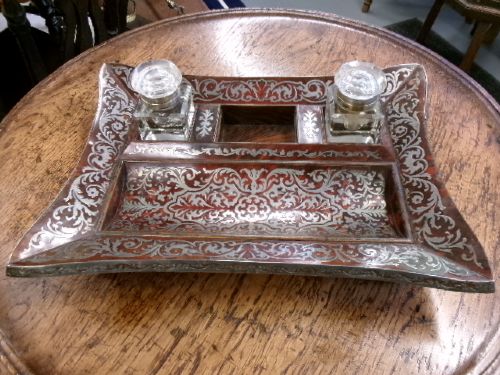
Buyers regularly encounter Victorian examples executed in brass, oak, or silver, alongside nineteenth-century tortoiseshell, coromandel, and papier-mâché variations. The selection spans formal Regency rosewood sets, Art Nouveau bronze pieces, and utilitarian desk tidies.
The form adapts to domestic and administrative use, sometimes pairing quill holders with chambersticks, match holders, or integrated clocks. Regional iterations include Scottish horn and silver mounts, Dutch Delft faience, and Kashmiri hand-painted papier-mâché.
How They Were Made
Construction relies upon traditional cabinet-making and metalworking techniques, utilising dense hardwoods like coromandel, mahogany, and walnut as structural bases. These wooden chassis often feature inlaid brass, mother-of-pearl, or tortoiseshell detailing.
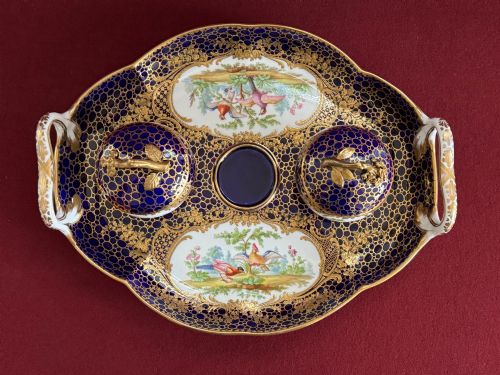
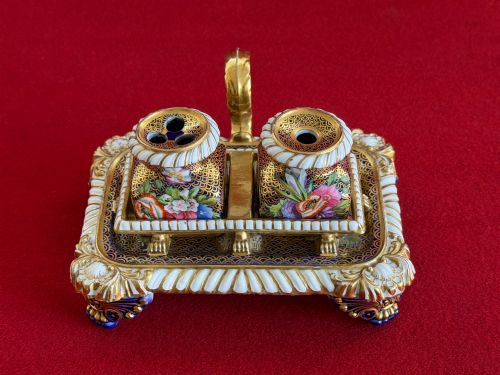
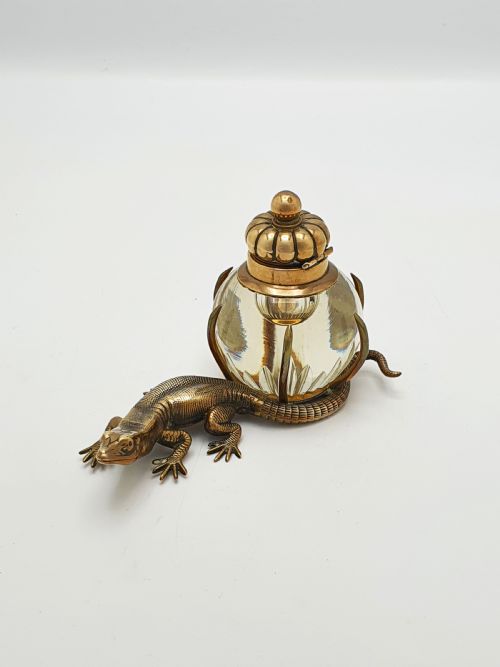
Metal components involve cast bronze, polished pewter, brass, and silver plate, frequently paired with cut glass or porcelain inserts for the ink reservoirs. Artisans also employed specialist finishes such as gold leaf, ormolu, and hand-painted ceramic glazes.
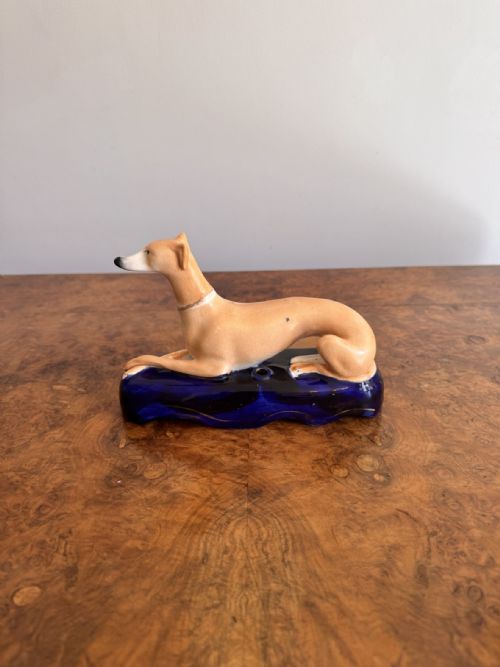
Staffordshire whippet and greyhound quill holders keep watch over stray pens with canine vigilance.
What Varies in Quality
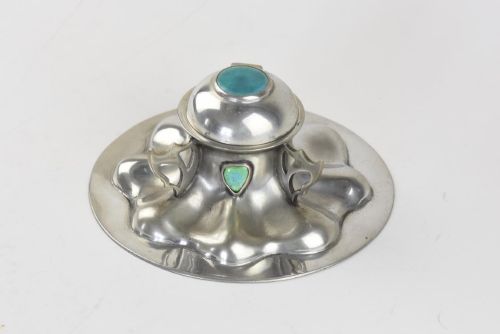
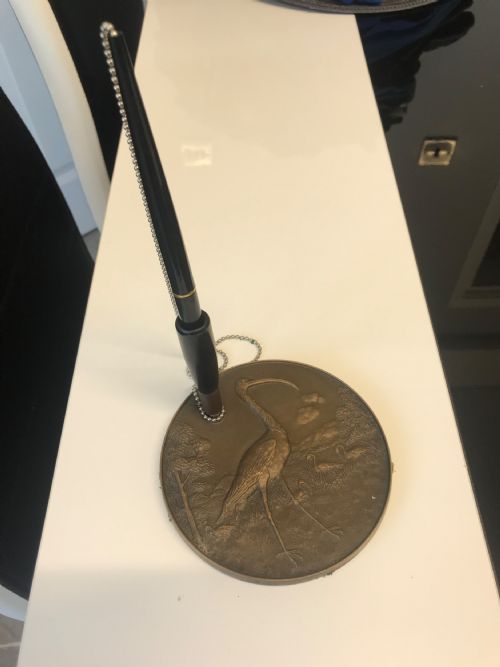
Quality rests in the precision of the joinery and the selection of materials, where solid hardwoods and heavy gauge silver or brass denote higher workmanship than plated alternatives. The integration of decorative elements, such as Ruskin cabochons or detailed bronze castings, distinguishes finer studio work from standard production.
The sophistication of secondary materials also alters the character of a piece, separating basic desk tidies from elaborate French or English salon sets. Complete suites retaining their original matching ink inserts and pen rests hold greater cohesion.
A Cohen and Co Ltd·Walker And Hall·Robert Garrard
The Antique Desk Pen Stand Glossary
- Inkstand
- A fitted tray or stand holding one or more inkwells and space for pens. These pieces anchor the desk surface.
- Quill holder
- A specialised rest or stand shaped to hold loose quills or early pens. Examples often take figural forms such as animals.
- Ormolu
- Gilded bronze mounted onto decorative objects or furniture. The technique creates a bright metallic finish.
- Papier-mâché
- A composite material made from paper pulp and binding agent, moulded and painted. It yields lightweight yet rigid desk accessories.
- Capstan-shaped
- Designed with a tapering cylinder resembling a nautical capstan. This profile appears frequently on Edwardian silver inkwells.
Antique Desk Pen Stand: Frequently Asked Questions
What is an antique desk pen stand used for?
These stands hold writing instruments, inkwells, and related desk accessories in a single consolidated tray.
They kept writing tools accessible while protecting the desktop from ink spills during correspondence.
How do I date an antique inkstand?
Dating relies on stylistic markers, material combinations, and occasional hallmarks found on silver components.
Victorian and Georgian examples often display distinct wood choices and decorative motifs characteristic of their decade.
What materials are common in these desk stands?
Common materials include hardwoods like coromandel and walnut, paired with brass, bronze, and sterling silver.
Many pieces also feature cut glass ink inserts, tortoiseshell inlay, or ceramic elements like Dutch Delft.
How do I care for a wooden and metal inkstand?
Wood surfaces benefit from occasional wax polish while avoiding excessive moisture near joints.
Metal components require gentle dusting and careful handling to preserve silver or brass finishes.