

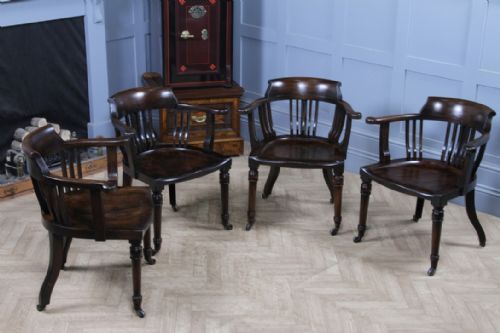
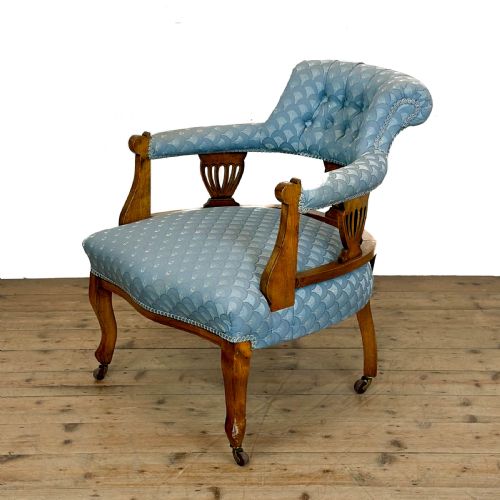


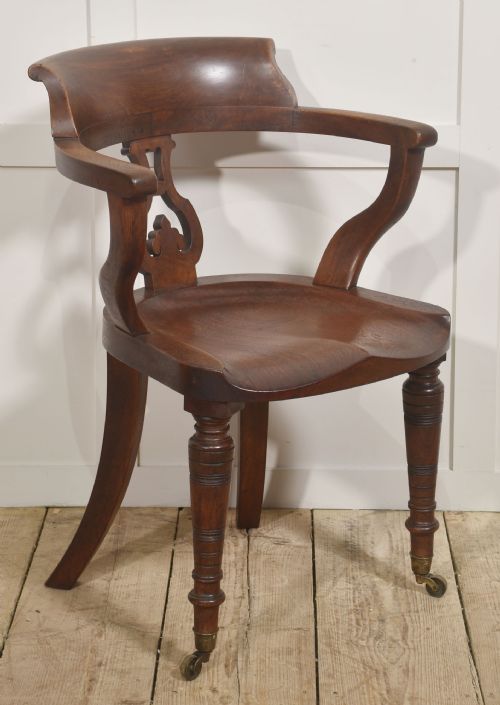


Antique Desk Armchair Castors
These antique desk armchair castors secure mobility for seating designed for library, office and study.
Antique Desk Armchair Castors
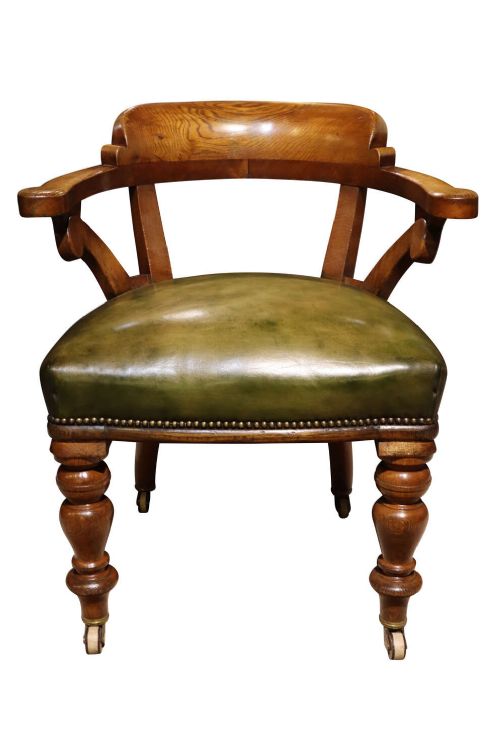
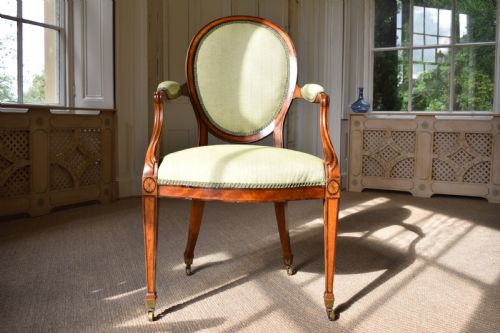
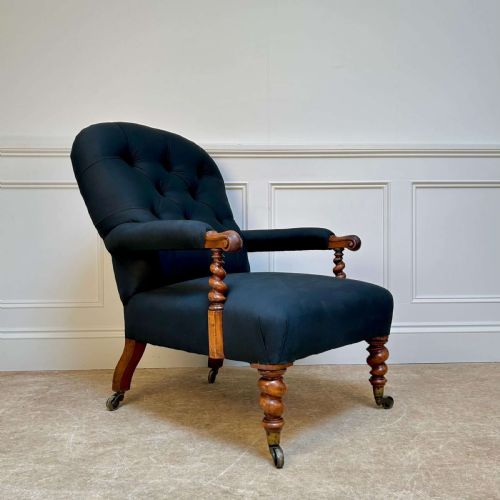
When you search for antique desk armchair castors, you encounter seating built to anchor a study, library or office. These chairs combine the support of an armchair with the practical requirement of movement across a floor.
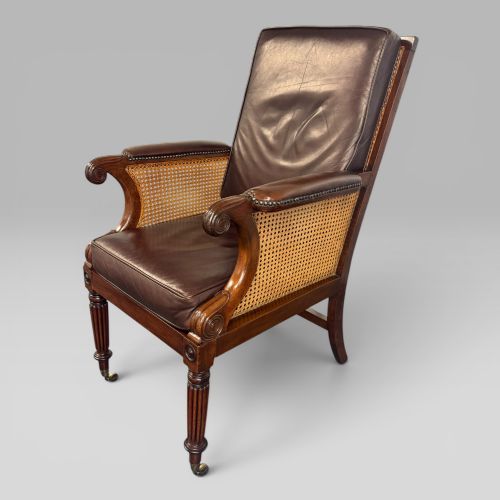
The pieces appearing on this page span the 19th century into the early 20th century, encompassing Regency, Victorian and Edwardian periods. Forms range from library bergères and captain's chairs to swivel office chairs and open armchairs.
Mahogany and oak dominate the selection, often paired with leather upholstery or cane panels. You will also find walnut, rosewood and beech examples fitted with the brass wheels that define the search phrase.
Materials and Construction
Cabinet makers utilised dense hardwoods such as mahogany, oak and walnut to ensure structural integrity under daily use. Turned and reeded legs frequently terminate in metal mountings and brass wheels.
Upholstery methods involved fitted leather hides, sometimes highlighted with studwork, alongside woven cane for lighter bergère frames. Swivel mechanisms in later Edwardian models incorporated metal components for rotation.
Some chairs were built so stoutly for gentlemen of the library that they outlived the empires whose newspapers they read.
Distinctions in Quality
Quality rests upon the proportion of the frame and the depth of timber selection, whether figured mahogany or golden oak. Well drawn lines and generous proportions distinguish finer library chairs from simpler utility seating.
The integration of the castor fittings into the leg base reveals the original ambition of the piece. Maker attribution, through stamps or known workshop designs, elevates individual examples above standard production.
Hindley & Sons·W.Williamson & Sons·Gillows·Kendrick & Jefferson·Daws
The Antique Desk Armchair Castors Glossary
- Castor
- A small wheel mounted on a swivel at the base of a leg to facilitate rolling movement. These metal and brass fittings are central to the mobility of desk armchairs.
- Bergère
- An enclosed upholstered armchair with exposed wooden framing and cane-work sides. They appear frequently in Regency library settings.
- Captain's Chair
- A low-backed wooden armchair designed for comfort during long hours at a desk or table. Examples often feature steam-bent rails and saddle seats.
- Reeded
- A decorative moulding consisting of parallel convex strips resembling parallel reeds. This technique surfaces on mahogany library chair legs.
Antique Desk Armchair Castors: Frequently Asked Questions
What defines a library chair?
Library chairs are substantial armchairs designed for reading rooms, typically constructed from mahogany or oak with upholstered leather seats and backs. They offer generous proportions and sturdy armrests to support prolonged study.
Many examples incorporate brass castors to allow easy repositioning across carpeted or wooden library floors without lifting the heavy timber frame.
How do I identify a Regency desk chair?
Regency desk chairs date from the early 19th century and often display classical restraint through reeded mahogany frames, sabre legs, and cane or leather panels. Their silhouettes reflect archaeological influences popular during the period.
Attributions to prominent workshops sometimes accompany these pieces, marking them out through superior carving and well-drawn proportions.
Were swivel chairs made in the Victorian era?
Swivel mechanisms evolved towards the end of the 19th century and into the Edwardian period, primarily for office and captains' seating. These designs utilised beech, mahogany or oak combined with central iron screw or pivot mechanisms.
Such chairs meet the practical demands of clerical work while retaining traditional timber construction methods.
What is a cockfighting chair?
A cockfighting chair is a specialised low armchair featuring a padded rest on the upper back rail, originally intended for spectators leaning forward during matches. The compact form often includes an upholstered seat and sturdy turned legs with castors.
In domestic settings, these pieces function effectively as compact desk or library armchairs.