



Antique Desk Accessory Tray
An antique desk accessory tray organises writing equipment with period craftsmanship, bringing functional history to any tabletop.
Antique Desk Accessory Tray
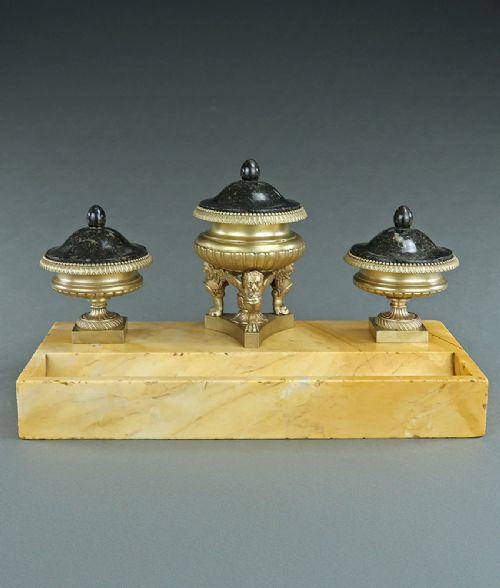
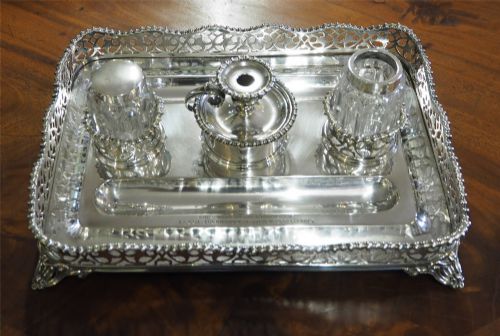
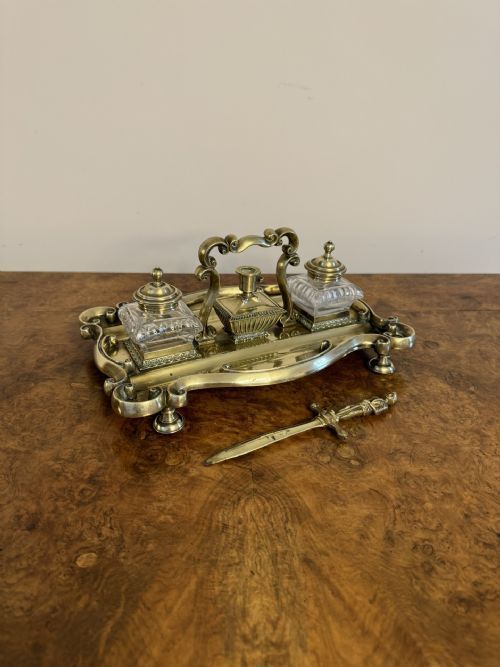
These pieces range from simple brass and bronze inkstands to elaborate multi-piece desk sets featuring letter racks and matching inkwells. The forms vary from compact tortoiseshell tidies to double-sided walnut stands built for heavy correspondence.
Originating predominantly from English, French, and Austrian workshops, these trays reflect the writing habits of past eras. Each piece serves as a tactile record of nineteenth and early twentieth-century desk organisation.
Materials and construction methods
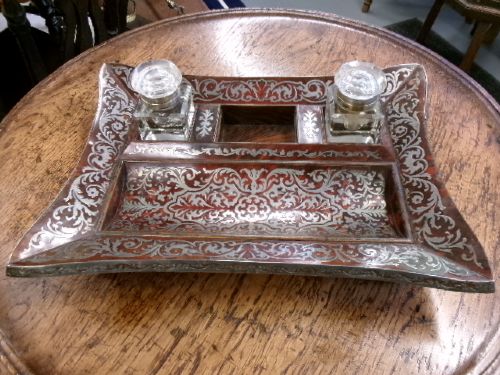
Maker utilisation of solid hardwoods like walnut, coromandel, and rosewood forms the structural core of many desk trays, frequently enhanced by intricate brass mounts, Boulle work, or tortoiseshell inlay. Cabinet makers employed careful joinery to support heavy glass inkwells and metal components.
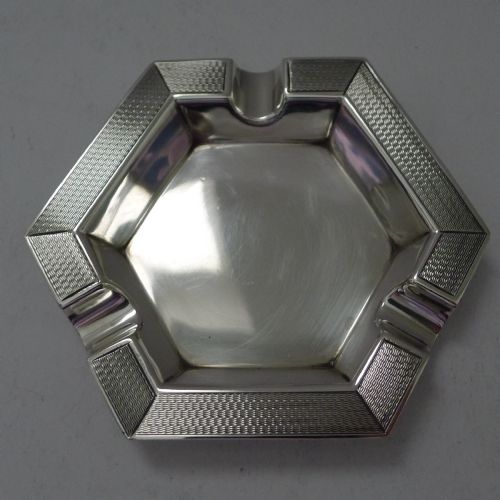
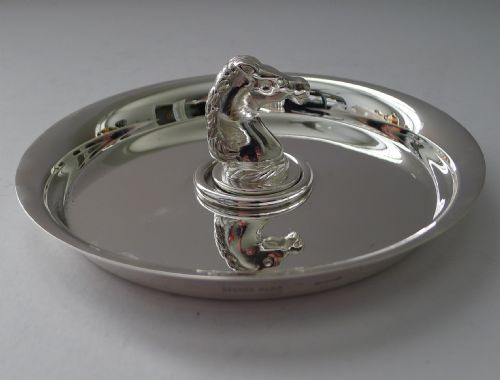
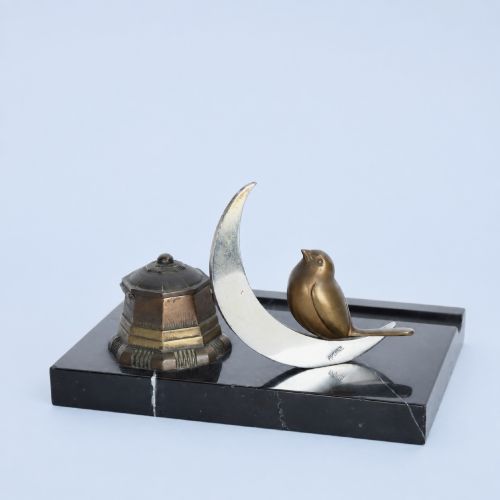
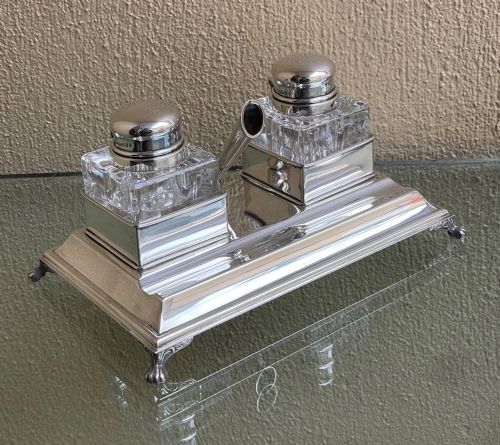
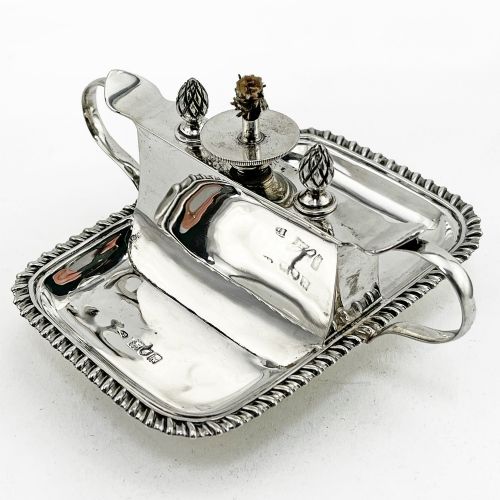
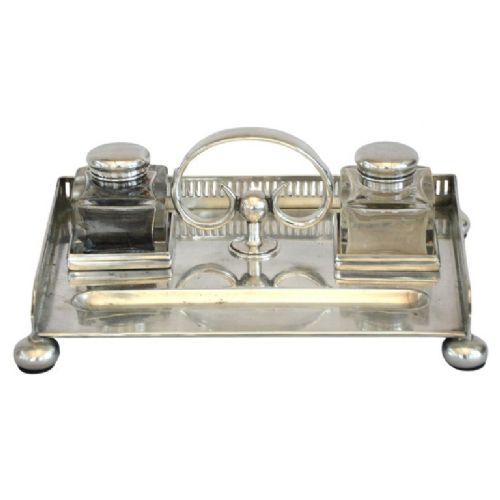
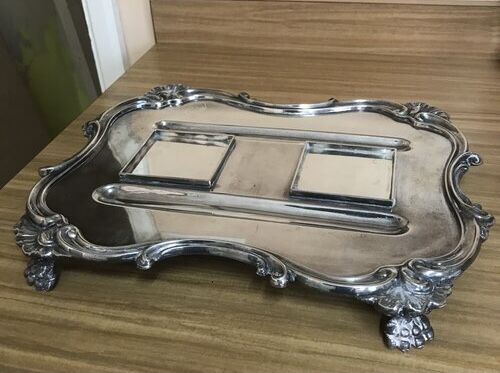
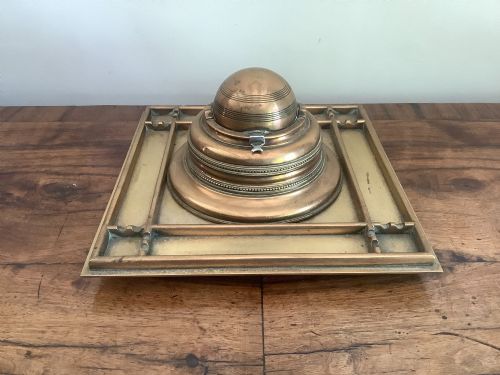
Metalworking techniques encompass cast brass, patinated bronze, and cold-painted bronze figures, alongside sterling silver and silver-plated copper known as Old Sheffield plate. Silversmiths and metalworkers shaped these elements to withstand daily handling while providing secure rests for pens and cigars.
Ceramic and glass elements, including Dutch Delft blue and white faience and cut glass inkwells, demonstrate specialised kiln firing and moulding practices. Artisans combined these fragile components with metal or wooden bases to create stable desktop containers.
A cricket novelty bat, ball, and wicket letter rack proves that nineteenth-century gentlemen took their pavilion sports directly to the paperwork.
Factors of superior manufacture
The standard of an antique desk accessory tray depends upon the precision of its fitted elements and the depth of material selection. Superior examples display substantial gauge metals, dense hardwoods, and finely chased bronze work that resists wear.
Integration of secondary materials dictates overall refinement, such as the crispness of hand-painted papier-mâché, the alignment of Boulle inlay, and the clarity of cut glass inkwells. Master workshops ensured every component, from pen rests to chambersticks, functioned harmoniously within the design.
Maker attribution elevates desirability, as pieces bearing marks from established retailers or silversmiths exhibit superior finishing to unmarked commercial items. The weight and stability of the base material further separate basic production from exceptional artistry.
William Neale·Elkington·Walker And Hall·Harrods·Creswick·Robert Garrard·Asprey Of London
The Antique Desk Accessory Tray Glossary
- Inkstand
- A portable tray or stand fitted with one or more inkwells, sanders, and pen rests. These containers kept writing fluids organised on the desktop.
- Boulle work
- An ornamental marquetry technique utilising tortoiseshell and brass inlay developed in seventeenth-century France. This decorative surface treatment appears on refined nineteenth-century desk boxes.
- Cold-painted bronze
- A sculptural technique where bronze figures receive non-fired polychrome paint applications. This method was widely utilised by Austrian makers for small animal desk ornaments.
- Old Sheffield plate
- A composite material formed by fusing a thin sheet of silver to a thicker copper base. It predates electroplating and appears on eighteenth and early nineteenth-century desk wares.
- Coromandel
- An exotic, dark-grained hardwood imported from Asian regions, valued for its rich colour and durability. Cabinet makers utilised this dense timber for luxury Victorian writing equipment.
Antique Desk Accessory Tray: Frequently Asked Questions
What is the difference between a desk set and an inkstand?
An inkstand specifically focuses on ink storage, typically holding one or two inkwells alongside a pen rest and sometimes a sander or wafer box.
A desk set represents a broader ensemble that may include a matching letter rack, blotter, chamberstick, or paper knife alongside the central ink container.
How were nineteenth century desk trays utilised daily?
Users placed these trays on Davenport desks, partner desks, or library tables to corral loose writing implements before the widespread adoption of fountain pens and ballpoints.
Inkwells required regular refilling from larger ink bottles, while pen rests kept steel-nib pens from staining writing surfaces.
How do I care for antique wood and metal desk trays?
Maintain wooden surfaces by applying appropriate wax sparingly to preserve the polish without softening inlaid brass or tortoiseshell elements.
Metal components like brass and bronze benefit from dust removal with a soft brush, avoiding aggressive polishes that strip historical patination.
How can I distinguish Victorian pieces from Edwardian ones?
Victorian desk trays frequently showcase heavier ornamentation, including Rococo Revival curves, ornate cast brass, and dense walnut or coromandel foundations.
Edwardian examples often lean towards lighter sterling silver construction, cleaner lines, or simpler geometric forms reflecting changing interior tastes.