




Antique Demilune Credenza
An antique demilune credenza offers a curved facade and graceful profile, bringing architectural elegance and refined storage to a room.
Antique Demilune Credenza
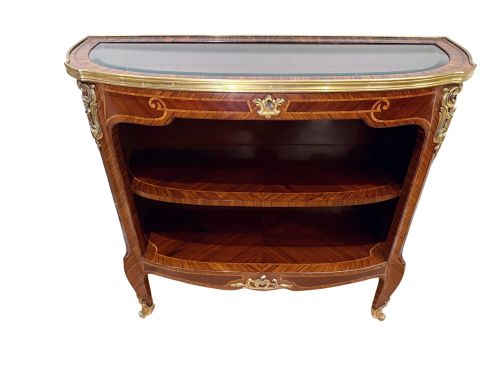
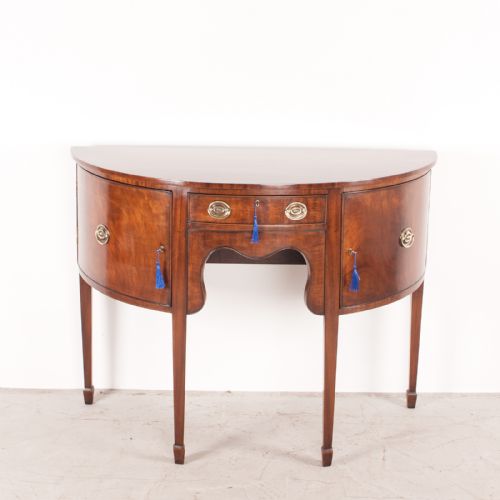
When you search for an antique demilune credenza, you encounter semicircular case furniture that functions as a side cabinet, commode, or sideboard. These pieces originate from periods spanning the eighteenth century through to the early twentieth century, taking forms such as marble-topped cabinets and inlaid commodes.
Makers and cabinetmakers constructed these semicircular forms to fit flush against walls, serving functional storage roles in dining rooms and parlours while displaying decorative wood veneers and painted surfaces.
Materials and construction
Cabinetmakers built the carcase and curved frames using foundational timbers such as mahogany and satinwood, frequently applying intricate marquetry and parquetry inlays of boxwood and other contrasting woods. Furniture from French and English workshops often incorporates burr elm, burr yew, and kingwood veneers.
Many surfaces receive decorative treatment through painted finishes, including Vernis Martin techniques or hand-painted ornamentation. Stone masons fitted heavy marble slabs to the tops of French and English side cabinets to create durable, polished working surfaces.
Metalworkers added cast brass and ormolu mounts, handles, and gallery rails to accent the curved mahogany and satinwood structures.
Music cabinets disguise sheet music behind curved doors, proving that even eighteenth-century sheet hoarders required elegant concealment.
Judging quality in semicircular cabinetry
The refinement of the timber selection distinguishes pieces, particularly the choice of figured veneers like burr elm, kingwood, and satinwood arranged in symmetrical marquetry patterns. Finer pieces demonstrate precision in the hand-cut parquetry and the integration of delicate boxwood stringing along curved drawer fronts.
The quality of the mountings separates workshop tiers, with cast and chased ormolu hardware representing superior craftsmanship compared to simpler stamped brass fittings. Furthermore, the thickness and polish of the fitted marble top, alongside the tightness of the joinery on the semicircular carcase, mark the division between standard production and master cabinetmaking.
James Hicks·Kaufman
The Antique Demilune Credenza Glossary
- Demilune
- Half-moon shape describing furniture with a semicircular front and a flat back designed to stand against a wall. This profile defines the core geometry of these side cabinets and commodes.
- Marquetry
- Decorative veneer work forming pictures or geometric patterns using various coloured woods. Craftsmen applied this technique extensively to the top surfaces and doors of Georgian and Revival cabinets.
- Ormolu
- Gilded bronze mounts and decorative hardware applied to furniture. It provides metallic contrast against dark mahogany and rich kingwood veneers.
- Parquetry
- Geometric mosaic woodwork arranged in patterns like cubes or chequers. It appears on the top and sides of eighteenth and nineteenth-century commodes.
- Vernis Martin
- A simulated Japanese lacquer finish developed in eighteenth-century France. This technique created glossy painted panels depicting pastoral or floral scenes on side cabinets.
Antique Demilune Credenza: Frequently Asked Questions
What is a demilune cabinet?
A demilune cabinet is a semicircular piece of furniture designed to sit flat against a wall. These items function as commodes, sideboards, or decorative side cabinets.
Cabinetmakers shaped the front in a half-moon curve while keeping the rear straight, allowing the piece to occupy minimal floor space in hallways and reception rooms.
Where were these cabinets placed?
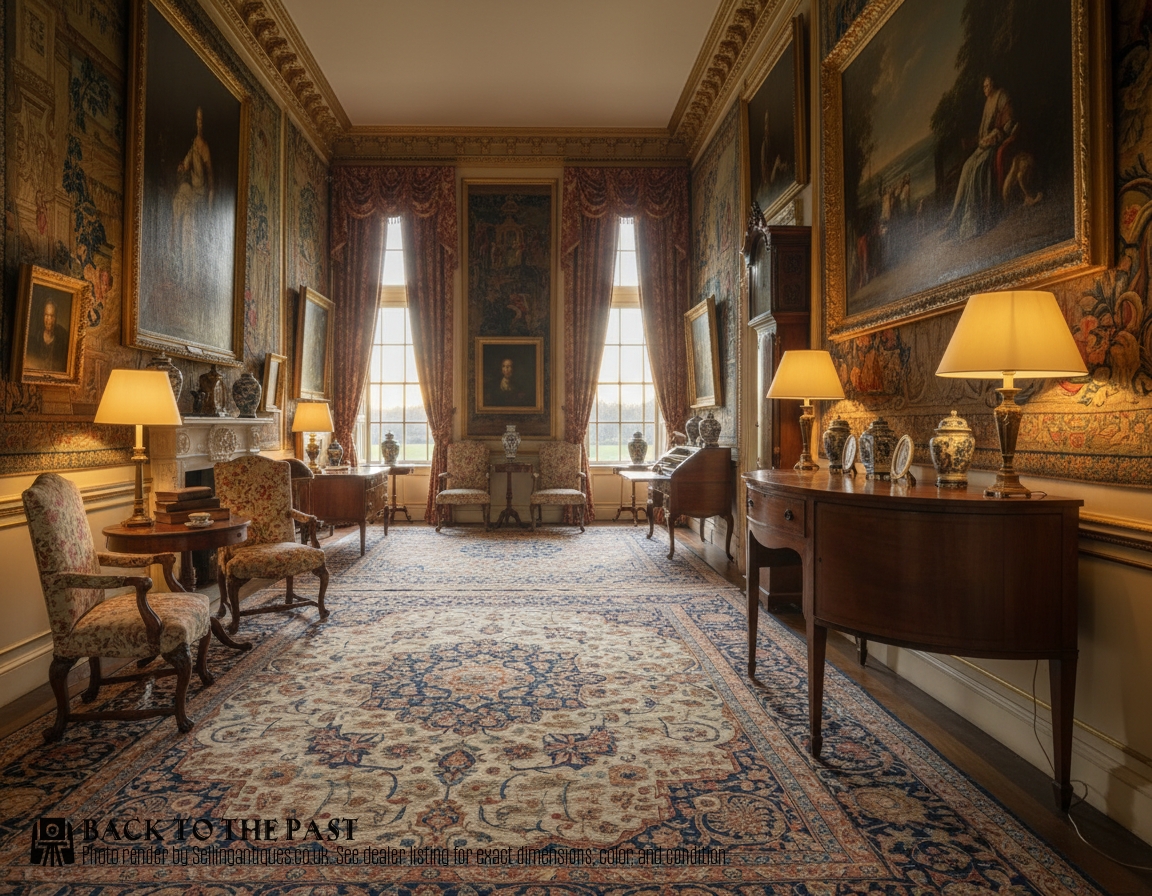
These cabinets traditionally stood in formal dining rooms, drawing rooms, and entrance halls. They served as serving surfaces or storage units for tableware and documents.
The flat top accommodated decorative objects like lamps and urns, while the internal shelves held china and linens.
How do I identify a revival style?
Revival pieces emulate earlier design movements, such as Sheraton or Louis XV styles, but date from the nineteenth or early twentieth centuries. Makers utilised period forms while employing contemporary construction methods and machinery.
Examination of the secondary woods inside drawers and the ageing of the internal carcase timbers helps determine the actual date of manufacture.
What maintenance do marble tops need?
Marble tops require gentle cleaning with mild, pH-neutral soap and warm water to preserve the polished stone surface. Avoid acidic cleaners that can etch the calcium carbonate in the marble.
Applying a specialist stone wax periodically helps protect the surface from moisture rings and minor staining.