

Antique Cylinder Secretary
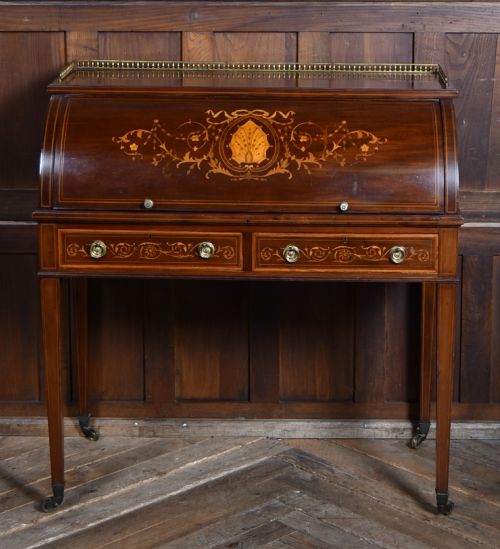
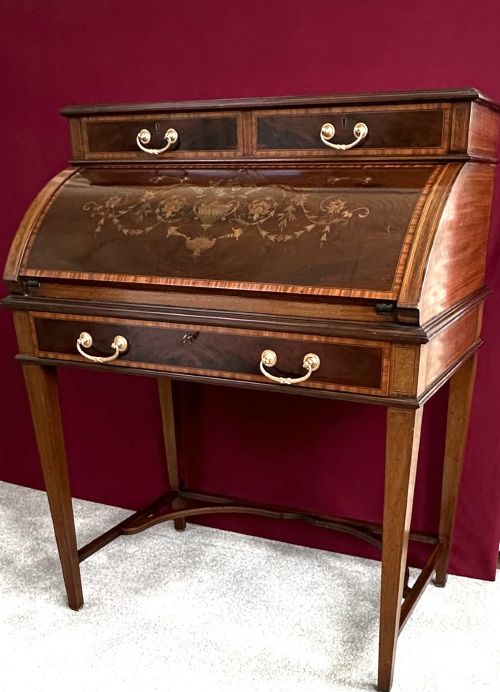
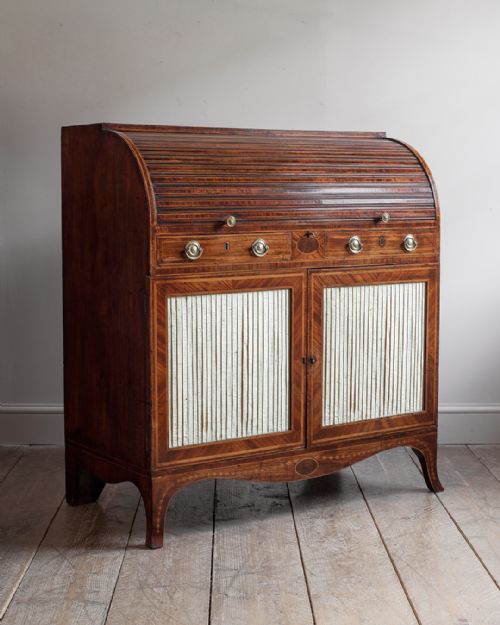
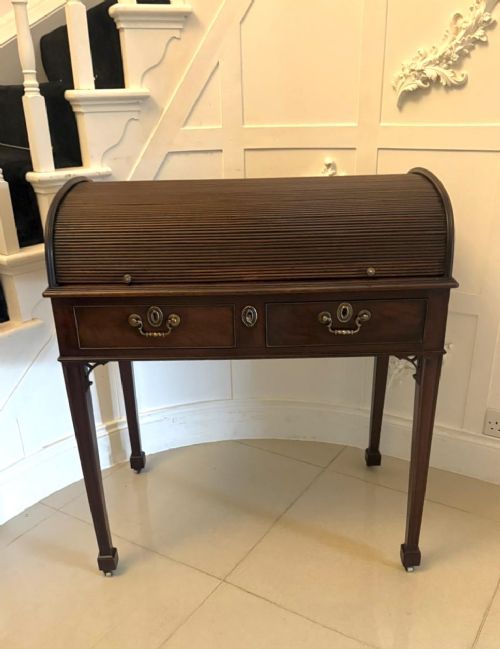
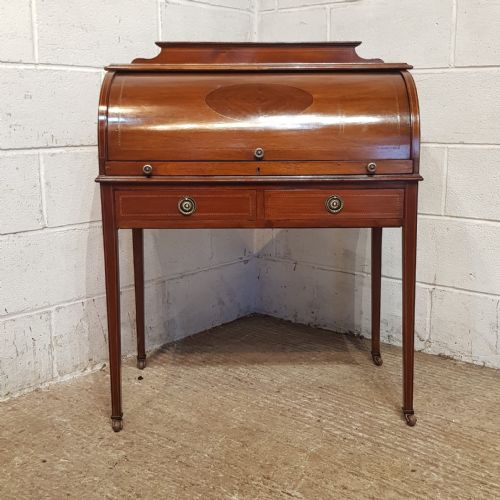
An antique cylinder secretary brings architectural precision to the study, concealing a fitted writing surface beneath a rolling cylindrical lid.
Antique Cylinder Secretary
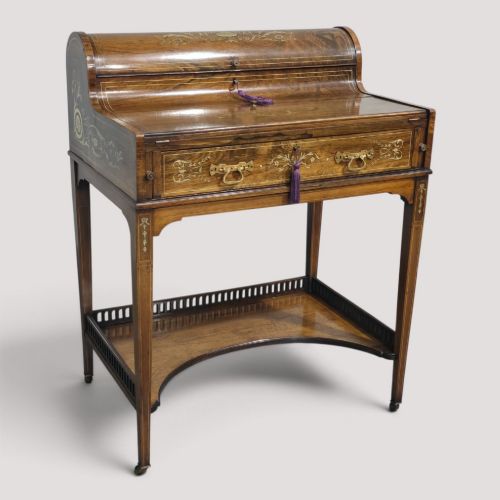
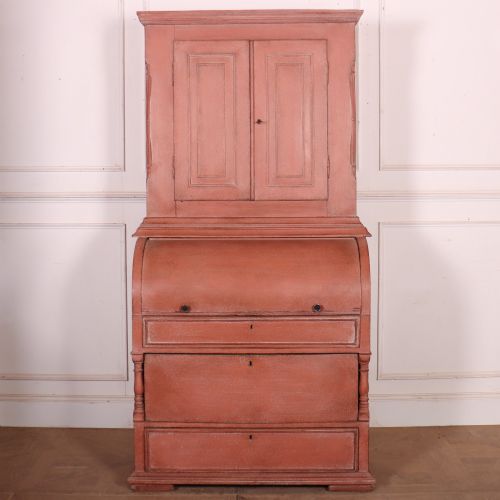
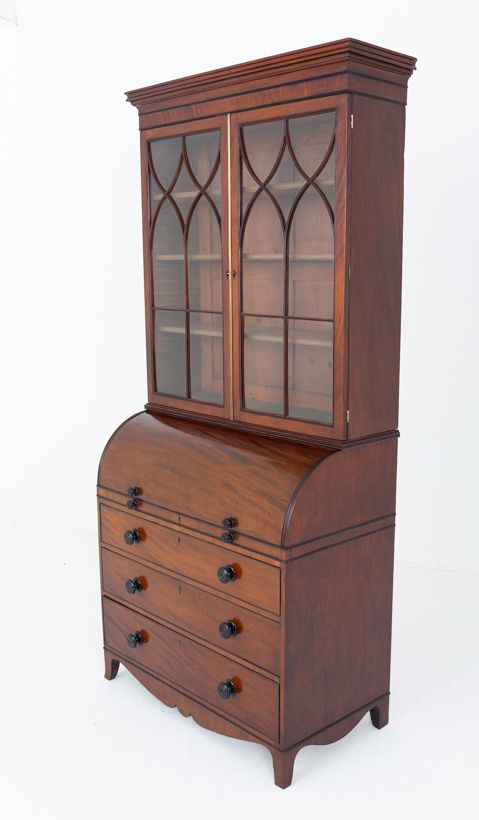
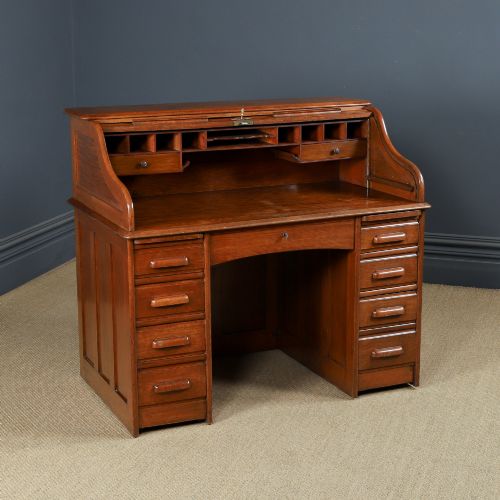
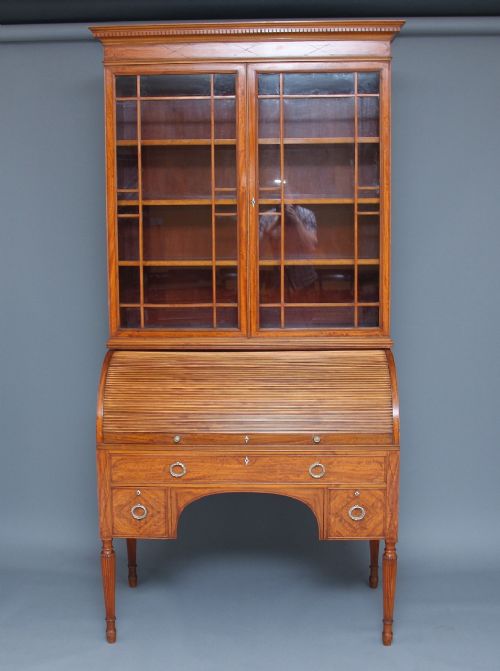
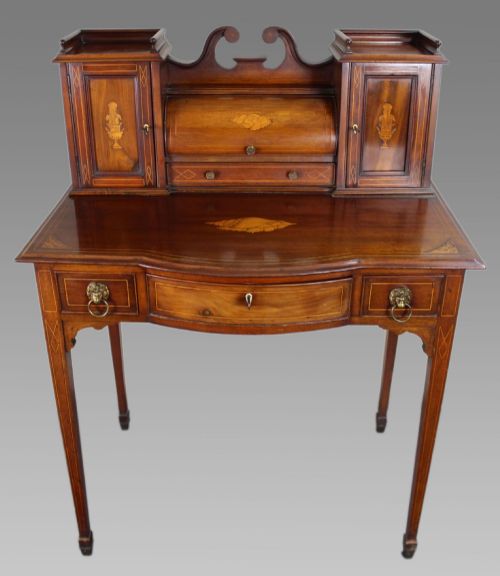
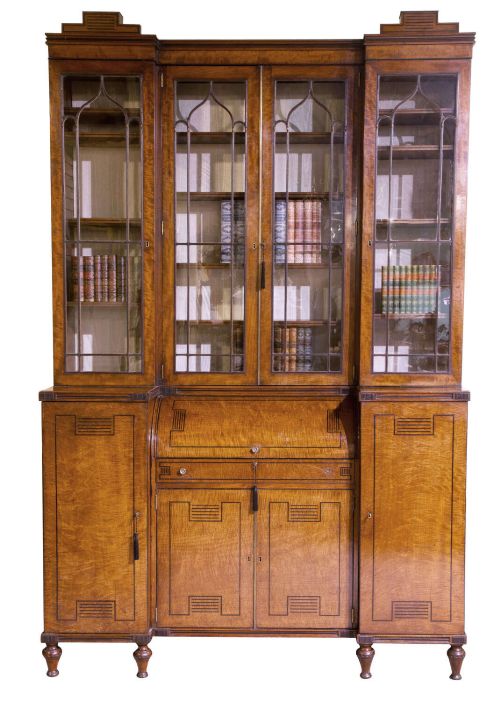
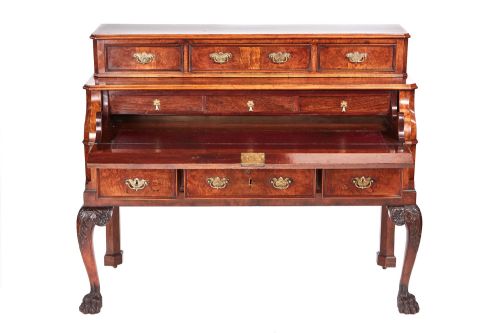
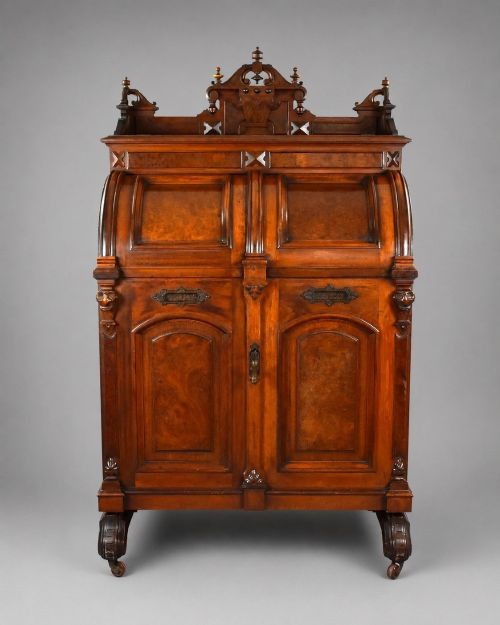
The antique cylinder secretary combines a cylindrical roll top with a pull-out writing slide, appearing across the eighteenth, nineteenth, and early twentieth centuries in forms ranging from compact ladies desks to large breakfront bookcase cabinets.
Makers produced these pieces in Georgian, Regency, Victorian, and Edwardian styles, alongside Sheraton Revival interpretations and Continental variations.
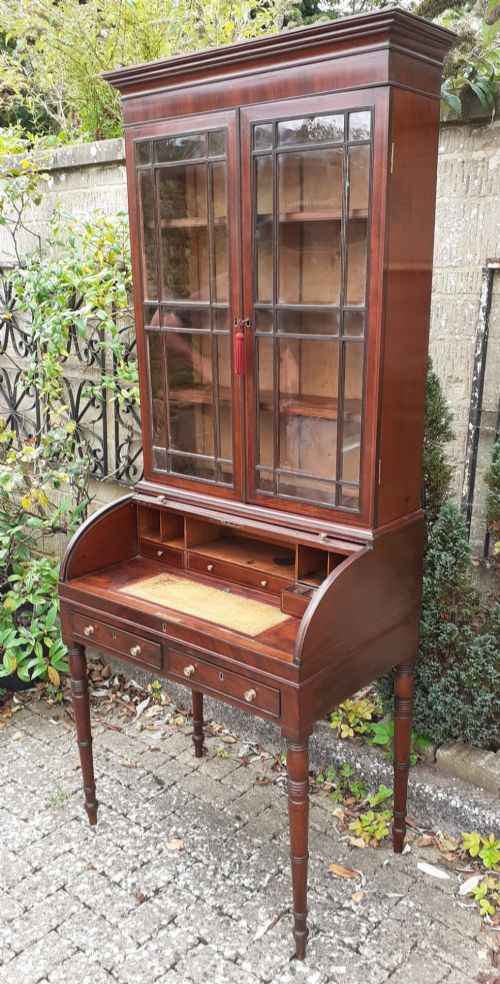
The configuration typically includes interior pigeonholes and small drawers enclosed by the curved lid, occasionally surmounted by glazed bookcase doors.
Materials and Construction
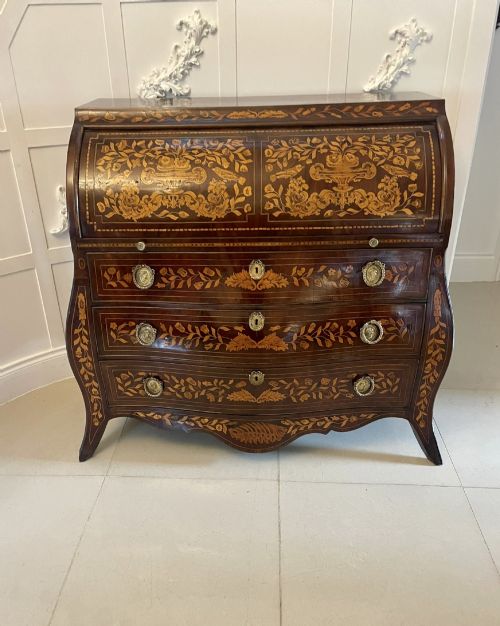
Cabinetmakers utilised primary timbers like mahogany, walnut, burr walnut, oak, satinwood, and rosewood, frequently incorporating intricate marquetry and contrasting stringing.
Internal mechanisms rely on slatted tambour strips or solid curved wooden cylinders that track smoothly within recessed channels to reveal the writing surface.
Brass hardware, leather writing inserts, and fine glass panes complete the construction of these refined case pieces.
Antique Cylinder Secretary Retail Price Guide 2026
Typical asking prices for cylinder secretary among the pieces listed under this phrase on Sellingantiques today, from the lower quarter to the upper quarter. They describe what is for sale here now, not the wider market.
Some cylinders open with a secret click, reminding us that past owners kept their love letters hidden behind miniature pigeonholes.
Craftsmanship and Proportion
Quality rests in the precision of the cylindrical mechanism, ensuring the curved slats or solid shell glide without binding in their tracks.
Finer examples display superior timber selection, such as figured burr walnut or meticulously matched satinwood veneers, paired with crisp marquetry and substantial brass fittings.
Edwards & Roberts·Tudor & Burrey·Wells Fargo·Wiggers
The Antique Cylinder Secretary Glossary
- Cylinder secretary
- A desk featuring a curved, quarter-circle or half-cylinder lid that rolls back to uncover a fitted writing interior and pull-out surface.
- Tambour
- A flexible shutter formed of narrow strips of wood glued to canvas, allowing the writing surface enclosure to slide around a curved track.
- Marquetry
- Decorative patterns formed by fitting together small pieces of tinted woods, veneers, and shell into wood panels.
- Secretaire bookcase
- A tall cabinet combining a writing compartment with upper shelving enclosed by glass or wooden doors.
Antique Cylinder Secretary: Frequently Asked Questions
How does a cylinder secretary work?
The curved wooden lid glides backward along tracks inside the desk carcass, simultaneously drawing out the writing slide or revealing the interior compartments.
This clever mechanism conceals correspondence and writing implements when not in use while maintaining a tidy facade.
What is the difference between a cylinder desk and a roll top?
A cylinder desk typically employs a solid curved wooden shell or fine tambour slats that fit flush when closed, representing a more formal aesthetic.
Rolltop desks often utilise heavier slatted tambour fronts associated with commercial office furniture from later periods.
Where were these desks placed historically?
These pieces occupied private libraries, drawing rooms, and studies where correspondence and estate management took place.
Bookcase variants served the dual purpose of displaying bound volumes while keeping writing materials secure.
How do I identify the period of a secretary?
Dating relies on timber choice, such as eighteenth-century satinwood versus Edwardian mahogany, alongside stylistic details like Regency brass inlay or Victorian carving.
Construction methods inside the secondary drawers also indicate whether a piece originates from the Georgian era or later revivals.