


Antique Curved Cabinet
An antique curved cabinet brings soft lines to a room, offering glazed display or enclosed storage in mahogany, walnut and exotic veneers.
Antique Curved Cabinet
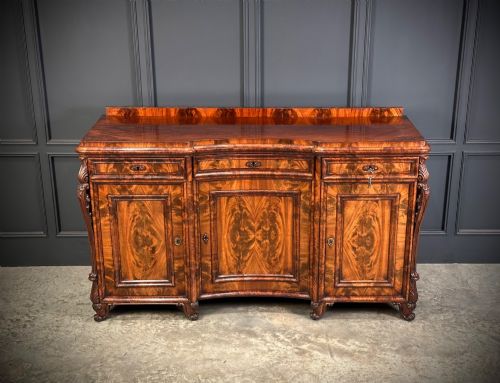
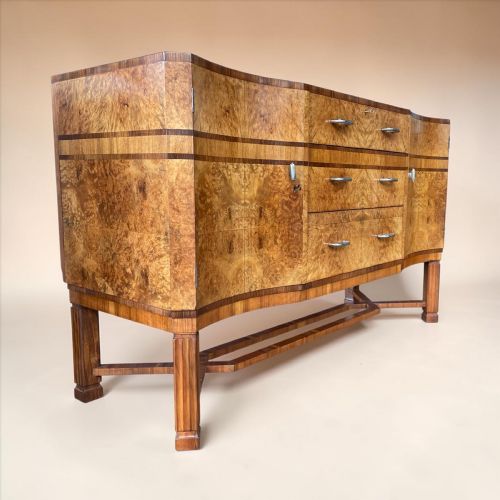
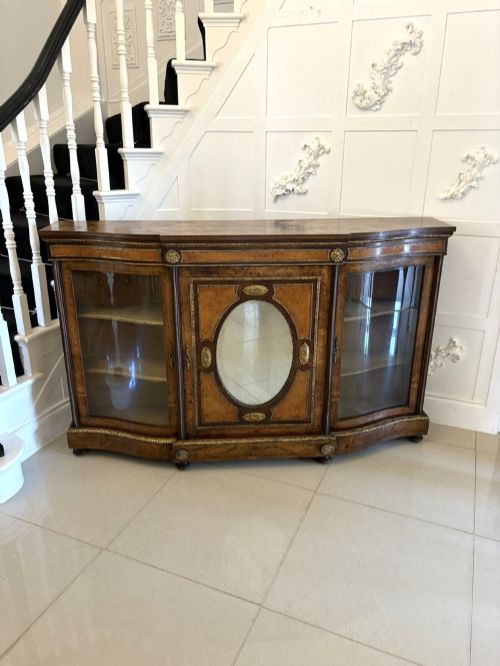
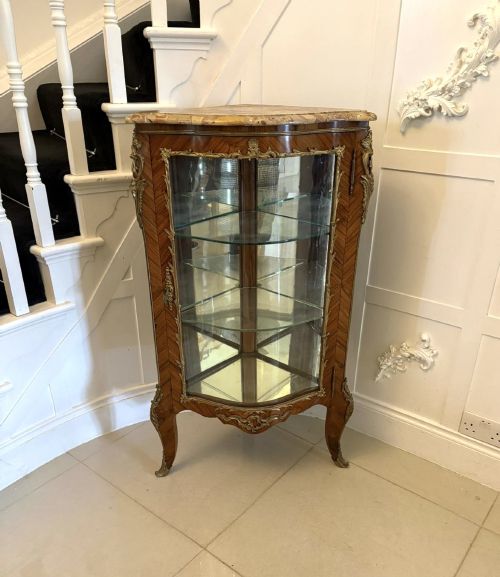
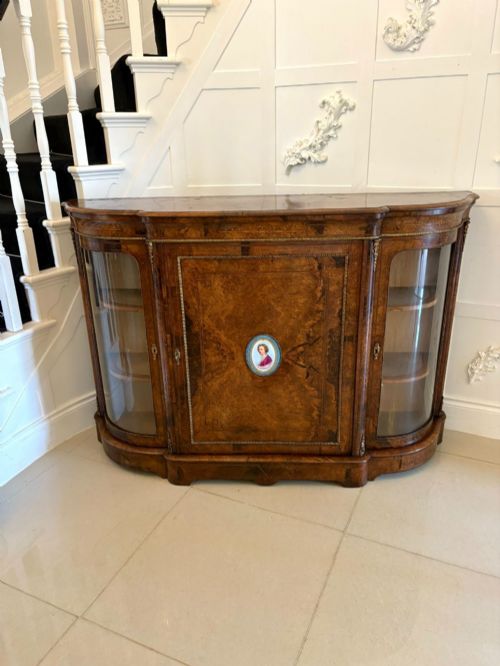
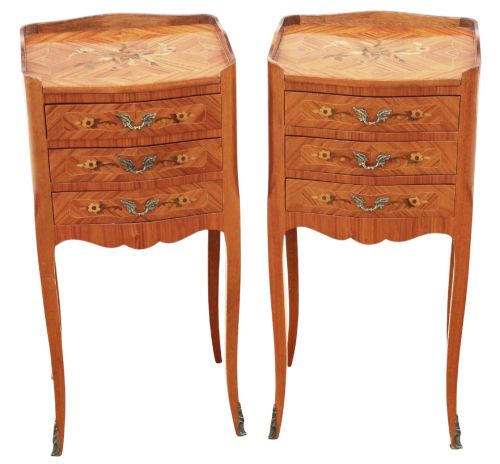
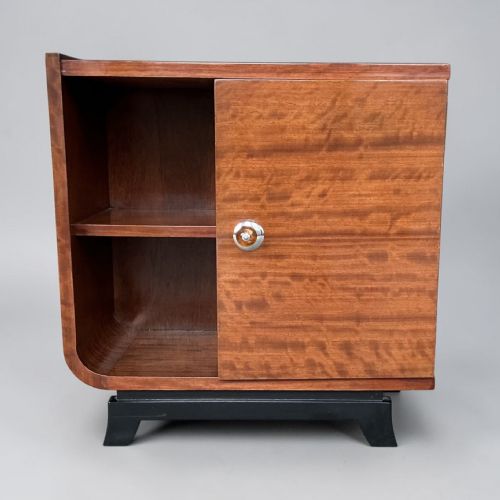
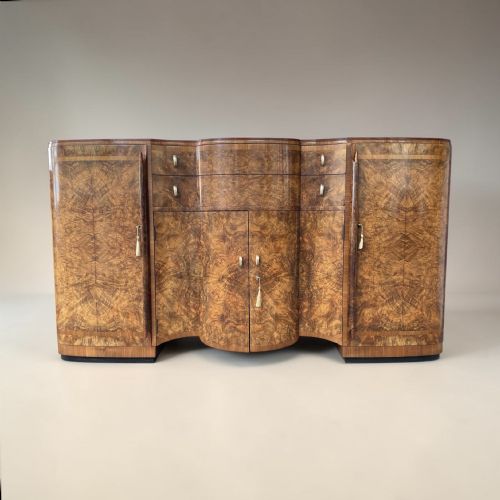
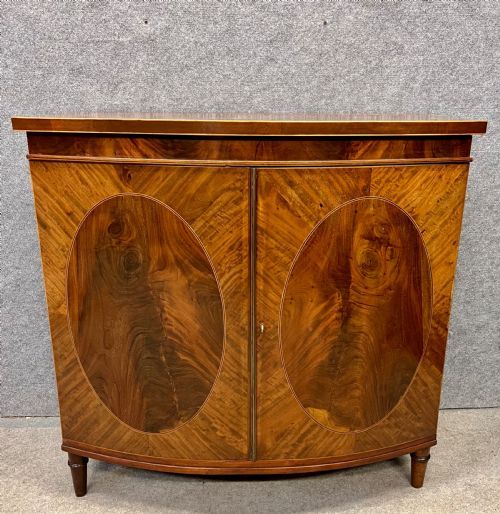
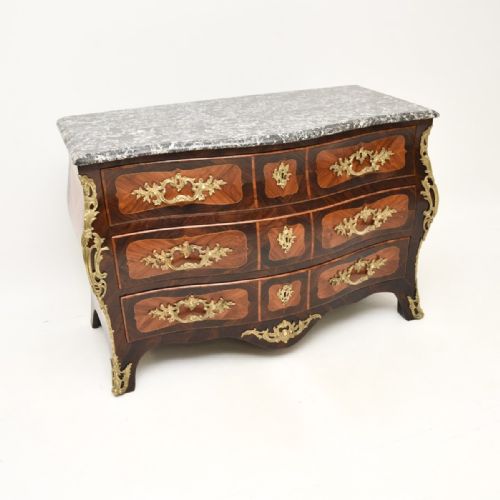
An antique curved cabinet encompasses display cabinets, corner cupboards, credenzas and commodes shaped with bowed fronts, serpentine lines or rounded corners. Pieces emerge across the Georgian, Victorian, Edwardian and Art Deco periods, shifting from timber storage to glass-fronted vitrines. Buyers encounter various iterations on this page, ranging from mahogany bowfront chests and corner cupboards to French marble-topped commodes and walnut Art Deco sideboards.
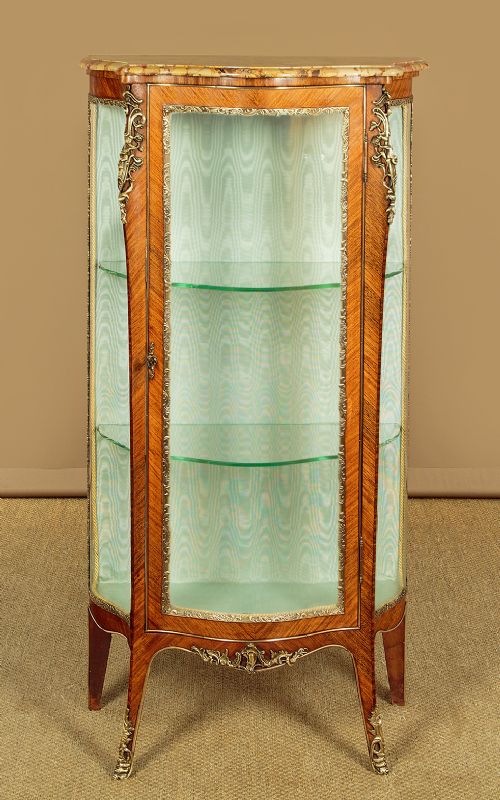
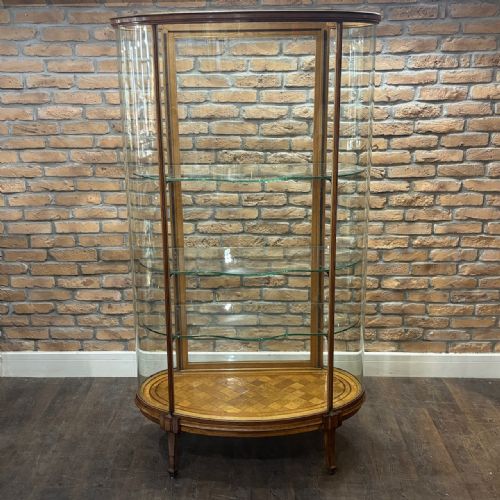
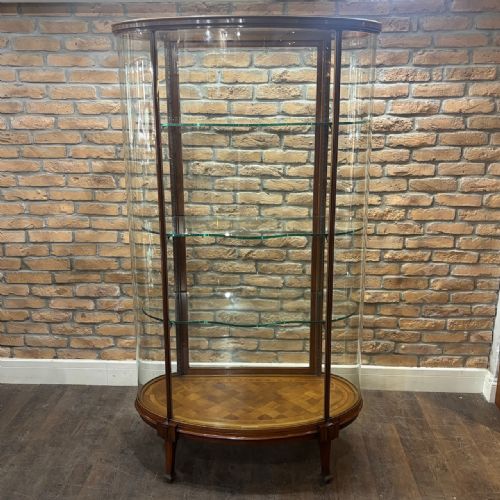
Corner cabinets form a distinct sub-category, designed to fit cleanly into room angles with curved or bow fronts in oak, pine and mahogany. Display cabinets and vitrines utilise curved glass panels to showcase porcelain and objects from multiple angles, spanning Edwardian and 1930s workshops.
How they were made
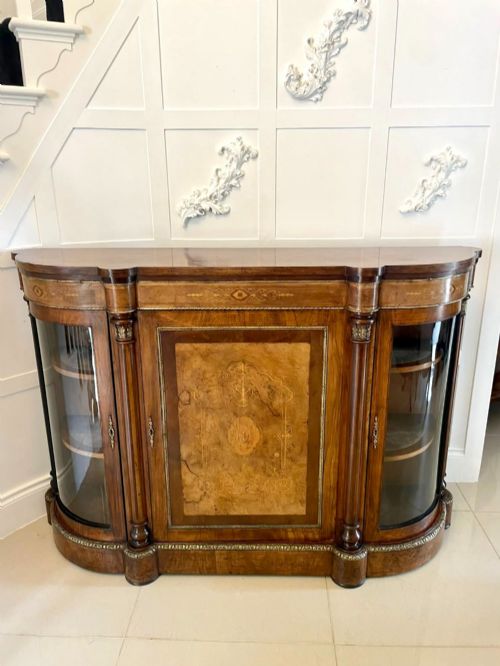
Cabinetmakers constructed curved carcasses using solid timbers like mahogany, oak and walnut, often applying veneers of burr walnut, amboyna, kingwood and sycamore over a secondary wood base. Marquetry, floral inlay and ebonised detailing embellish the exterior surfaces of Victorian and Edwardian examples. Mounts in ormolu, brass handles and glazed doors define the finer iterations, alongside marble tops fitted to French commodes and credenzas.
What varies in quality
Quality rests in the precision of the curved joinery, the selection of figured veneers such as burr walnut or plum pudding mahogany, and the integration of original mounts and glass. Superior pieces exhibit hand-cut marquetry, finely cast ormolu mounts and seamless door alignment along the radius of the curve. Lesser examples rely on plainer secondary timbers, simpler brassware and straightforward veneering without the complex banded borders or hand-fitted curved glass panels seen at the top of the range.
F. Sage & Co·Maurice Adams·Jacques Bircklé·Edwards & Roberts
The Antique Curved Cabinet Glossary
- Bowfront
- A convex, outwardly curved front profile common on chests of drawers, sideboards and cabinets. This shape softens the corners of case furniture and appeared across Georgian and later periods.
- Credenza
- A low cabinet or sideboard, frequently featuring inlaid veneers and ormolu mounts. Originating in the Victorian era, these pieces often incorporate central cupboards flanked by curved or glazed end sections.
- Vitrine
- A glass-fronted display cabinet designed for showing porcelain and decorative objects. These range from tall Edwardian floor-standing units to compact 1930s Art Deco table models.
- Marquetry
- Decorative patterns formed by fitting together thin slices of various coloured woods, veneers and shell onto a carcase. Master cabinetmakers utilised this technique on Victorian credenzas and Edwardian display cabinets.
- Ormolu
- Gilt-bronze decorative mounts applied to the corners, feet and friezes of fine cabinets. These mounts were cast and chased by hand, primarily appearing on French and high-status Victorian pieces.
Antique Curved Cabinet: Frequently Asked Questions
Where should I place a curved cabinet?
Curved cabinets and corner cupboards suit awkward angles or blank walls where a flat piece would look harsh. Their rounded fronts soften circulation routes in hallways, dining rooms and drawing rooms.
Glass-fronted vitrines and display cabinets work best near natural light sources to illuminate the interior shelves and displayed objects.
How do I clean marble top cabinets?
Marble tops on French commodes and credenzas require gentle cleaning with a damp cloth and neutral soap. Avoid acidic cleaners, vinegar or abrasive scouring pads that etch the polished stone surface.
Dry the marble thoroughly after wiping to maintain the natural sheen of the stone.
Can I adjust the shelves?
Most antique cabinets feature fixed wooden or glass shelves supported on fixed wooden battens rather than modern adjustable metal pins. Altering shelf heights requires professional intervention by a restorer.
Consider the height of your collection items before purchasing a cabinet with fixed interior spacing.
How do I date a bowfront cabinet?
Dating relies on timber selection, construction methods, handles and hardware styles. Georgian pieces utilise solid mahogany or figured woods with hand-cut dovetails, while Victorian examples often feature heavy burr walnut veneers and elaborate marquetry.
Edwardian and 1930s cabinets introduce lighter proportions, glazed frames and distinct Art Deco geometric veneers.