



Antique Curule Desk Chair
An antique curule desk chair brings ancient Roman authority straight into the study, offering a striking X-framed silhouette that demands attention.
Antique Curule Desk Chair
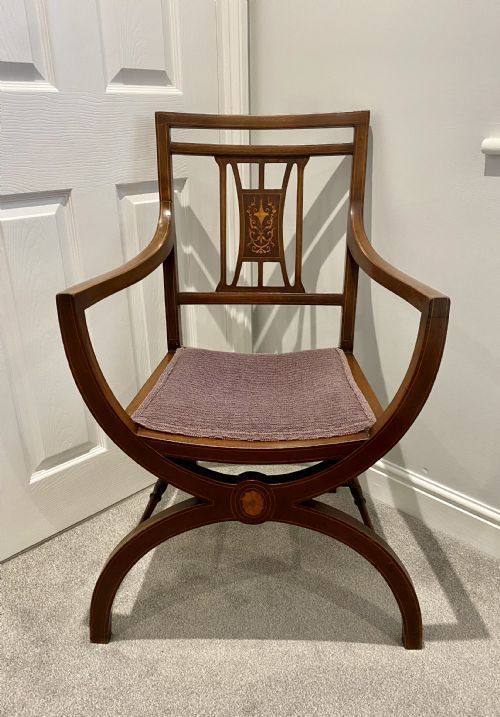
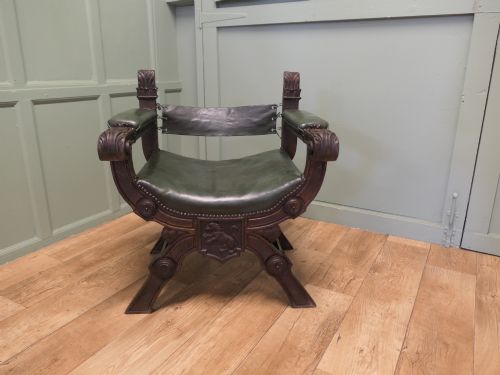
The antique curule desk chair draws directly from classical X-framed forms, appearing across the nineteenth century and into the Edwardian era in various revivals. You will encounter these pieces most frequently in rich mahogany or solid oak, often configured as armchairs or library seats.
Makers adapted the ancient curule shape through different stylistic lenses, ranging from stark Gothic Revival and Renaissance Revival to refined Edwardian Neoclassical. These forms combine striking architectural presence with practical seating, making them ideal statement pieces for a traditional study.
Materials and construction methods
Cabinetmakers utilised dense timbers like mahogany, oak, and occasionally walnut to build the robust X-frame structure required for these chairs. Inlaid satinwood details and carved wooden elements frequently accent the primary wood.
Upholstered components incorporate supple leather and durable fabrics, secured with brass tacks or hidden fixings. Metal and iron reinforcements occasionally provide structural support within the intersecting frame.
Antique Curule Desk Chair Retail Price Guide 2026
Typical asking prices for curule desk chair among the pieces listed under this phrase on Sellingantiques today, from the lower quarter to the upper quarter. They describe what is for sale here now, not the wider market.
The listings on this page demonstrate a strong preference for nineteenth-century mahogany and oak, reflecting popular revival movements.
Assessing quality in the form
Superior examples display crisp, deep carving and precise joinery at the crucial intersection of the X-frame, where structural stress concentrates. Lesser pieces rely on softer detailing and simpler timber preparation without inlaid decoration.
The sophistication of the historical revival influences the overall refinement, with pieces following specific architectural designs showing superior proportions. Original leather upholstery and well-executed period inlays elevate the status of the chair.
The Antique Curule Desk Chair Glossary
- Curule
- An ancient Roman chair shape defined by intersecting concave legs forming an X, revived extensively in nineteenth-century seating. This distinctive silhouette provides both structural strength and visual drama.
- X-Frame
- A structural furniture base formed by crossing two members to support the seat, typical of curule and Dante chairs. It dates back centuries and reappears in various revival periods.
- Gothic Revival
- An architectural and decorative style mimicking medieval forms, prominent in mid-nineteenth-century British design. Pieces often display pointed arch motifs and heavy timber construction.
Antique Curule Desk Chair: Frequently Asked Questions
What is a curule chair?
A curule chair is a seat characterised by its X-shaped frame, originating from ancient Roman magistrate seats. Nineteenth-century cabinetmakers revived this historic form for libraries and studies.
These chairs combine an imposing architectural silhouette with functional seating. They serve as striking focal points in traditional rooms.
How do I date these chairs?
Dating relies on identifying the specific revival style, timber choice, and construction techniques visible in the frame. Nineteenth-century examples often show distinct Victorian or Gothic revival ornament.
Later Edwardian versions tend to feature lighter mahogany frames with delicate inlay work. Comparing the secondary woods helps confirm the period.
Are they comfortable for daily use?
These chairs were primarily designed for formal studies and libraries rather than extended lounging. Many feature upholstered seats or leather pads that provide adequate support for desk work.
The upright posture encouraged by the rigid X-frame suits working at a writing table. Cushions can be added to alter the seating height and comfort.
Where should I place one?
An antique curule desk chair belongs naturally beside a partners desk or library table. Its commanding profile also makes it suitable as an accent piece in a hallway or corner.
Positioning the chair where the X-frame remains visible from multiple angles highlights its sculptural qualities. Ensure adequate clearance around the splayed legs to protect the wood.