
Antique Cups and Saucers
These antique cups and saucers offer a tactile connection to historical dining tables, spanning delicate Georgian porcelain to vibrant Victorian tea services.
Antique Cups and Saucers
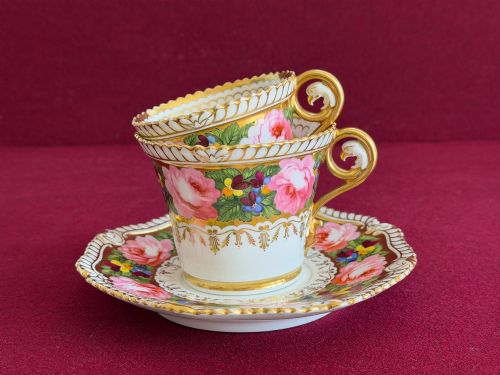
When searching for antique cups and saucers, collectors encounter a diverse array of domestic and cabinet wares designed for social rituals of tea, coffee, and chocolate. The selection spans utilitarian vessels to elaborate cabinet trios, reflecting shifts in beverage consumption from the eighteenth century onward.
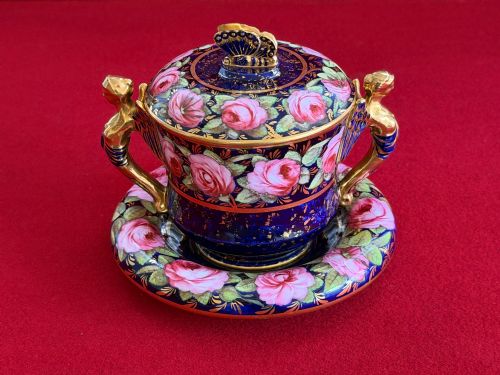
English factories such as Worcester, Coalport, and New Hall dominate the available forms, alongside continental European contributions from Paris and Berlin. Pieces range from straightforward teacups and saucers to specialised chocolate cups with covers and stands, as well as Japanese lacquer and ceramic variations.
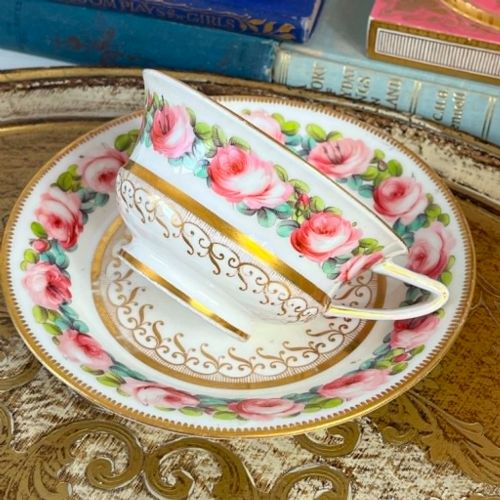
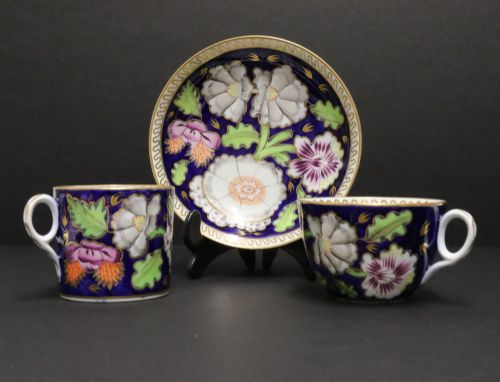
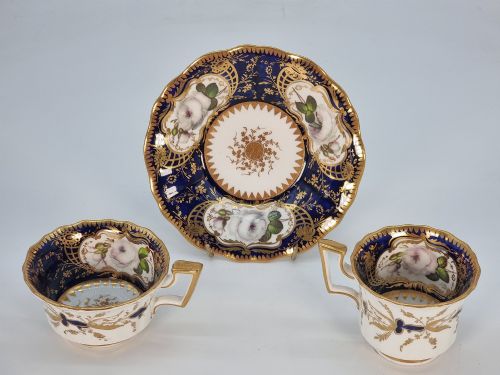
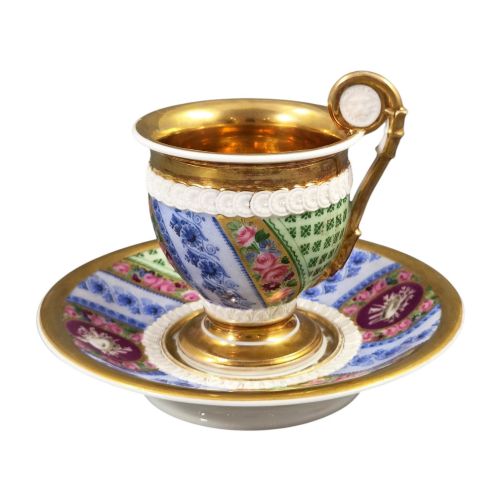
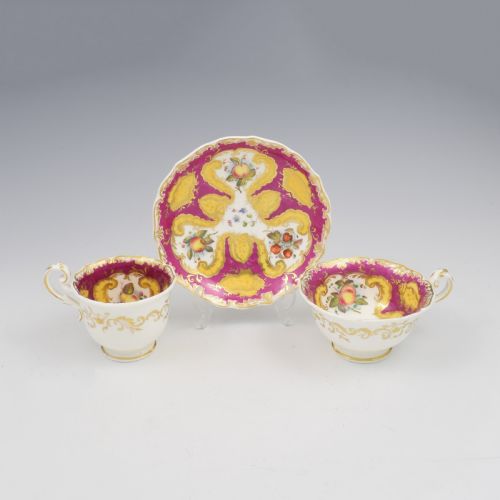
The aesthetic vocabulary shifts across periods, moving from eighteenth-century hand-painted botanicals and Chinese export styles to the bold Regency shapes and Victorian blush ivory decoration. Buyers frequently meet duos and trios that pair a teacup, coffee cup, and saucer in matching patterns.
Materials and manufacturing methods
Makers utilised porcelain and bone china as the primary ceramic bodies, shaped either by throwing on a wheel or utilising moulds for more complex forms like cabinet cups. Soft-paste porcelain characterises many eighteenth-century English and French examples, while later nineteenth-century pieces frequently employ bone china for increased durability.
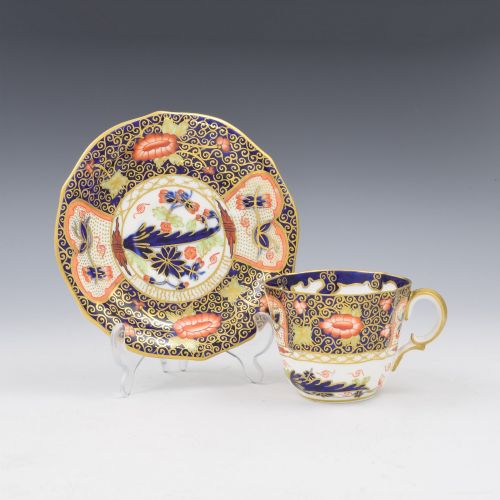
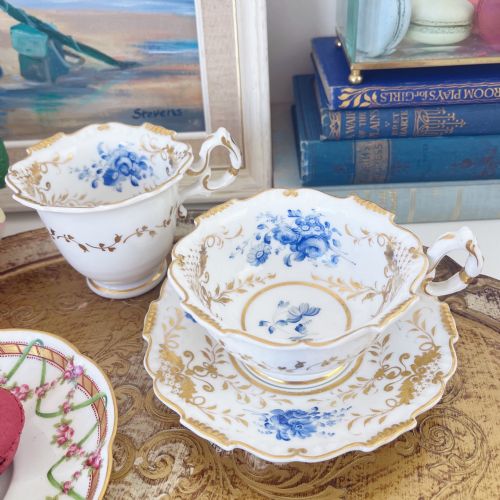
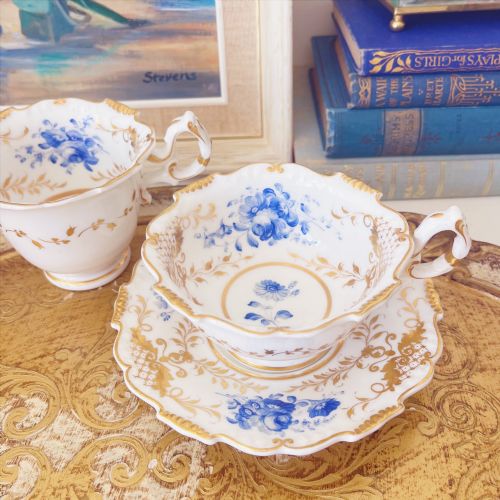
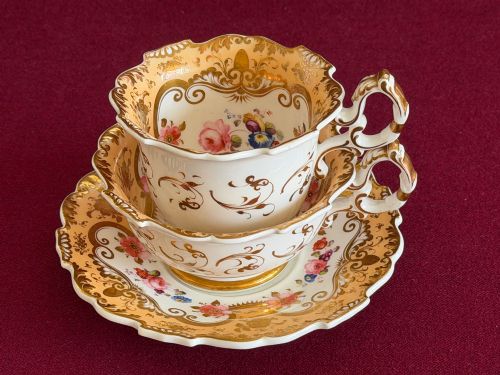
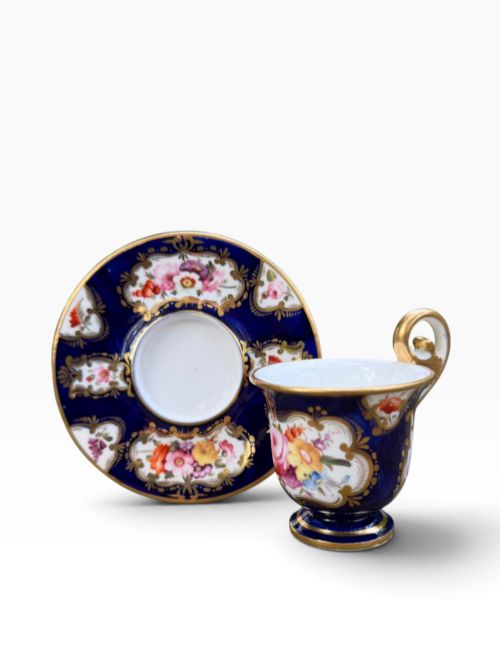
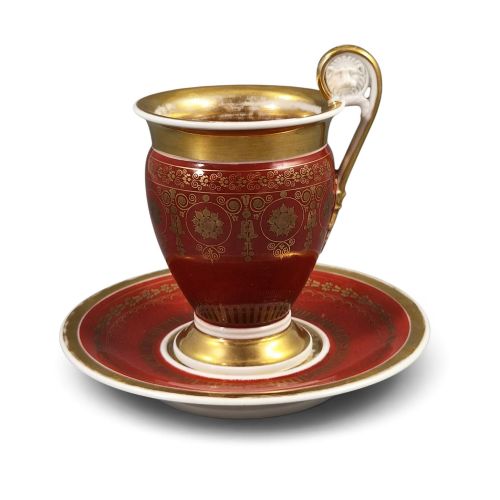
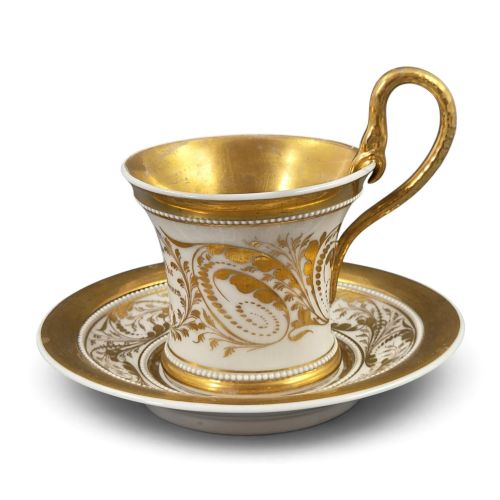
Decoration relied heavily on hand-painted pigments, underglaze cobalt, and rich enamel palettes, often enhanced by gold leaf, gilding, and gold gilt accents. Artisans applied intricate motifs ranging from naturalistic floral sprays and landscape scenes to Japanese-inspired compartmentalised designs.
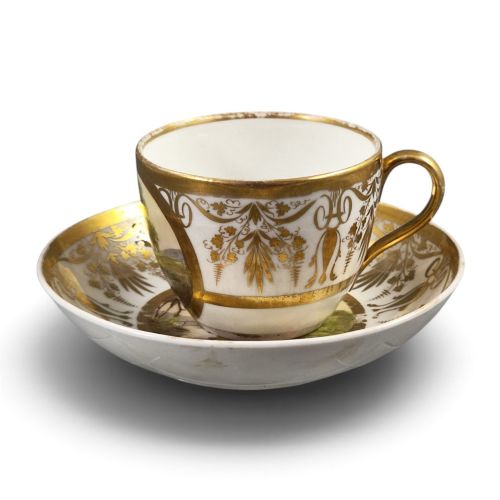
Enamel, gold leaf, and hand-painted landscapes appear frequently across English and continental European cabinet pieces.
Distinctions in quality and execution
The distinction between ordinary production and superior work rests on the precision of the hand-painted detailing and the refinement of the ceramic body. Finer pieces display crisp, assured brushwork in botanical or figural subjects, whereas lesser examples rely on mechanical transfer printing or hasty application.
The application of gilding and enamel work further differentiates the hierarchy of these objects, with top-tier manufactures employing raised gold leaf and intricate burnishing. The stability of the form, the purity of the porcelain glaze, and the provenance attached to specific makers like Royal Crown Derby or Flight & Barr elevate the standing of individual sets.
Royal Crown Derby·H & R Daniel·Chamberlain Worcester·Coalport·KPM Berlin·Flight & Barr·Rockingham·New Hall
The Antique Cups and Saucers Glossary
- Cabinet trio
- A matching set comprising a teacup, coffee cup, and saucer intended for display rather than robust daily use. These often feature elaborate hand-painted landscapes or gilded highlights.
- Coffee can
- A cylindrical cup designed specifically for drinking strong coffee, typically lacking the flared rim and handle found on standard teacups. They frequently appear in early nineteenth-century English porcelain.
- Trembleuse
- A specialised cup and saucer featuring a raised ring or well in the centre of the saucer to secure the cup and prevent spilling. They were popular in the eighteenth century for serving hot liquids to nobility.
- Soft-paste porcelain
- An artificial ceramic body composed of clay, glass frit, and ground minerals used before the widespread adoption of true hard-paste porcelain. It possesses a warm, slightly creamy tone under the glaze.
- Imari
- A decorative style inspired by Japanese export porcelain, characterised by a palette of underglaze blue, iron red, and abundant gilding. English factories enthusiastically adopted this aesthetic during the Georgian and Regency eras.
Antique Cups and Saucers: Frequently Asked Questions
What is the difference between a teacup and a coffee can?
Teacups are generally wider and shallower to allow the hot liquid to cool quickly, often featuring a dedicated handle and a curved body.
Coffee cans are taller and straight-sided, designed to retain heat for concentrated brews of early nineteenth-century coffee.
How were antique cups and saucers used historically?
Wealthy households utilised these vessels during formal morning routines, drawing rooms, and afternoon tea ceremonies as status symbols.
In earlier centuries, drinkers sometimes poured hot tea from the cup into the saucer to cool it before consumption.
Can I use antique cups and saucers for daily tea?
Most antique porcelain and bone china require careful hand washing rather than dishwasher use to preserve delicate enamel and gold leaf.
Earlier soft-paste bodies and fragile handles are particularly susceptible to thermal shock and accidental impact during regular use.
How do I identify the period of an unmarked porcelain set?
Stylistic shifts provide primary clues, such as the neoclassical motifs of the Regency era or the rich floral panels of the Victorian period.
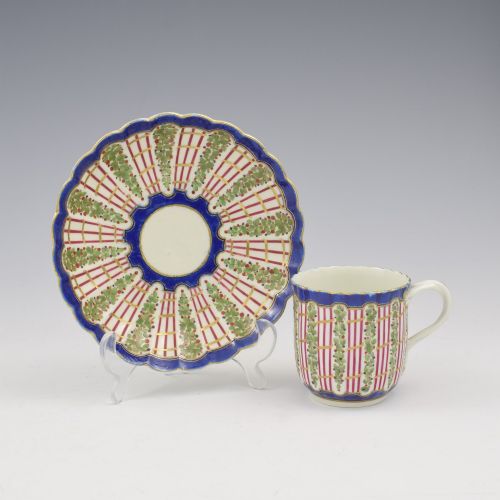
Form variations, such as the straight walls of an eighteenth-century coffee cup or the lobed shapes of a Georgian trio, also help narrow the date.