
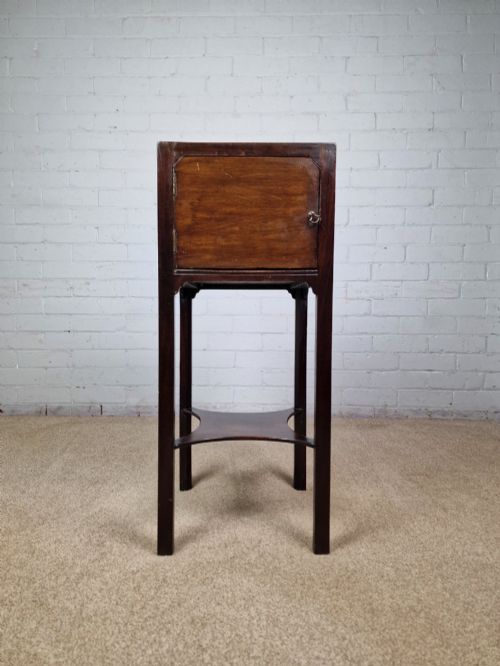
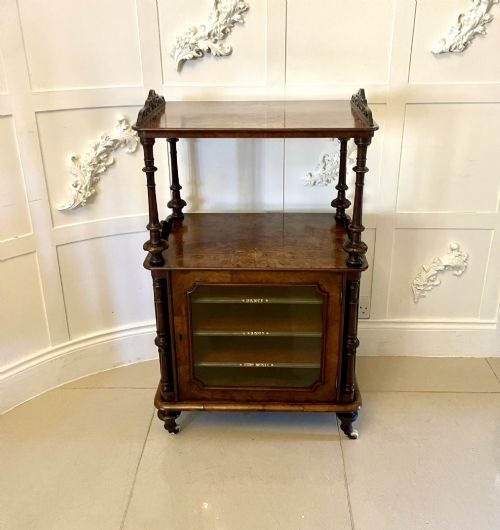
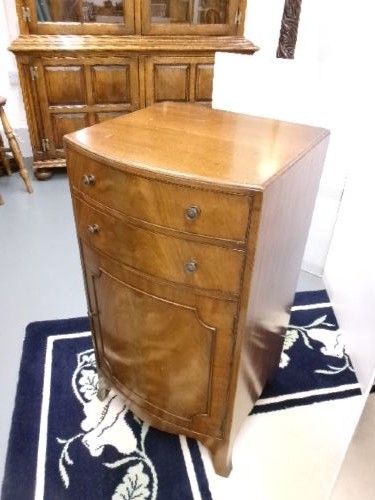
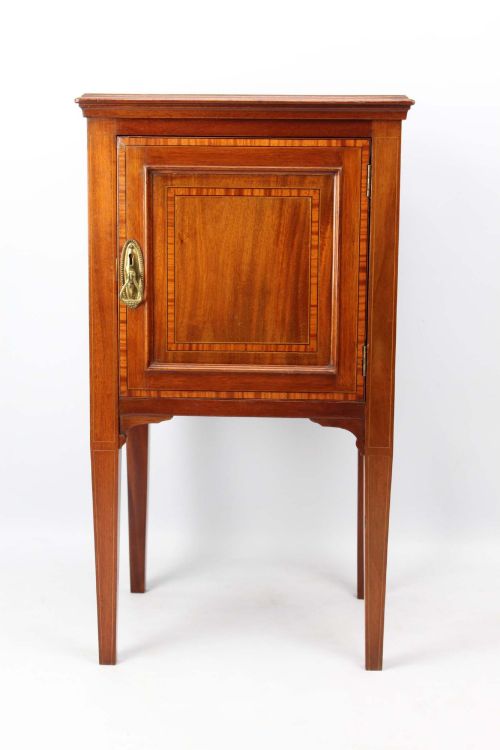

Antique Cupboard Side Table
When you search for an antique cupboard side table, you are looking at bedside cabinets, pot cupboards and compact lamp tables that combine enclosed storage with a useful surface.
Antique Cupboard Side Table
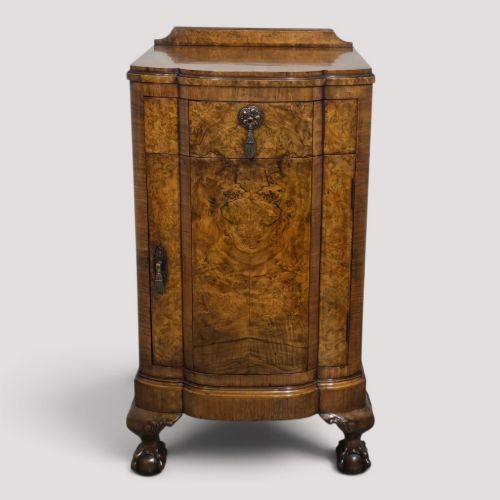
An antique cupboard side table brings together enclosed storage and a convenient surface, serving primarily as bedside furniture, nightstands or small lamp tables in domestic settings. The pieces seen in these listings bridge several centuries of domestic design, spanning from the restrained proportions of the eighteenth century through Victorian utilitarian forms to the clean geometry of the Art Deco period.
Buyers will most frequently encounter compact nineteenth-century and Edwardian examples alongside 1930s designs, reflecting how domestic storage needs evolved over time. Common formats include simple pot cupboards with a single door, marble-topped bedside chests, and satinwood or mahogany pieces fitted with internal shelving or drawers.
How They Were Made
Cabinetmakers constructed these pieces using a foundation of solid timbers such as mahogany, oak and walnut, frequently applying figured veneers like burr walnut, satinwood and harewood to prominent surfaces. Carcase construction relied on traditional joinery techniques, ensuring stability for small tables subjected to daily bedside use.
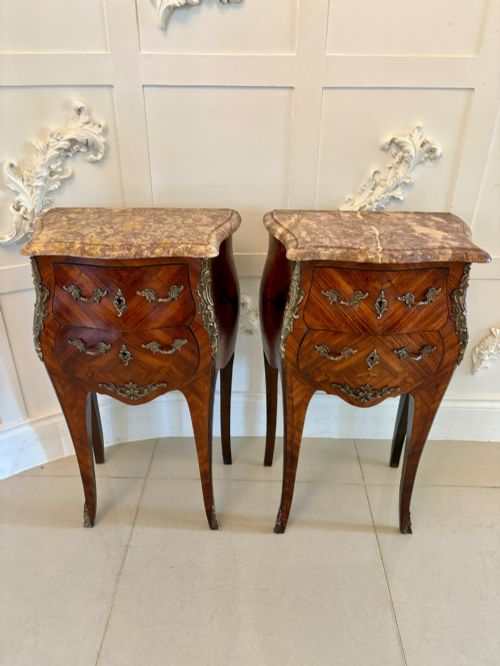
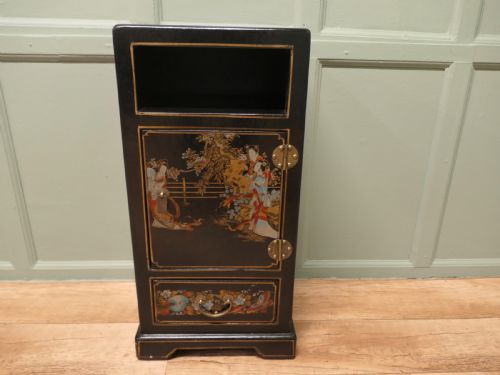
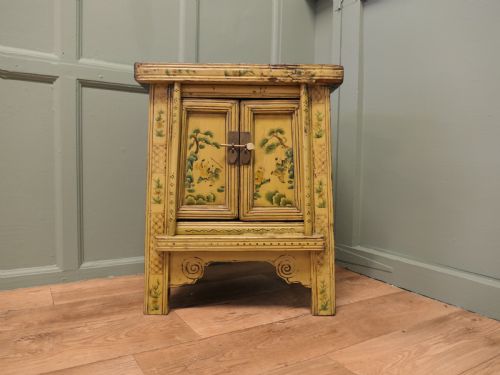
Surface ornamentation included marquetry inlay, ebony stringing and hand-painted Chinoiserie or floral motifs. Many pieces featured inset marble tops designed to provide a durable, wipe-clean surface for pitchers and wash items.
Brass hardware, including drop handles, knobs and escutcheons, completed the construction, while specialised timber choices like pitch pine or faux bamboo appeared in specific regional and period variants.
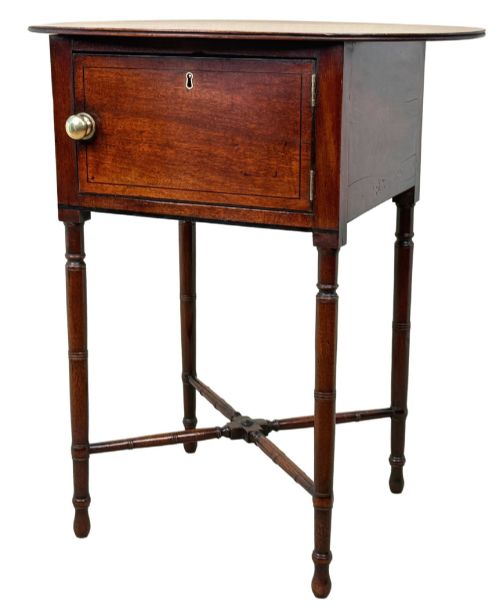
Form variations across the inventory range from simple Georgian pot cupboards to elaborate French marble-topped commodes and Art Deco lamp tables.
What Varies in Quality
The distinction between standard domestic utility pieces and the finest examples rests on the selection of timber and the precision of the cabinetwork. Superior pieces display carefully matched grain patterns, such as flame mahogany or burr walnut, carried seamlessly across doors and drawer fronts.
Refinements such as finely cut marquetry, delicate stringing, and solid brass fittings elevate a piece above simpler workshop production. The integration of high-status additions, like shaped marble slabs or specialised interiors including cylinder roll tops and secretaire drawers, signals ambitious design.
Proportion and structural restraint also define the upper tier of the range, where delicate legs, well-balanced carcases and crisp carving distinguish bespoke furniture from mass-produced items.
Gillows·Walter Carter Harrods
The Antique Cupboard Side Table Glossary
- Pot cupboard
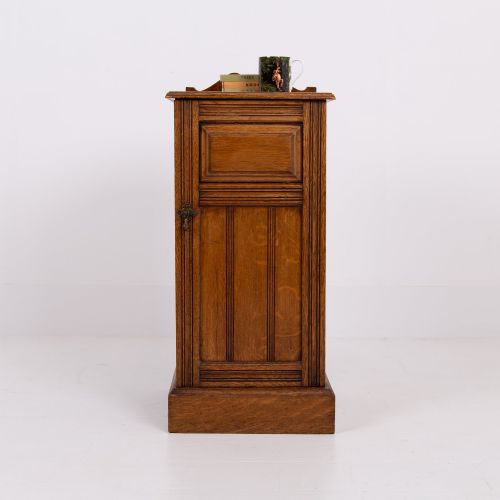
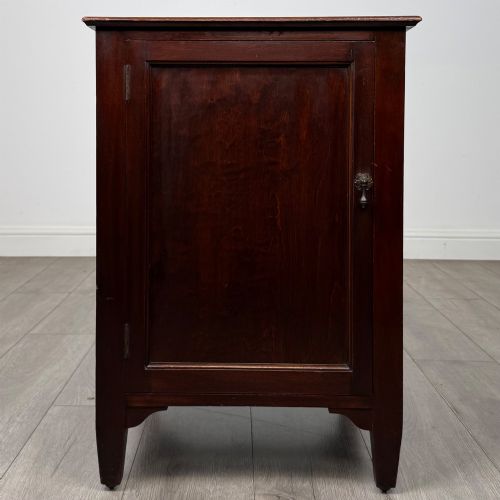
- A small bedside cabinet originally designed to house a chamber pot behind a single door. These pieces often feature an enclosed compartment above or below a small shelf.
- Tray top
- A tabletop finished with a raised moulded rim or gallery around the edges. This design prevented small items or glassware from sliding off the surface.
- Chinoiserie
- European decorative style employing imitation Chinese motifs and painted lacquer techniques. It appeared frequently on cabinets and decorative furniture during the eighteenth and early twentieth centuries.
- Marquetry
- The art of applying decorative veneer pieces of different woods, metals or shells to a structure to form intricate patterns. This technique defined the surface decoration of many high-end Edwardian and Art Deco cabinets.
- Burr walnut
- Timber taken from a walnut tree outgrowth, prized for its swirling, highly figured grain patterns. Cabinetmakers used it extensively as a veneer on luxury front panels.
Antique Cupboard Side Table: Frequently Asked Questions
What is the difference between a pot cupboard and a bedside table?
A pot cupboard specifically refers to a small enclosed cabinet originally built to contain a chamber pot, featuring a door to hide the interior. Bedside tables often provide open shelf space or multiple drawers instead of a single enclosed cupboard.
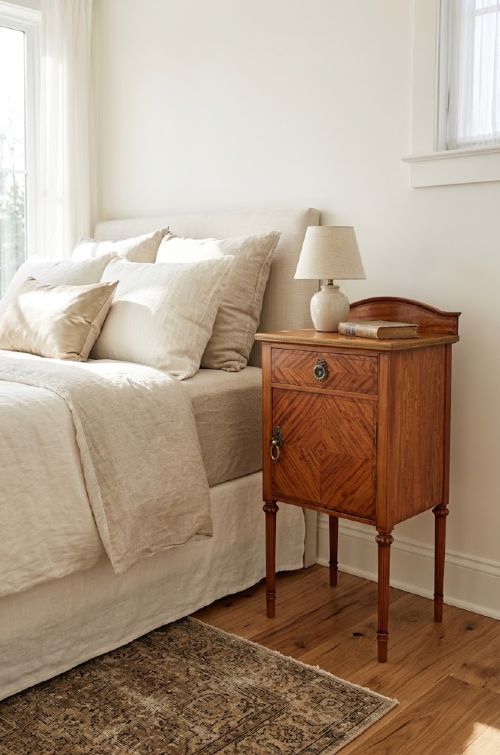
Over time, the terms became interchangeable as domestic habits changed, and many former pot cupboards now serve simply as lamp tables or nightstands.
How do I identify an Art Deco bedside table?
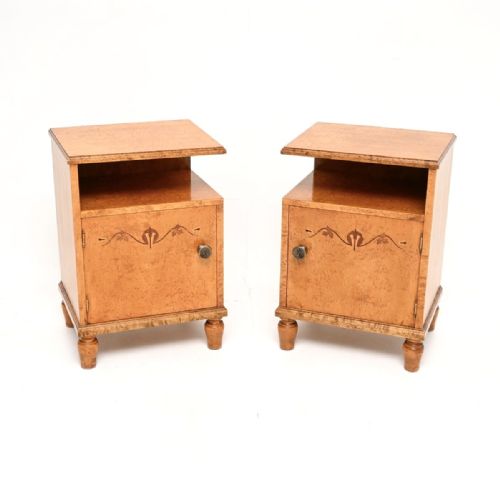
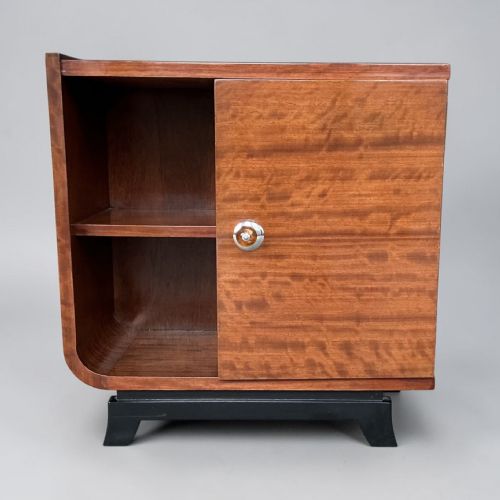
Art Deco pieces typically date from the 1920s and 1930s, displaying geometric lines, stepped forms, and symmetrical arrangements. They often utilise exotic veneers like burr walnut or macassar ebony with minimal applied ornamentation.
Unlike ornate Victorian or Edwardian furniture, these tables rely on the natural grain of the wood and the purity of their silhouette for visual impact.
Were these cabinets always made as pairs?
While many bedside cabinets and tables survive as matched pairs, a significant number were produced and sold individually. Single pieces often served specific functions in smaller rooms or guest quarters.
Matching pairs command particular attention from collectors looking to furnish both sides of a bed symmetrically.
What are marble-topped bedside cabinets used for?
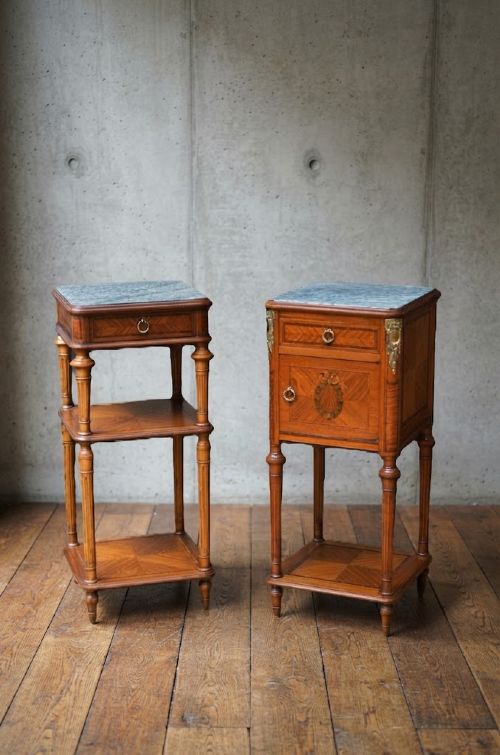
Marble tops provided a durable, waterproof surface designed to hold heavy wash jugs, ceramic basins, and drinking water pitchers without damaging the timber beneath. In modern settings, this stone surface makes them resilient bedside tables or lamp stands.
French and Edwardian makers utilised white or veined marble slabs extensively to add weight and a refined finish to small bedroom cabinets.